In high-volume dry bulk powder logistics across Africa and the Middle East, pneumatic cement tanker semi-trailers discharge 40 to 50 tons of abrasive Portland cement through 4-inch (DN100) high-pressure rubber discharge hoses and quick-acting Camlock couplings (Type C female and Type E male adapters) into 25-meter-high batching plant storage silos. Operating under 0.20 to 0.25 MPa air pressure, inspecting embedded high-tensile copper anti-static grounding wires, verifying 1.0 MPa hose burst pressure margins, and securing cam-arm safety clips prevents lethal hose whipping blowouts and combustible dust spark detonations.
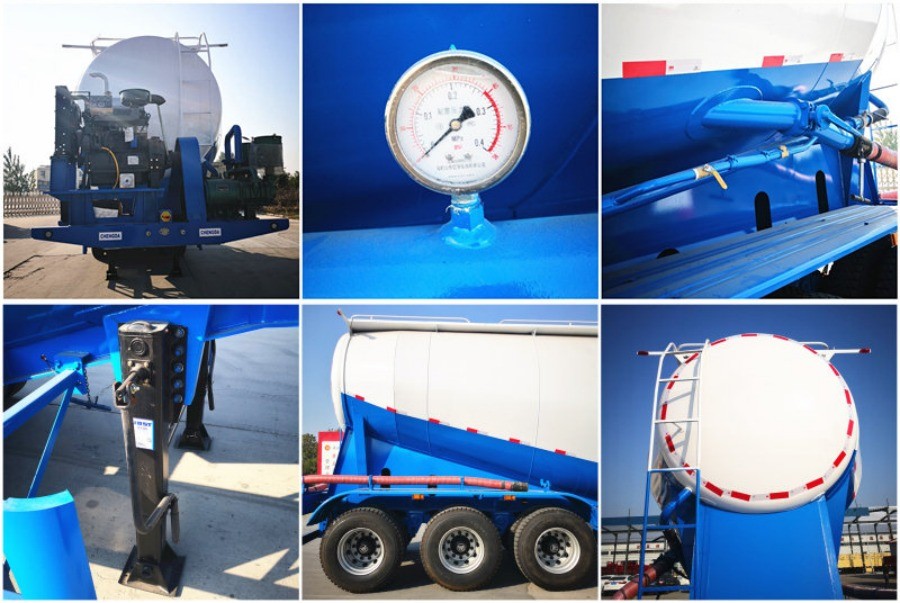
1. Technical Specification Comparison: Standard Canvas Hose vs. Heavy Wire-Helix Rubber Discharge Hose
Burst pressures, wear lining thicknesses, electrical static resistances, and flexibility across cement discharge hoses:
| Engineering Parameter | Economy Fabric-Reinforced Hose (Canvas Covered) | Chengda Heavy Wire-Helix Anti-Static Rubber Discharge Hose |
|---|---|---|
| Internal Tube Rubber Metallurgy | Standard recycled Natural Rubber (NR / SBR, 3.0mm thick) | Ultra-high abrasion resistant pure synthetic rubber (6.0mm – 8.0mm thick) |
| Reinforcement Layer Architecture | Multiple plies of synthetic textile cords without steel wire | High-tensile textile plies + embedded high-flex spiral steel wire helix |
| Internal Anti-Static Grounding Wire | None (Relies on external makeshift jumper wires) | Twin braided multi-strand copper grounding wires embedded along full length |
| Rated Working Air Pressure | 0.20 MPa (2.0 bar / 29 psi) | 0.40 MPa (4.0 bar / 58 psi heavy-duty working pressure) |
| Hydrostatic Burst Pressure Rating | approx. 0.60 MPa (6.0 bar - low safety margin) | Over 1.20 MPa (12.0 bar minimum burst rating; 3:1 safety factor) |
| Abrasion Loss Rating (DIN 53516) | Loss: approx. 120 – 150 mm³ | High wear resistance: Loss ≤ 50 mm³ (Exceeds abrasive quartz wear) |
| Operating Vacuum Collapse Rating | Collapses completely under vacuum suck-back | Full vacuum resistance: Withstands -0.09 MPa during pump reverse suck-back |
| Service Life in Bulk Cement Haulage | approx. 2,000 – 3,500 metric tons of cement discharged | Exceeds 12,000 – 16,000 metric tons before inner lining wear-through |
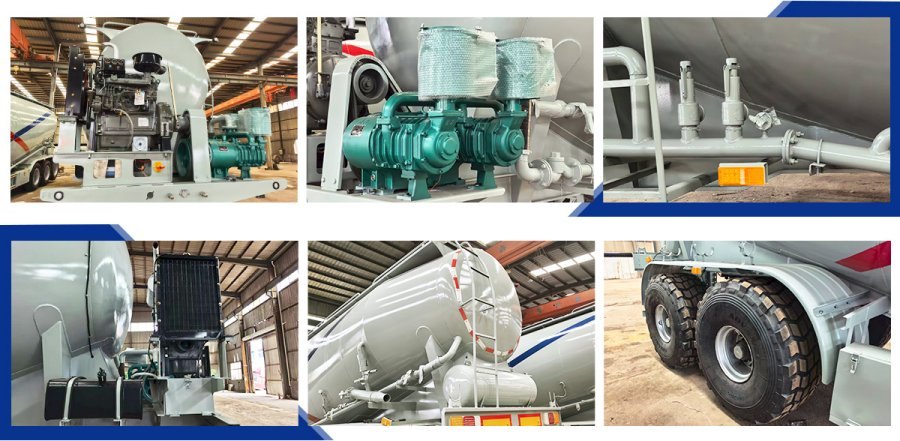
2. The Static Electricity Spark Hazard: Why Embedded Copper Wires Are Mandatory
High-velocity pneumatic powder transfer generates tens of thousands of volts of static charge:
- The Triboelectric Static Accumulation: As 45 tons of microscopic dry cement and silica fly ash grains scrape through a 7-meter rubber discharge hose at 25 meters per second, friction strips electrons from the rubber wall. The hose builds up electrostatic charges exceeding 30,000 Volts within three minutes of pumping.
- The Explosive Discharge Spark: If the hose lacks continuous electrical grounding, this massive voltage jumps across the aluminum Camlock coupler to the batching plant steel receiving pipe in a bright blue electric arc. In organic powder operations (flour, starch, grain dust), this static spark instantly detonates combustible dust clouds, blowing silos apart. In cement handling, it delivers painful, disorienting electric shocks that cause operators to fall off silo catwalks.
- The 10-Ohm Continuity Rule: Both ends of the embedded copper spiral wires must be securely clamped under the aluminum Camlock shank ferrules. Electrical resistance measured from one Camlock coupler to the opposite coupler must measure strictly under 10 Ohms.

3. Troubleshooting Catastrophic Hose Blowouts & Camlock Detachments
Hose whipping under 0.2 MPa air pressure generates lethal kinetic force that can crush human skulls:
| Observed Hose Malfunction | Most Probable Root Cause | Immediate Corrective Action |
|---|---|---|
| Hose ruptures with an explosion during unloading; cement dust clouds silo | Inner rubber tube worn paper-thin by abrasive cement; kinked hose creating local stress; burst pressure exceeded | Shut off compressor immediately; vent tank pressure; replace hose assembly; check 0.22 MPa safety valve |
| Camlock arms vibrate open under pressure, blowing coupling off pipe | Worn cam-arm pivot pins; missing safety R-clips; degraded NBR flat rubber gasket allowing coupling play | Replace Camlock female body; install heavy safety locking clips through cam arms; install fresh silicone gasket |
| Hose kinks shut, blocking cement flow and spiking tank pressure to 0.25 MPa | Broken or collapsed internal steel wire helix caused by vehicles accidentally driving over the hose | Replace crushed hose section; install heavy rubber drive-over cable protectors across haul paths |
| Severe electric shock when operator touches discharge Camlock fitting | Embedded copper grounding wire severed internally; loose grounding band clamp on hose shank | Test electrical continuity with multimeter; re-strip copper wire and clamp under external grounding band |
4. Step-by-Step Camlock Coupling Attachment & Whip-Check Safety Rigging
Professional hose rigging protocols for high-pressure bulk powder discharge:
- Inspect Flat Rubber Gaskets: Before coupling, examine the thick nitrile or Viton sealing ring inside the Type C female Camlock coupler. Never connect a coupling with a missing, cracked, or hardened gasket!
- Engage Cam Arms Simultaneously: Push the male Type E shank straight into the female coupler until it bottoms out against the rubber seal. Close both forged brass or stainless steel cam arms downward simultaneously until they snap flush against the coupling body.
- Insert Spring-Loaded Safety Pins: Pass hardened steel lynch-pins or heavy safety R-clips through the cross-drilled holes in both cam arms. This mechanical lock physically prevents the arms from vibrating open under 0.2 MPa pulsating air shock.
- Install a Steel "Whip-Check" Safety Cable: Slip a heavy 6mm galvanized steel wire whip-check cable across the coupling connection, securing one loop around the tanker discharge pipe and the opposite loop around the rubber hose body. If the Camlock coupling shears or detaches under pressure, the steel whip-check holds the pressurized hose tethered to the trailer, preventing the flailing hose from striking personnel!
Frequently Asked Questions
Q: What causes cement discharge hoses to develop soft, squishy blisters on the outer rubber cover?
A: Soft blisters occur when the internal rubber lining wears through. High-pressure air and abrasive cement penetrate beneath the outer rubber cover, inflating bubbles that will rupture explosively within minutes. Blistered hoses must be condemned immediately.
Q: Can a standard radiator hose clamp (jubilee worm-drive clamp) be used to secure Camlock fittings on cement hoses?
A: Absolutely not! Worm-drive band clamps lack the clamping force needed to retain heavy 4-inch rubber hoses under pressure and will strip under 0.2 MPa. Always use heavy two-bolt cast malleable iron safety clamps or hydraulically crimped aluminum ferrules.
Q: Where can cement haulage fleets procure heavy-duty 4-inch discharge hoses, Camlock couplers, and whip-checks?
A: Browse our complete powder machinery inventory in the Construction Machinery Category, view original Bulk Cement Semi-Trailers, or consult our International FAQ Center.
Request Bulk Cement Discharge Hoses & Camlock Hardware Quotation
Recommended Semi-Trailers
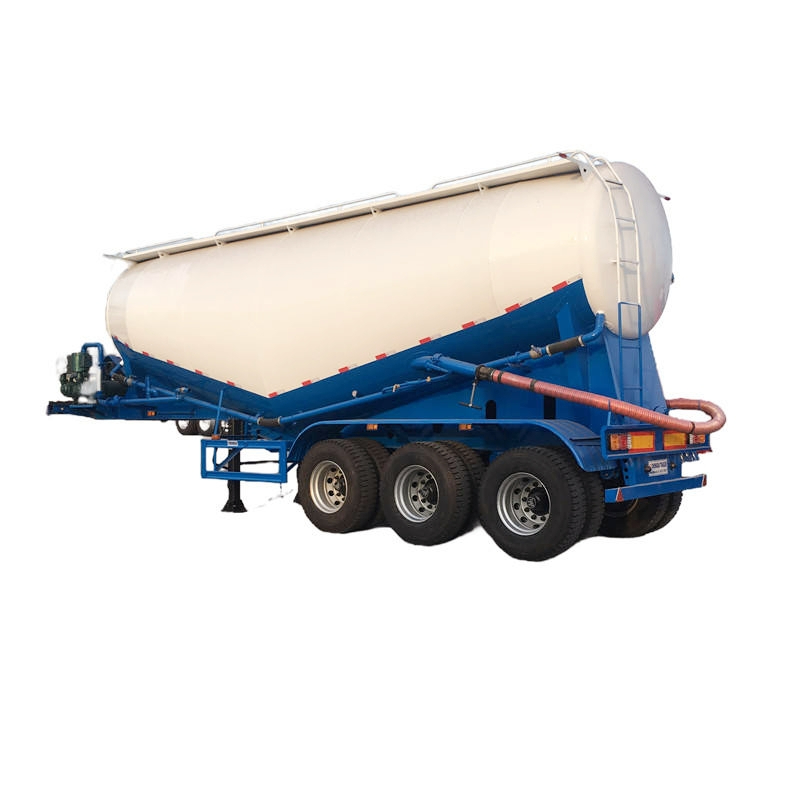 3 Axle Bulk Cement Trailer | 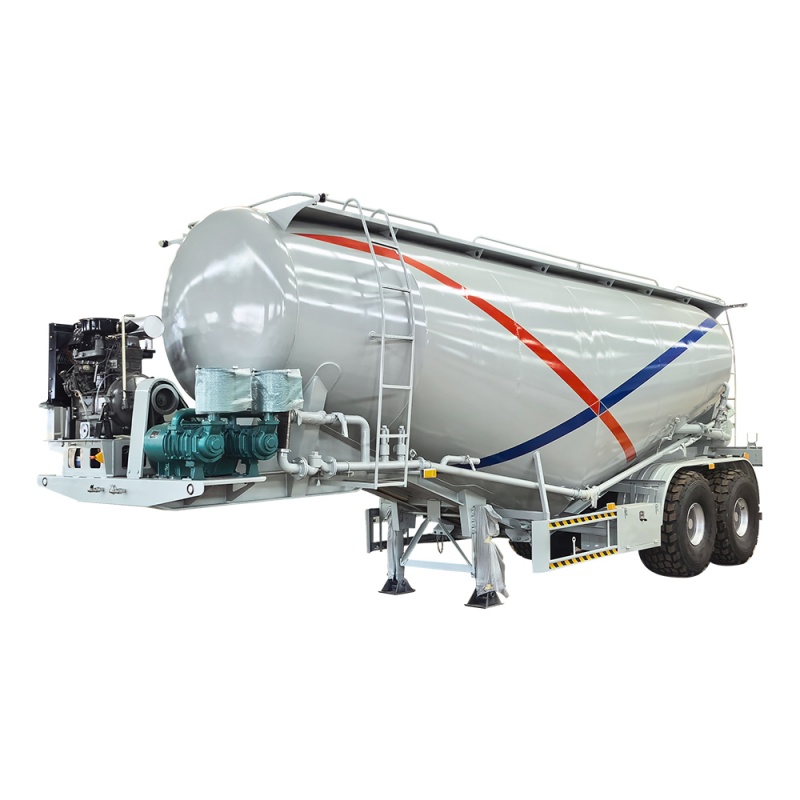 2 Axle Cement Trailer |  BYD Sealion 06 EV |