On high-precision truck-mounted mobile cranes and articulated knuckle-boom loaders (XCMG, SANY, Palfinger, Zoomlion), the load-independent electro-hydraulic proportional multi-spool valve (Danfoss PVG 32 / Hawe PSL series) governs all simultaneous boom telescoping, winch hoisting, and slewing motions. Incorporating individual section post-compensated pressure compensators and dual-crossover slewing cushion shock valves, proper hydraulic calibration ensures buttery-smooth 2-millimeter micro-inching positioning for structural steel erection while eliminating violent hydraulic slewing shocks that snap wire ropes and swing suspended loads out of control.
1. Technical Specification Comparison: Open-Center Monoblock vs. Post-Compensated Proportional Valves
Flow sharing capabilities, metering sensitivities, operating pressures, and control electronics across crane hydraulic valves:
| Engineering Parameter | Conventional Open-Center Monoblock Valve (Standard Utility Crane) | Load-Sensing Proportional Valve (Danfoss PVG32 / Hawe PSL Spec) |
|---|---|---|
| Hydraulic Circuit Architecture | Fixed-displacement open-center circuit with tandem center gallery | Closed-center Load Sensing (LS) with individual section pressure compensators |
| Flow Sharing Under Pump Saturation (LUDV) | None (High-pressure circuit steals 100% of pump flow; other functions stop) | True proportional flow sharing: All functions slow down proportionally together |
| Micro-Inching Control Resolution | Coarse (approx. 15% – 25% dead-band; jerky initial movement) | Ultra-fine: Sub-millimeter flow metering from 1% to 100% joystick stroke |
| Maximum Working System Pressure | 21.0 – 25.0 MPa (approx. 210 – 250 bar) | 31.5 – 35.0 MPa (315 to 350 bar heavy crane rating) |
| Individual Section Flow Capacity | approx. 60 – 80 Liters / minute per spool | approx. 100 – 140 Liters / minute (Supports simultaneous high-speed operations) |
| Slewing Cushion Shock Valve Spec | Simple fixed relief cartridge (Prone to abrupt hydraulic hammer) | Dual anti-cavitation cross-over shock cushion valves with soft-reversal spools |
| Spool Actuation Interface | Manual hand mechanical linkage rods | 24V PWM CAN-Bus electro-hydraulic actuators + manual emergency levers |
| Target Construction Lifting Mission | Basic municipal tree trimming, light equipment drop-off | Precision steel girder assembly, petrochemical pipe erection, glass curtain panels |
2. Kinematics of Post-Compensated Flow Sharing: Why Spools Don't Steal Oil
When an operator hoists a heavy 5-ton load while simultaneously telescoping the boom and slewing the turret:
- The Pump Saturation Dilemma: Operating three heavy functions simultaneously demands more oil than the hydraulic pump can physically deliver. In standard open-center valves, oil takes the path of least resistance: the light slewing motor spins wildly while the heavy hoist winch stops dead in mid-air.
- The Individual Section Pressure Compensator: In a post-compensated proportional valve, a miniature hydro-mechanical balance spool sits behind each main valve spool. It continuously senses the differential pressure across the spool metering notches.
- Synchronized Proportional Slow-Down: If pump capacity is saturated, the compensators throttle flow evenly across all active spools. The crane does not stall or jerk; all three movements continue moving simultaneously in exact proportion to their respective joystick deflections.
3. Troubleshooting Jerky Slewing Shocks & Sticking Pressure Compensators
Violent swinging jolts during crane rotation and boom sluggishness trace to specific contamination and relief faults:
| Observed Crane Malfunction | Most Probable Root Cause | Immediate Corrective Action |
|---|---|---|
| Crane boom jerks violently and clangs loudly when stopping rotation | Slewing cross-over cushion shock relief valve set too high; anti-cavitation check balls seized shut | Adjust slewing cushion relief valves to 14.0 MPa; clean anti-cavitation makeup check valves |
| One crane function moves at snail's pace while other functions move fast | Internal pressure compensator shuttle spool jammed by fine varnish grit; clogged 100-micron damping orifice | Unscrew compensator cartridge; clean internal spool with solvent; inspect damping orifice pinhole |
| Slewing motor cavitates and chatters when swinging downhill on slopes | Anti-cavitation check valve in the slewing manifold blocked; insufficient return backpressure | Inspect motor port check valves; ensure low-pressure return line has minimum 0.5 bar backpressure |
| Electronic radio remote control gives jerky, stepped output signals | PWM solenoid actuator internal pilot diaphragm worn; CAN-Bus voltage drops below 21.0V | Test 24V supply voltage at valve plug; calibrate joystick minimum/maximum deadband on remote receiver |
4. Step-by-Step Slewing Cushion Valve Calibration Protocol
Eliminating hazardous load swinging when stopping slewing motion:
- Locate the Slewing Cushion Valve Block: Identify the dual-relief manifold mounted directly on the hydraulic slewing motor ports (or integrated into the slewing section of the proportional valve bank). It contains two adjustable hex cartridges with locknuts.
- Connect Dual 25 MPa Pressure Gauges: Tee-in precision pressure test gauges into Port A and Port B of the slewing motor.
- Perform Full-Speed Slewing Abrupt Stop: Rotate the crane turret at 50% speed with an empty boom. Release the joystick abruptly to neutral:
- Observe the instantaneous pressure spike on the gauge opposite to rotation direction.
- Target Cushion Pressure Threshold: The pressure spike should peak cleanly at 13.5 MPa to 15.0 MPa (135 to 150 bar).
- If Pressure Spikes Past 20.0 MPa: The cushion valve is set too stiff, creating a violent hydraulic hammer that risks shearing turret ring bolts and swinging the suspended load. Loosen the cartridge adjusting screw counter-clockwise.
- If Pressure Reads Below 10.0 MPa: The cushion valve is too soft; the turret will drift excessively before coming to a stop. Turn adjusting screw clockwise in 1/4-turn increments.
- Verify Anti-Cavitation Makeup Flow: Ensure the return line from the cushion valve feeds into the hydraulic tank return circuit below the minimum oil level to prevent aeration.
Frequently Asked Questions
Q: What causes pressure compensator spools to stick in proportional valve blocks?
A: Pressure compensator spools have microscopic diametrical clearances of just 0.008mm to 0.012mm. Fine silica quarry dust or oxidized hydraulic oil varnish (created when oil temperatures exceed 85°C) jams these spools, causing individual crane functions to move erratically.
Q: Can an operator manually control a proportional valve if the electronic remote fails?
A: Yes! High-end proportional valves (Danfoss PVG 32) feature manual emergency hand levers attached directly to the back of each spool, allowing full mechanical operation even if the 24V electrical harness or radio remote is completely destroyed.
Q: Where can mobile crane operators procure genuine Danfoss PVG32, Hawe PSL, and Walvoil valve components?
A: Browse our complete lifting component inventory in the Construction Machinery Category, view original Heavy-Duty Spare Parts, or consult our International FAQ Center.
Request Proportional Valves & Crane Hydraulic Parts Quotation
Recommended Semi-Trailers
 3 Axle Flatbed Trailer | 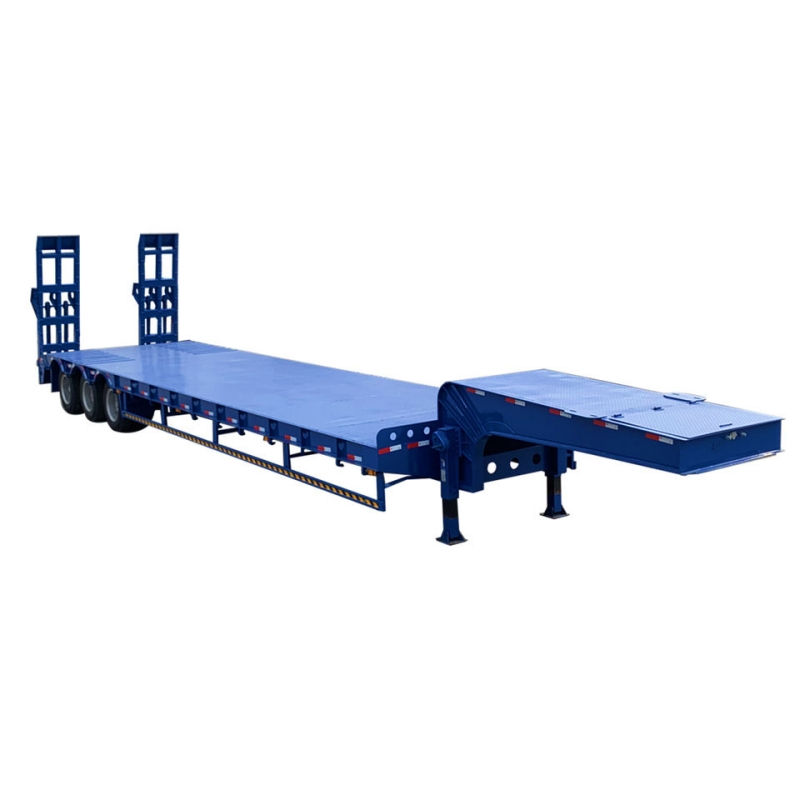 3 Axle Lowboy Trailer |  3 Axle Container Chassis Trailer |