In heavy-duty aggregate hauling, mining concession earthworks, and roadbed embankment construction, choosing between a Side Dump Semi-Trailer and a Rear End Dump Semi-Trailer directly dictates cycle times, unloading stability, and vehicle rollover risks. While end dump trailers offer higher volumetric capacities (30 m³ to 45 m³) for stockpiling loose materials in deep pits, side dump trailers eliminate tip-over hazards on soft, uncompacted dump berms, allow linear windrow dumping on the move without stopping, and handle dense boulders and wet clay without material bridging.
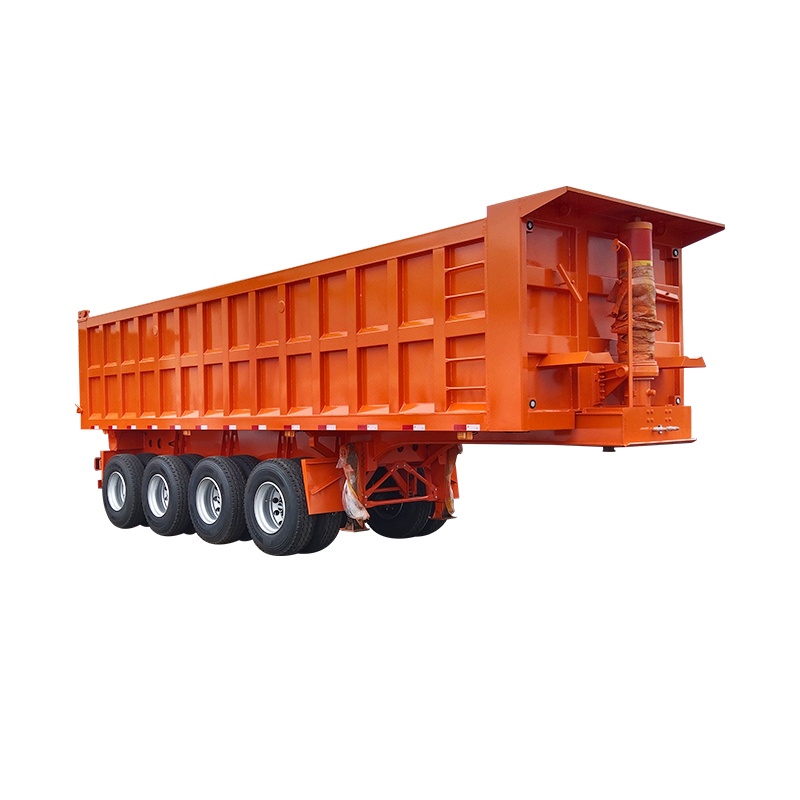
1. Operational Comparison: Side Dump vs End Dump Mechanics
The fundamental difference between these two tipper configurations lies in their center-of-gravity displacement and discharge kinematics:
| Operational Metric | Side Dump Semi-Trailer | Rear End Dump Semi-Trailer | Job Site Consideration |
|---|---|---|---|
| Rollover Risk During Tipping | Extremely Low (Near Zero) | High on soft ground, cross-winds, or sticky loads | Side dump wheels remain flat on solid ground; body pivots outward |
| Dump Pad Ground Requirements | Tolerates uneven, uncompacted slope surfaces | Requires level, highly compacted pad (<3° cross-slope) | Prevents expensive rollover downtime in wet mining concessions |
| Discharge Cycle Speed | Fast (15 to 25 seconds) | Moderate (40 to 65 seconds full stroke) | Shorter hydraulic cylinder stroke cycles faster |
| Discharge Pattern | Continuous windrow along the road shoulder while moving | Stationary cone pile directly behind rear bumper | Windrow dumping saves grader spreading passes on roadbeds |
| Large Boulder / Rip-Rap Handling | Excellent (Open side drops rocks directly to ground) | Risk of tailgate jam; boulder impact on tailgate hinge | Prevents tailgate damage when hauling blasted quarry rock |
| Volumetric Capacity Limits | Moderate: 20 m³ to 32 m³ (Dense heavy ore) | High: 30 m³ to 45 m³ (Coal, sand, light aggregate) | Select based on bulk material density (tons/m³) |
2. Hydraulic System & Tipping Mechanical Architecture
The hydraulic lifting engineering distinguishes the structural demands of these two tipper classes:
- Side Dump Multi-Cylinder Direct-Push Setup: Employs 4 to 6 heavy multi-stage telescopic cylinders mounted horizontally or at an angle across the chassis frame. When activated, the cylinders push one side of the tub upward to a 45°–50° dumping angle while the opposite side door drops down automatically via mechanical pivot linkages, creating a chute that deposits rock clear of the trailer tires.
- End Dump Front-End Telescopic Cylinder (HYVA): Employs a single giant multi-stage cylinder (e.g., HYVA FC 196 or FC 214) mounted at the front bulkhead. Raising a 10-meter body to a 48°–52° incline elevates the center of gravity more than 8 meters into the air, creating severe lateral overturning torque if the trailer sits on a 2-degree cross-slope or if sticky material clings to the top front corners.
- Tub Abrasion Liners (Hardox / NM450): In quarry and bauxite haulage, both trailer designs incorporate 6 mm to 8 mm NM450 wear plate floors to absorb the kinetic shock of 3-ton blasted rock chunks dropped from 5-meter excavator heights.

3. Material Compatibility Matrix: Matching Payload to Trailer Type
Selecting the correct trailer prevents catastrophic equipment loss and maximize payload efficiency:
| Hauled Commodity | Bulk Density (t/m³) | Recommended Tipper Type | Engineering Reason |
|---|---|---|---|
| Blasted Quarry Rock & Rip-Rap | 1.8 - 2.4 t/m³ | Side Dump Semi-Trailer | Boulders drop clear of side without battering tailgate hinges or jamming |
| Wet, Sticky Bauxite & Clay Ore | 1.5 - 1.8 t/m³ | U-Shape End Dump or Side Dump | Smooth radiused internal corners prevent sticky mud hang-up |
| Crushed Sand & Fine Gravel | 1.4 - 1.6 t/m³ | End Dump Semi-Trailer | Pours cleanly into asphalt plant hoppers and deep stockpiles |
| Raw Coal & Industrial Clinker | 0.8 - 1.0 t/m³ | High-Cube End Dump (38m³ - 45m³) | Maximizes volumetric payload for lightweight bulk solids |
Frequently Asked Questions (FAQ)
Q: Can a side dump trailer dump to either the left or right side?
A: Yes. Chengda manufactures both single-side dump trailers (fixed to driver or passenger side) and two-way (bilateral) side dump trailers. By manually pulling safety hinge pins on either the left or right side, the operator chooses which side the hydraulic cylinders will tip the tub, offering maximum versatility along narrow mountain road cuts.
Q: What causes end dump semi-trailers to tip over during discharge?
A: End dump rollovers are caused by three main triggers: (1) Uneven tire subsidence where one trailer side sinks into soft mud; (2) Material freezing or sticking in the upper front nose of the body, raising the center of gravity while the bottom unloads; and (3) Heavy crosswinds acting against the massive sail area of a fully elevated 10-meter dump body.
Q: Which tipper trailer delivers faster turnarounds on roadbed construction?
A: Side dump trailers are substantially faster. The driver pulls alongside the road embankment, activates the in-cab hydraulic lever, and dumps while creeping forward at 5 km/h, laying down a neat windrow without ever stopping, backing up, or waiting for a spotter.
Recommended Dump Trailers for Mining & Earthmoving
|
End Dump Semi Trailer |
4 Axle Heavy Dump Trailer |
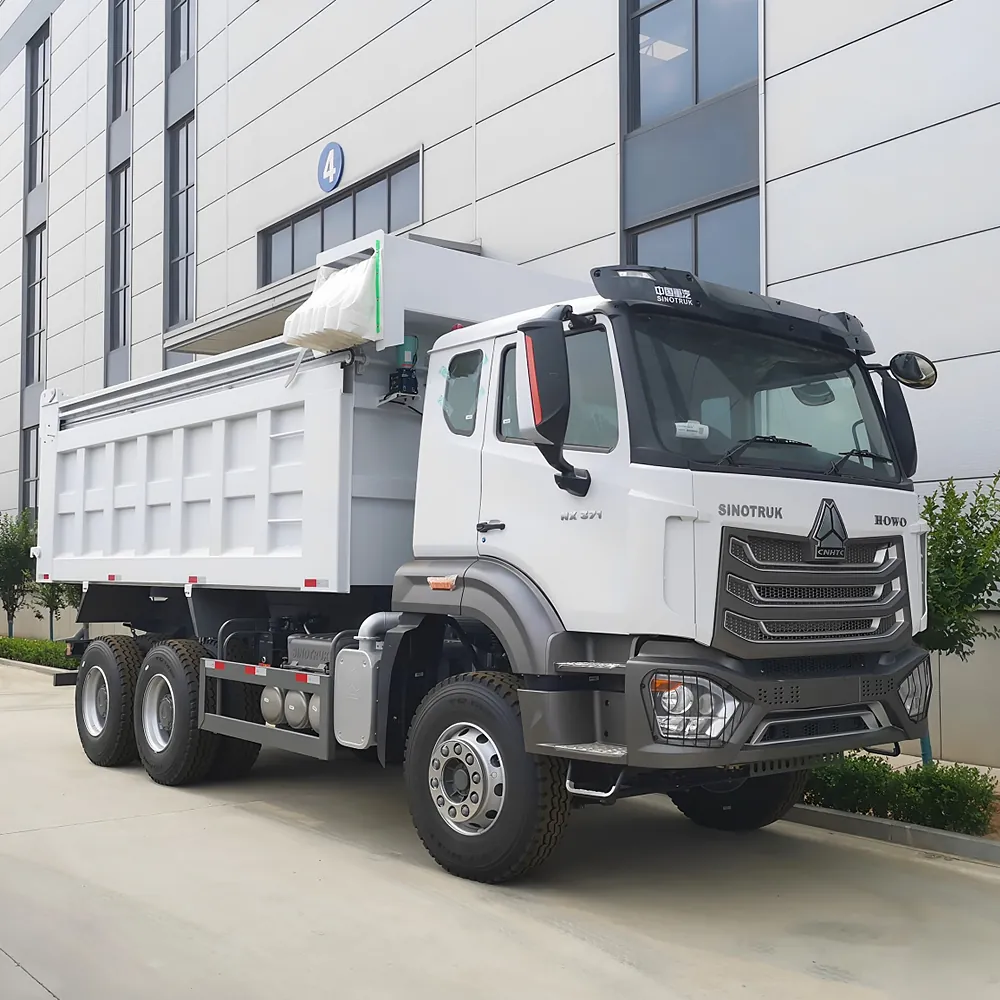
Howo NX 371hp 6x4 Dump Truck |