In articulated commercial freight logistics, the mechanical coupling junction between the tractor's fifth wheel saddle (JOST JSK 37C / 38C) and the semi-trailer's upper coupler rubbing plate (skid plate, 10mm to 14mm high-strength steel) carries the entire 15 to 25-ton vertical kingpin imposed load and hundreds of kilonewtons of dynamic draft pull. Operating under intense coupling shocks on rough African and Latin American corridors, diagnosing rubbing plate dishing warpage (flatness tolerance exceeding 2.0mm), calibrating fifth wheel lock-jaw free play to 0.5mm to 0.8mm, and eliminating false latching prevents catastrophic highway trailer detachment and rollover pileups.
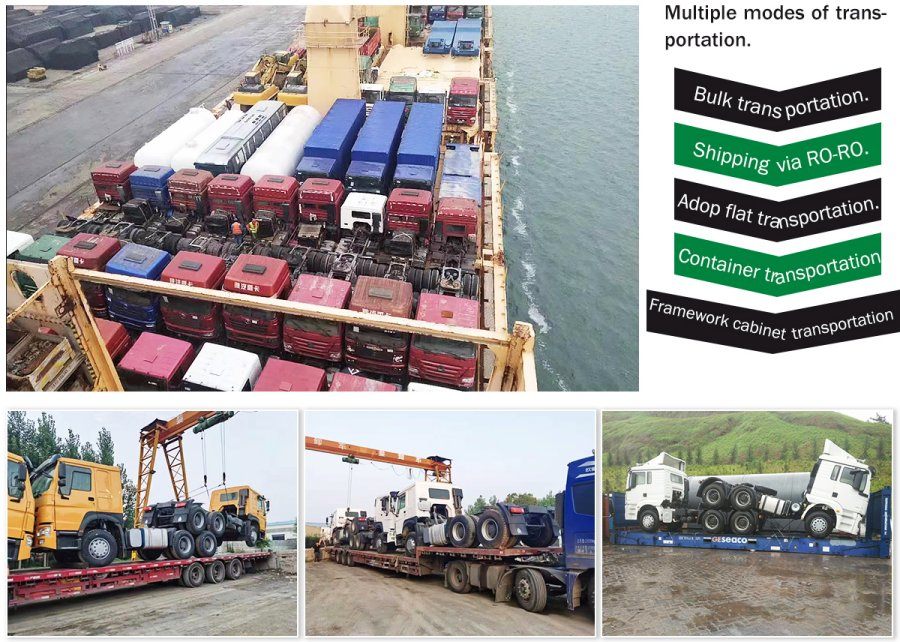
1. Technical Specification Comparison: 2-Inch (50#) vs. 3.5-Inch (90#) Kingpin & Plate Assemblies
Pin neck diameters, rubbing plate thicknesses, maximum allowable wear limits, and gross combination weight ratings:
| Engineering Parameter | Standard 2-Inch (50# / DIN 74080) Coupling Assembly | Heavy-Duty 3.5-Inch (90# / DIN 74083) Mining Coupling Assembly |
|---|---|---|
| Nominal Kingpin Throat Diameter | 50.8 mm (2.000 inches) nominal diameter | 89.0 mm (3.500 inches) heavy forged diameter |
| Maximum Allowable Wear Limit | Condemn when throat wears below 49.0 mm (-1.8mm wear) | Condemn when throat wears below 86.0 mm (-3.0mm wear) |
| Upper Coupler Rubbing Plate Thickness | approx. 8.0 mm – 10.0 mm high-yield steel plate | Heavy 12.0 mm – 14.0 mm Q345B/T700 wear-resistant steel plate |
| Rubbing Plate Surface Flatness Tolerance | Strictly ≤ 2.0 mm convex / 0.0 mm concave across 1,000mm | Strictly ≤ 2.0 mm maximum surface deviation across entire plate |
| Fifth Wheel Lock-Jaw Free Play Gap | Adjustable: strictly 0.5 mm to 0.8 mm (Cold setting) | Adjustable: strictly 0.5 mm to 1.0 mm (Heavy shock allowance) |
| Kingpin Retention Fastener Specification | 8 x M14 or M16 Grade 10.9 countersunk hex bolts (Torque: 190 N·m) | 12 x M16 or M20 Grade 10.9 high-tensile bolts (Torque: 280 N·m) |
| Maximum Imposed Vertical Fifth Wheel Load | approx. 20,000 kg (Standard highway container transport) | approx. 36,000 – 45,000 kg (Heavy mining dumpers & 100T lowboys) |
| Rated D-Value Dynamic Pull Strength | approx. 150 – 170 kN (SADC / UEMOA 56T GCW limit) | High D-value: approx. 240 – 260 kN (Abnormal multi-trailer road trains) |
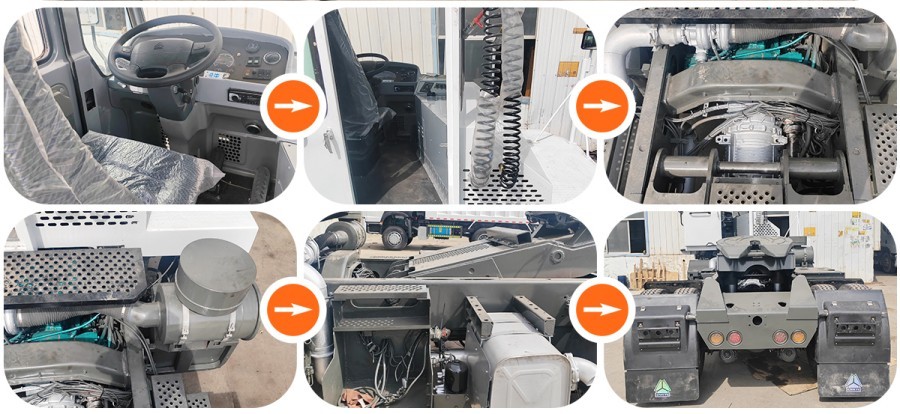
2. The Dished Plate Deception: How Warped Skid Plates Cause False Latching
One of the most insidious causes of fatal highway decoupling is a concave or "dished" rubbing plate:
- The Inward Bending Warpage: When a tractor backs aggressively into a dropped trailer at an incorrect fifth wheel height, the heavy fifth wheel ramps smash upward against the center of the trailer's 10mm skid plate. Over time, the plate dishes upward into a shallow concave bowl centered on the kingpin.
- The False Latching Trap: When the driver backs under the trailer, the high outer rim of the fifth wheel contacts the outer edges of the dished plate prematurely. The kingpin sits 15mm too high inside the lock jaw throat. The fifth wheel release handle pops in, leading the driver to believe the mechanism is locked.
- The Catastrophic Highway Pull-Away: In reality, the lock jaw is clamped only around the wide lower flange of the kingpin rather than its narrow neck. The moment the truck accelerates out of the yard or hits an uphill ramp, the kingpin slips out of the jaw. The 40-ton trailer drops onto the highway pavement, severing air lines and destroying tractor rear chassis rails.

3. Troubleshooting Coupling Rattle & Accidental Detachment
Excessive coupling chucking slack and release lever jamming indicate critical wear:
| Observed Coupling Symptom | Most Probable Root Cause | Immediate Corrective Action |
|---|---|---|
| Loud metallic banging / chucking slack when braking and accelerating | Fifth wheel lock jaw clearance exceeds 2.5mm; worn kingpin throat; worn lock bar wedge | Adjust fifth wheel wedge adjusting screw; measure kingpin wear with JOST limit gauge |
| Fifth wheel release handle will not pull out to uncouple trailer | Trailer weight hanging forward against lock jaw; broken release lever pull cable; dry ungreased jaw | Back tractor slightly to relieve forward pin pressure; lube lock jaw mechanism with aerosol grease |
| Kingpin bolts loose; gap visible between kingpin flange and skid plate | Reused stretch bolts; improper bolt torque; cracked internal mounting boss plate | Replace all 8 mounting bolts with Grade 10.9 fasteners; torque to 190 N·m with thread-locker |
| Deep circular grooves gouged into the tractor fifth wheel top plate | Operating with dry ungreased skid plate; embedded grit in plastic lube plates; burred kingpin | Scrape old grease; dress fifth wheel plate flat; apply heavy extreme-pressure chassis grease |
4. Step-by-Step Fifth Wheel Lock-Jaw Adjustment & Flatness Check
Calibrating fifth wheel locking clearance to prevent chucking without binding:
- Inspect Skid Plate Flatness with a Straightedge: Place a 1-meter precision steel straightedge across the bottom surface of the trailer rubbing plate in longitudinal and diagonal directions. Measure light gaps with feeler gauges. If the plate is concave (dished upward) by more than 2.0 mm, the plate must be reinforced or replaced!
- Measure Kingpin Diameter with a Caliper: Measure the narrow neck diameter of the 2-inch kingpin in four quadrants. If diameter measures under 49.0 mm (or under 86.0 mm for 3.5-inch pins), unbolt and discard the worn pin.
- Adjust Fifth Wheel Lock-Jaw Wedge (JOST JSK 37C):
- Couple the tractor to the trailer (or lock an authentic test dummy kingpin tool into the jaws).
- Loosen the locking nut on the wedge adjusting bolt located on the front side of the fifth wheel housing.
- Turn the adjusting bolt clockwise until the lock jaw clamps snugly against the kingpin throat, then back off the adjusting bolt by exactly 1.0 to 1.5 turns.
- Tighten the jam locknut to 160 N·m. This establishes the engineered 0.5mm to 0.8mm running clearance, allowing smooth 360-degree articulation without mechanical binding.
- Execute the "Tug Test" and Visual Latch Check: Before connecting air hoses, set the trailer spring parking brakes. Put the tractor into low gear and pull forward gently against the locked pin ("The Tug Test"). Then step down from the cab with a flashlight: physically verify that the release handle is fully retracted and that the locking wedge is 100% seated behind the closed jaw!
Frequently Asked Questions
Q: Can Teflon / poly low-lube plates replace grease on heavy mining trailers?
A: While plastic low-lube plates work well for clean highway dry freight, they shatter and crack under the violent vertical shock loads of 60-ton mining tippers on unpaved roads. Heavy mining operations must always use heavy 12mm steel rubbing plates packed with high-tack graphite-lithium grease.
Q: Can a worn kingpin be built up with arc welding and ground round?
A: Absolutely not! Kingpins are forged from high-tensile alloy steel (40Cr / 42CrMo) and induction-hardened. Arc welding introduces thermal stress concentrations and micro-cracking that cause the kingpin to snap clean off under highway braking shock, causing fatal trailer runaways.
Q: Where can fleet operators procure genuine JOST fifth wheels, kingpins, and rebuild kits?
A: Browse our complete coupling hardware catalog in the Heavy-Duty Spare Parts Category, inspect original Commercial Semi-Trailers, or consult our International FAQ Center.
Request Fifth Wheel Hardware & Kingpin Replacement Quotation
Recommended Semi-Trailers
 Sinotruk Howo Tractor Head |  Shacman F3000 Tractor Truck |  Howo TX 430hp 6x4 Tractor Truck |