In heavy commercial trucks operating under 40 to 60-ton highway logistics and rough mining cycles (Sinotruk Howo, Shacman, Foton), the steering gear pitman arm (drop arm), longitudinal drag link, and tie-rod ball joints form the primary mechanical linkage translating hydraulic steering gear rotation into front steer axle wheel deflection. Subjected to severe torsional shocks from potholed haul roads, detecting ball stud vertical play exceeding 1.5mm, torquing tapered spindle castle nuts to 350 N·m, and securing hardened split cotter pins prevents catastrophic steering disconnection and uncontrolled rollover accidents.
1. Technical Specification Comparison: Standard Commercial vs. Heavy Mining Steering Linkages
Ball stud diameters, pull-out retention forces, and taper pin geometries across heavy truck steering components:
| Engineering Parameter | Standard Highway Steering Linkage (4x2 / 6x4 Tractor) | Heavy Mining Reinforced Steering Linkage (8x4 Tipper / AWD) |
|---|---|---|
| Steering Drag Link Tube Profile | approx. 48 mm – 52 mm seamless alloy steel tube (5.5mm wall) | approx. 57 mm – 60 mm heavy-wall seamless carbon-manganese tube |
| Ball Stud Spherical Diameter | approx. 40 mm – 45 mm induction-hardened chrome steel ball | approx. 50 mm – 55 mm forged alloy steel ball (Heavy mining spec) |
| Ball Stud Pull-Out Retention Force | Minimum 85 kN – 100 kN static pull-out limit | Over 150 kN – 180 kN anti-separation tensile strength |
| Internal Bearing Socket Medium | Wear-resistant POM engineering polymer or phosphor bronze cup | Heat-treated case-hardened alloy steel socket with pre-load spring |
| Spindle Taper Pin Angle & Thread | Standard 1:8 or 1:10 taper ratio; M24 x 1.5 castle nut thread | 1:8 heavy taper pin; M27 x 1.5 or M30 x 1.5 heavy forged thread |
| Castle Nut Tightening Torque | approx. 280 – 320 N·m (With hardened cotter pin) | approx. 350 – 420 N·m (Mandatory calibrated torque wrench) |
| Maximum Allowable Axial Free Play | Strictly ≤ 1.5 mm dial indicator vertical deflection | Strictly ≤ 1.0 mm (Immediate replacement if play detected) |
| Tapered Pitman Arm Spline Design | Master-tooth blind spline with cross-clamping pinch bolt | Fine serrated involute spline + M20 Grade 10.9 cross-pinch bolt |
2. The Taper-Pin Interference Fit: How Steering Force Is Transferred
A ball joint does not transfer lateral turning forces through its threaded shank:
- The Precision Taper Seat Wedging Action: The tapered pin on the ball joint fits into a matching tapered bore inside the steering knuckle arm. When torqued to 350 N·m, the taper wedges tightly, creating an immovable 100% metal-to-metal friction lock.
- The Danger of Loose Taper Seats: If an operator drives with a slightly loose castle nut, the taper seat begins to fret and rock inside the knuckle arm hole. Within 1,000 kilometers, the precision round tapered hole wears into an oval, preventing new ball joints from ever seating securely and demanding replacement of the entire $400 front axle steering knuckle casting.
- The Role of the Slotted Castle Nut & Cotter Pin: A standard nylon locknut (Nyloc) can melt and back off under severe brake drum friction heat (exceeding 300°C). Commercial steering linkages mandate forged slotted castle nuts locked positively with heavy steel cotter pins through cross-drilled holes.
3. Troubleshooting Loose Steering & Wandering Front Axles
Steering wheel free-play exceeding 15 degrees and front wheel shimmy indicate critical linkage wear:
| Observed Steering Malfunction | Most Probable Root Cause | Immediate Corrective Action |
|---|---|---|
| Excessive steering wheel free-play (>20° of dead movement) | Worn ball joint socket internals in the drag link; worn pitman arm splines on steering box output shaft | Perform pry-bar deflection test; replace worn drag link assembly; torque pitman arm cross-bolt to 320 N·m |
| Violent steering wheel shimmy / death-wobble at 60 – 75 km/h | Collapsed pre-load spring inside drag link ball socket; ovalized steering knuckle taper bore | Inspect ball socket spring; replace drag link; inspect knuckle bore with machinist blue paste |
| Grease boot torn, spitting dried red rust paste around ball joint | Rubber dust boot punctured by road gravel; internal water ingress washed out grease, causing abrasive wear | Replace ball joint end immediately before ball pulls through socket; install new grease-filled boot |
| Steering wheel clicks or pops loudly during sharp low-speed turns | Pitman arm loose on tapered sector shaft; cross-pinch bolt stretched or undertorqued | Inspect steering box sector shaft splines for twisting; replace pinch bolt with Grade 10.9 fastener |
4. Step-by-Step Ball Joint Inspection & Castle Nut Torquing Protocol
Verifying steering linkage integrity during routine fleet preventative maintenance:
- The Lever Pry-Bar Deflection Test: With the truck parked on flat concrete and engine off, have an assistant rock the steering wheel back and forth. Position a heavy pry-bar between the steering drag link and the knuckle arm. Pry vertically: any visible up-and-down movement exceeding 1.5 mm mandates immediate link replacement!
- Clean and Inspect the Taper Seat: When replacing a ball joint, wipe the internal tapered bore clean of all oil and grit. Never apply grease to the taper shank—the taper must seat completely dry!
- Torque the Castle Nut to Specification: Tighten the M24 or M27 castle nut to 350 N·m using a calibrated torque wrench.
- Align the Slot with the Split Cotter Pin: If the slot in the castle nut does not align with the hole in the pin, always tighten further to line up the nearest slot—never back off the nut to insert the pin! Insert a new heavy steel cotter pin and spread the legs firmly around the nut body.
Frequently Asked Questions
Q: What happens if a steering drag link ball joint separates while driving on the highway?
A: Ball joint separation results in total and instantaneous loss of steering control. The front road wheels immediately castor randomly outward into full lock, causing the truck to violently veer off the road or roll over within seconds.
Q: Can worn steering ball joints be rebuilt by welding or pressing in field workshops?
A: Absolutely not! Commercial steering drag link ball joints are sealed, induction-hardened safety assemblies. Welding or hammering ball sockets alters the metallurgical heat-treatment, causing sudden catastrophic brittle fracture.
Q: Where can fleet operators source genuine Sinotruk and Shacman steering drag links and ball joints?
A: Browse our complete steering component inventory in the Heavy-Duty Spare Parts Category, inspect original Commercial Heavy Trucks, or consult our International FAQ Center.
Request Steering Linkage Parts & Drag Link Catalog
Recommended Semi-Trailers
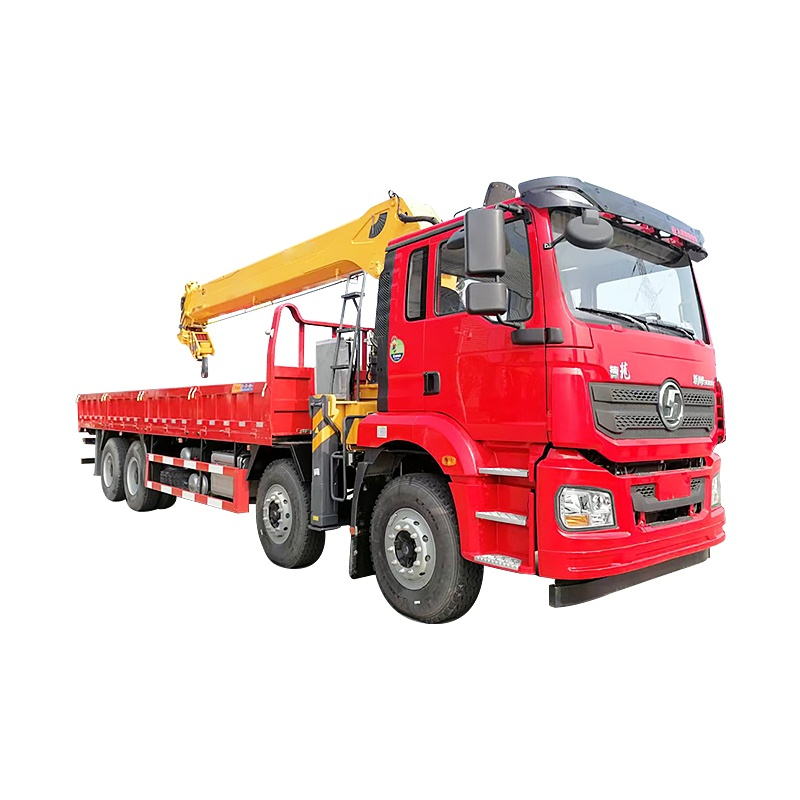 Shacman Delong Truck-Mounted Crane |  Caterpillar 330C Excavator |  3 Axle Lowbed Semi Trailer |