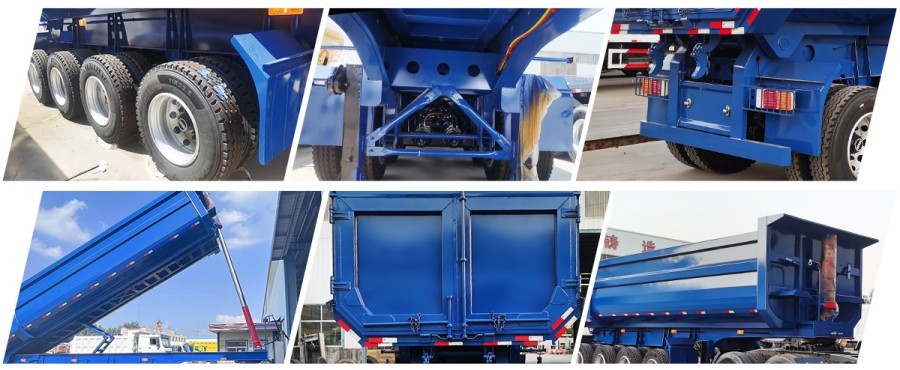
In high-capacity river port transshipment terminals along the Rio Nuñez and Rio Fatala in Guinea (Dapilon, Katougouma, Kokaya ports), moving millions of tons of red bauxite from road trucks onto floating ocean-going river barges requires seamless geometric and dynamic matching between heavy 50-ton mining dump semi-trailers and stationary receiving belt conveyor hoppers. Properly designing tipping ramp approaches, hopper entry apertures (minimum 3.4m to 3.8m width), and rubber impact bed baffles prevents catastrophic conveyor belt punctures and cuts truck unloading turnaround times to under 40 seconds.
1. Technical Specification Comparison: Truck-to-Hopper Receiving Infrastructure
Receiving hopper capacities, liner plates, and dump trailer discharge kinematics across river terminal designs:
| Engineering Parameter | Standard Truck Dump Receiving Hopper | High-Capacity Mining Barge Feeder Hopper (Dapilon Terminal Standard) |
|---|---|---|
| Hopper Surge Capacity | approx. 40 – 60 m³ buffer capacity | approx. 80 – 120 m³ heavy surge buffer (Accommodates 2 trucks dumping simultaneously) |
| Hopper Top Throat Width | 3,200 mm – 3,500 mm aperture | 3,800 mm – 4,500 mm flared funnel (Prevents ore spillage around truck tailgates) |
| Maximum Trailer Tipping Angle | 42° – 45° elevation angle | 45° – 48° steep tipping angle (Ensures instant cohesive bauxite flow) |
| Hopper Impact Liner Plates | 12mm – 16mm Manganese Steel (Mn13) | 20mm – 25mm Hardox 500 / NM500 Wear Plates with ceramic-rubber composite backing |
| Belt Feeder Conveyor Width | 1,200 mm belt (approx. 1,500 T/h capacity) | 1,600 mm – 1,800 mm heavy steel-cord belt (3,000 – 4,500 T/h continuous loading) |
| Truck Discharge Cycle Speed | approx. 60 – 90 seconds per truck | approx. 35 – 45 seconds (Rapid automated HYVA FC 214 hoist lift) |
| Tire Stop Bumper Architecture | Bolted wooden ties or concrete curb | Heavy embedded steel I-beam tire stops with shock-absorbing polyurethane buffers |
| Terminal Loading Mission | Trucks feed stationary stockpiles | Continuous 24/7 direct-dumping onto river barges (up to 10,000 DWT barges) |

2. Anti-Spillage Hopper Throat Alignment: Tailgate Chute Geometry
When an 8x4 tipper or 40-foot dump trailer elevates to 45 degrees, the discharge point shifts backward:
- The Tailgate Projection Overhang: As the hydraulic hoist raises, the bottom rear edge of the trailer box pivots backward by 600mm to 900mm. The hopper entry opening must provide sufficient backward clearance so the swinging tailgate clears the hopper rim without striking structural steel beams.
- Extended Rear Apron Chute: Chengda bauxite dump bodies incorporate an extended 400mm tapered tail chute. This funnels cascading rock and wet laterite cleanly into the center of the hopper throat, preventing costly spillage over trailer tires and wheel hubs.
- Automated Pneumatic Tailgate Latching: The tailgate unlocks automatically via dual air cylinders triggered from the cab. A top-hinged double-pivot geometry allows the tailgate to swing wide open to an 85-degree angle, allowing 50 tons of cohesive ore to dump as an unimpeded tidal wave.
3. Mitigating 50-Ton Dynamic Shock Loads on Conveyor Belts
Dumping 50 tons of rock from 3 meters height generates enough impact energy to slice through industrial conveyor belts:
- Multi-Angle Baffle Deflector Grids: Inside the hopper, heavy angled deflector plates (grizzly bars spaced at 300mm) absorb initial rock impacts, creating a self-forming "rock-on-rock" cushion bed that slows falling bauxite before it touches the belt.
- Heavy Duty Impact Beds: Beneath the hopper discharge skirt, the conveyor belt rests on high-elasticity polyurethane impact bars supported by steel channel cradles, absorbing shock without tearing the rubber cover or bending idler rollers.
4. Terminal Traffic Circulation: Dual-Station Dumping Circuits
To load a 10,000-ton river barge within 4 hours, terminal traffic engineering must eliminate queuing:
- Dual-Sided Drive-Over Ramps: Two dump trailers reverse into adjacent side-by-side hopper bays simultaneously, discharging 100 tons into the conveyor system in under 60 seconds while outgoing empty trucks exit via a separate loop road.
- Pneumatic Wheel-Stop Interlocks: Heavy steel wheel stops ensure trailers halt at the exact engineered distance from the hopper lip, preventing drivers from accidentally backing into the pit.
Frequently Asked Questions
Q: What causes wet bauxite to bridge and clog inside receiving hoppers?
A: High-moisture bauxite (moisture content >12%) packs tightly when dropped into hoppers with slope angles below 55 degrees. Installing ultra-high molecular weight polyethylene (UHMW-PE) low-friction liners on hopper interior walls eliminates arching and bridging.
Q: What is the optimal trailer body shape for high-speed barge transshipment?
A: The curved U-shape (half-pipe) body is universally preferred over square boxes. The lack of 90-degree corners prevents sticky bauxite retention, ensuring clean discharge and preventing trailer rollovers on river ramps.
Q: Where can mining port operators procure heavy-duty bauxite dump semi-trailers?
A: Explore our full mining range in the Semi-Trailers Category, view original Mining End Dump Trailers, or consult our International FAQ Center.
Request Bauxite Port Logistics Equipment Drawings & Quotation
Recommended Semi-Trailers
 End Dump Semi Trailer |  4 Axle Dump Trailer |  3 Axle Flatbed Trailer |