In the hydrometallurgical copper-cobalt leaching belt of the Democratic Republic of the Congo (anchored by Kolwezi, Fungurume, and Likasi in Lualaba and Haut-Katanga provinces), massive industrial volumes of 98% concentrated sulfuric acid (H2SO4) are transported daily to solvent extraction and electrowinning (SX-EW) processing plants. Engineering specialized 30,000L to 35,000L corrosive chemical tanker semi-trailers requires combining high-density carbon steel (Q235B) or 316L stainless steel vessels, rotational-molded linear low-density polyethylene (LLDPE) acid linings, and pressurized top-discharge dip pipes that eliminate bottom hull valve leak points entirely.

1. Technical Specification Comparison: 98% Concentrated Acid vs. Dilute Acid/Leach Liquor Tankers
Tank shell metallurgy, chemical liner thickness, and discharge architectures across chemical acid tankers:
| Engineering Parameter | 98% Concentrated Sulfuric Acid Tanker (Specific Gravity 1.84) | Dilute Acid / Pregnant Leach Solution (PLS) Tanker |
|---|---|---|
| Liquid Chemical Cargo | Concentrated Sulfuric Acid (93% – 98% H2SO4 concentration) | Dilute acid (10% – 30%), copper sulfate, hydrochloric acid, ferric chloride |
| Primary Shell Metallurgy | Thick heavy carbon steel (8mm – 10mm Q235B with passivated layer) | 316L Stainless Steel or carbon steel lined with rotational LLDPE |
| Internal Anti-Corrosion Lining | Unlined passivated carbon steel (Acid forms protective ferrous sulfate film) | 16mm Rotational-molded LLDPE / PTFE fluoropolymer lining |
| Specific Gravity (Density) | Extreme density: 1.84 tons per cubic meter (Double the weight of water) | Moderate density: approx. 1.15 – 1.30 tons per cubic meter |
| Total Tank Capacity Volume | Compact volume: 18,000L – 22,000L (To avoid gross axle overload) | Standard volume: 30,000L – 35,000L (Multi-compartment) |
| Discharge Architecture | Strictly top-only siphon discharge (Zero bottom penetrations permitted) | Top siphon discharge or PTFE-lined bottom foot valves |
| Unloading Air Pressure Source | External air compressor pressurizing tank headspace to 0.15 MPa | Pneumatic top-discharge or chemical-resistant magnetic pump |
| Chassis Running Gear Setup | 3 x 16-Ton FUWA Heavy Mining Axles + 12-leaf mechanical suspension | 3 x 13-Ton or 16-Ton FUWA Axles with ABS brake modulators |
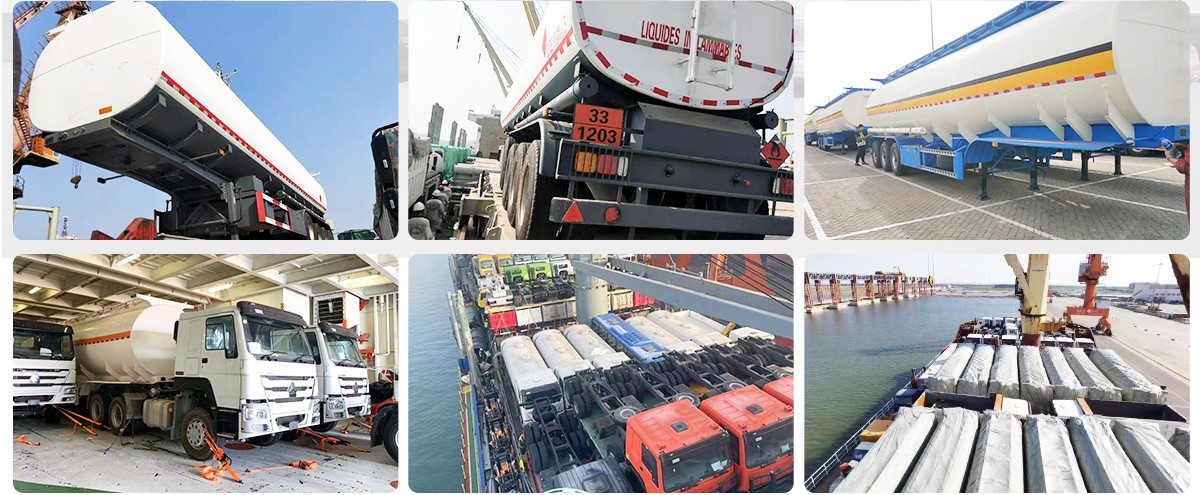
2. The Passivation Science of 98% Sulfuric Acid in Carbon Steel
A surprising chemical principle governs concentrated sulfuric acid transport:
- The Ferrous Sulfate Passive Barrier: Sulfuric acid at concentrations above 93% is a powerful oxidizing agent with very few free hydronium ions. It reacts with raw carbon steel to form a microscopic, insoluble layer of ferrous sulfate (FeSO4). This passive chemical crust acts as an impenetrable shield, halting further internal corrosion.
- The Deadly Danger of Moisture Intrusion: If rainwater or atmospheric moisture enters an empty acid tanker, the acid dilutes below 80%. Dilute sulfuric acid aggressively eats through 10mm carbon steel plates in under 48 hours! All top manhole seals must utilize virgin PTFE (Teflon) gaskets torqued to 120 N·m with desiccant breather traps to prevent moisture ingress.

3. Top-Discharge Siphon Architecture: Zero Bottom Hull Valves
International chemical transport safety codes prohibit bottom discharge outlets on highly concentrated corrosive tankers:
- Eliminating Roadway Shearing Hazards: Standard fuel tankers have bottom discharge valves. If an acid tanker rolls over on an unpaved Katanga road, a sheared bottom valve would dump 30,000 liters of boiling acid, dissolving the road and causing fatal chemical burns.
- Top Siphon Dip-Pipe Operation: The tanker shell has zero holes beneath the liquid level line. A heavy 316L stainless steel siphon dip-pipe extends from the top dome down to within 15mm of the bottom sump.
- Pneumatic Pressure Discharge: To unload, the operator connects an air line to a top fitting, pressurizing the vapor headspace to 0.15 MPa (1.5 bar). The air pressure forces the concentrated acid upward through the dip-pipe and out through a flanged PTFE-lined discharge valve into the mining storage vat.
4. Managing the 1.84 Specific Gravity Overload Risk
Because concentrated acid is nearly twice as heavy as water, volume must be drastically restricted:
- Compact 20,000L Vessel Sizing: A 20,000-liter payload of concentrated acid weighs approximately 36.8 metric tons! Mounting this dense payload onto an oversized 40,000-liter shell would result in gross axle weights exceeding 70 tons, snapping trailer axles and crushing bridge culverts along the RN39 between Kolwezi and Likasi.
- Heavy 10mm Steel Vessel Construction: The cylindrical shell is rolled from 8mm steel plate with 10mm dished head caps, reinforced by full-circumference external roll-over protection rings (stiffening rings) that prevent tank flattening in rollover accidents.
Frequently Asked Questions
Q: Why is 316L stainless steel preferred over 304 stainless steel for chemical tankers?
A: 316L stainless steel contains 2% to 3% molybdenum, which provides superior resistance to pitting and crevice corrosion caused by chloride ions and hot acidic solutions compared to basic 304 steel.
Q: What personal protective equipment (PPE) is required during acid tanker discharge?
A: Operators must wear full-body acid-resistant PVC suits, heavy neoprene chemical gloves, full-face polycarbonate shields with respiratory vapor protection, and safety boots.
Q: Where can mining operations in the DRC Copperbelt procure certified chemical acid tankers?
A: Explore our full liquid transport inventory in the Semi-Trailers Category, view specialized Corrosive Liquid Tanker Trailers, or consult our International FAQ Center.
Request Acid Tanker Drawings & DRC Delivery Quotation
Recommended Semi-Trailers
 3 Axle Lowbed Semi Trailer |  4 Axle Dump Trailer |  3 Axle Flatbed Trailer |