In pneumatic dry bulk semi-trailers, the aeration fluidized bed canvas (also known as the air slide fabric or permeable fluidization belt) lines the sloping bottom of the tank hopper, diffusing 0.2 MPa compressed air into micro-bubbles that transform tightly packed cement powder into a fluid-like state. Diagnosing canvas blinding, repairing torn aeration seams, and adhering to strict replacement protocols ensures complete pneumatic discharge while holding residual cement retention strictly below 0.2% (under 50 kg in a 40-ton load).

1. Technical Specification Profile: Fluidized Bed Canvas Materials
Permeability ratings, tensile strengths, and temperature tolerances across dry bulk fluidization fabrics:
| Engineering Metric | Multi-Ply Spun Polyester Air Slide Fabric | High-Temperature Nomex / Aramid Fluidization Belt |
|---|---|---|
| Raw Material Composition | 100% High-Tenacity Multi-Filament Spun Polyester (PET) | Aramid / Nomex Heat-Resistant Synthetic Fiber Blend |
| Standard Fabric Thickness | 4.0 mm, 5.0 mm, or 6.0 mm (Multi-ply interwoven weave) | 4.5 mm or 5.0 mm heavy density weave |
| Air Permeability Rating | 400 – 600 m³ / m² / hour @ 200 Pa differential pressure | 350 – 500 m³ / m² / hour @ 200 Pa differential pressure |
| Continuous Operating Temperature | Up to 120°C – 140°C (Standard cement powder loading) | Up to 180°C – 220°C (Fresh hot-clinker cement & fly ash) |
| Tensile Breaking Strength | Warp: ≥ 4,500 N/cm ; Weft: ≥ 3,000 N/cm | Warp: ≥ 5,500 N/cm ; Weft: ≥ 3,800 N/cm |
| Abrasion & Moisture Resistance | Excellent surface abrasion resistance; low moisture absorption | Superior resistance to acid degradation and thermal scorch |
| Expected Operational Lifespan | approx. 18 to 24 Months (approx. 40,000 tons discharged) | approx. 24 to 36 Months intensive thermal duty |
2. Diagnosing Fluidization Canvas Failure: Symptoms & Root Causes
Field operators can detect canvas deterioration through specific discharge anomalies:
- Excessive Residual Powder Retention (>300 kg per load): Caused by localized canvas "blinding" (pores clogged with hardened cement crusts) or low air compressor pressure. Fluidizing air bypasses the dead zone, leaving unfluidized piles of dry cement along the hopper slopes.
- Rapid Pressure Drop Without Cement Flow (Torn Canvas): A puncture or torn perimeter clamp allows compressed air to blow directly into the upper tank cavity without passing through the powder bed, resulting in zero fluidization.
- Uneven Discharge Pressure Oscillations: Indicates oil contamination from a worn compressor pump that has saturated the fabric pores, preventing uniform micro-bubble distribution.

3. Step-by-Step Fluidized Bed Canvas Replacement Protocol
Replacing canvas inside a confined cement tank requires strict safety and mechanical procedures:
- Confined Space Safety Entry: Ventilate the tank completely through open top manholes. Disconnect tractor airlines, lock out auxiliary engine starting switches, and verify that tank air pressure reads strictly zero. Workers must wear P100 particulate dust respirators and safety harnesses.
- Removing Retaining Batten Bars: Unbolt the stainless steel longitudinal clamping batten strips securing the canvas edges to the internal hopper angle-irons. Remove all rusted clamping bolts.
- Scraping and Preparing the Perforated Air Chamber: Remove the old stiffened canvas. Use a pneumatic wire brush and scraper to clean hardened cement scale from the underlying perforated steel plenum plate. Blow out the lower air plenum box with compressed air to clear trapped gravel.
- Tensioning & Clamping New Canvas: Lay the new polyester air slide fabric along the hopper floor. Apply uniform longitudinal tension using ratchet straps to eliminate surface ripples or slack. Reinstall the clamping battens with fresh zinc-plated lock nuts, torquing evenly to create an airtight perimeter seal.
- Pneumatic Soap-Bubble Pressure Test: Seal all tank manholes, run the air compressor to 0.05 MPa, and apply soapy water along the clamping batten seams. Continuous fine, uniform froth across the entire fabric surface confirms flawless installation.
4. Operational Best Practices to Minimize Residual Cement Retention
- Daily Compressed Air Drainage: Never start unloading with condensed water in the compressor air receiver. Moisture transforms airborne cement into permanent rock-hard crusts that blind aeration pores.
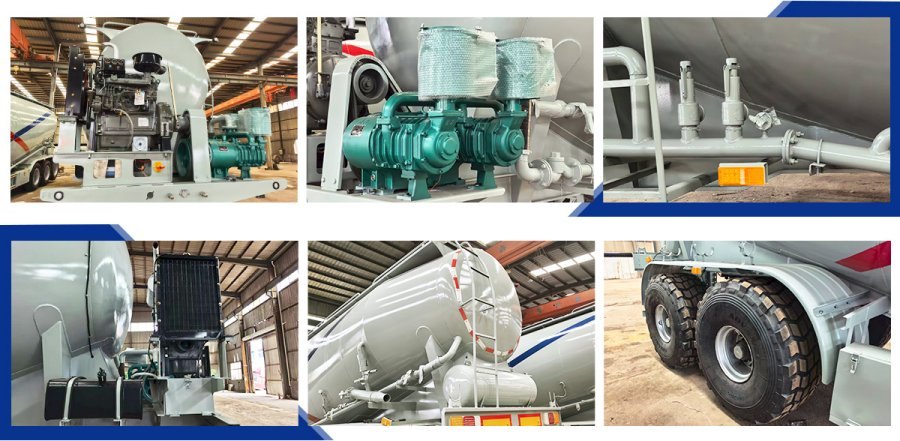
- Inspect Auxiliary Engine RPM: Ensure the 4102 diesel engine runs at rated governor speed (2,000 rpm) so the 12m³ compressor delivers full displacement volume.
Frequently Asked Questions
Q: What is an acceptable residual rate for a 40-ton cement semi-trailer?
A: Premium Chengda cement bulkers achieve a residual powder rate below 0.2% (under 50 kg of powder remaining inside the 40-ton tank after full unloading).
Q: Can the fluidized bed canvas be washed with water?
A: Absolutely not! Washing air slide canvas with water turns microscopic cement particles inside the fabric weave into concrete, permanently destroying air permeability.
Q: Where can fleet operators order replacement air slide fabrics and clamping battens?
A: Browse our replacement parts inventory in the Heavy-Duty Spare Parts Category, inspect original Bulk Cement Semi-Trailers, or consult our International FAQ Center.
Request Fluidized Bed Canvas Roll Pricing & Tanker Parts
Recommended Semi-Trailers
 3 Axle Bulk Cement Trailer |  2 Axle Cement Trailer |  Sinotruk Howo Tractor Head |