Importing commercial heavy trucks and semi-trailers from China represents the most cost-effective fleet expansion strategy for mining contractors, logistics operators, and construction enterprises across Africa. However, navigating maritime shipping logistics, pre-shipment compliance inspections, customs duties, and currency settlement requires clear procedural planning to eliminate costly port demurrage and delivery delays.
1. Maritime Shipping Modes: RORO vs. Container vs. Bulk Cargo
Ocean freight represents 15% to 25% of total landed equipment costs. Choosing the correct vessel mode protects vehicle condition while controlling transport budgets:
| Shipping Method | Best Suited Equipment | Transit Safety & Cargo Protection | Cost & Freight Structure |
|---|---|---|---|
| RORO (Roll-on / Roll-off) | Complete dump trucks, tractor heads, water tankers | Highest safety; vehicles driven into enclosed vessel hull, zero salt spray exposure | Calculated per vehicle volume (CBM); premium rate but lowest damage risk |
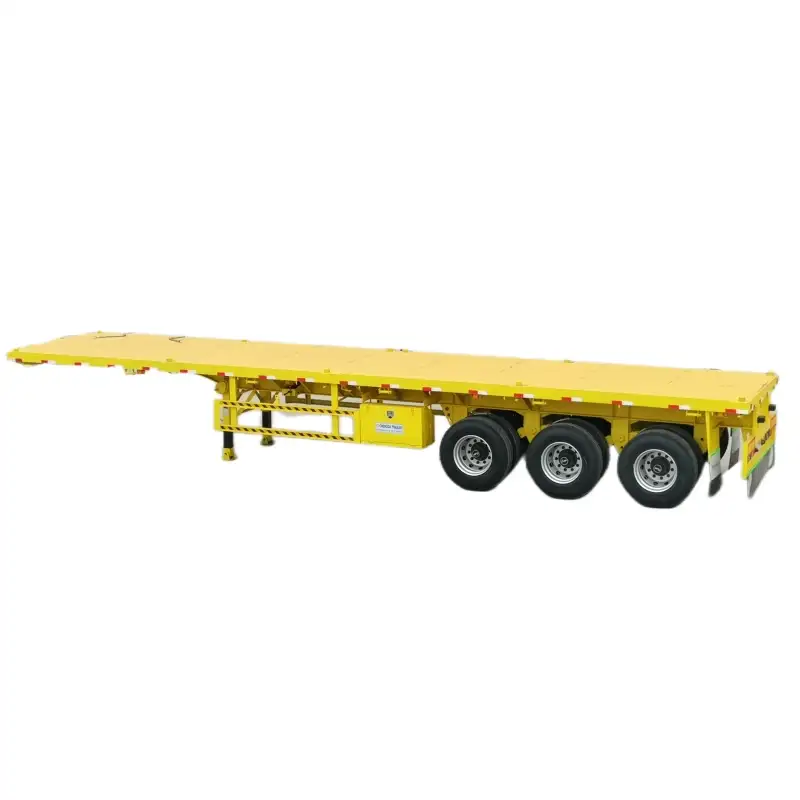
| Break-Bulk Vessel | Semi-trailers, stacked chassis, oversized lowboys | Stacked on deck or in cargo hold; requires heavy wax spray anti-corrosion coating | Most economical for multiple semi-trailers (up to 3 trailers stacked together) |
| 40ft High Cube Container | Flatbed trailers (with detachable tail), truck spare parts | Fully enclosed steel container; maximum theft and weather security | Flat ocean container rate; requires basic bolt assembly upon arrival |
| Flat Rack Container | Heavy excavators, large wheel loaders, wide machinery | Lashed to open-sided container bed with certified heavy chains | Specialized heavy-lift rate for out-of-gauge (OOG) machinery |
2. Destination Country Compliance & Pre-Shipment Inspection
African customs authorities enforce mandatory third-party quality and roadworthiness certifications prior to port loading in China. Chengda coordinates directly with international inspection agencies to issue valid clearance documents:
Nigeria (SONCAP / Form M): Mandatory Standards Organisation of Nigeria Conformity Assessment Programme. Includes Product Certificate (PC) and SONCAP Certificate (SC) for customs release at Apapa or Tin Can Island.
Kenya & East Africa (PVOC / KEBS): Pre-Export Verification of Conformity inspection conducted by SGS or Bureau Veritas, confirming right-hand drive (RHD) compliance and vehicle age limits.
Tanzania (TBS / PVoC): Mandatory quality verification for commercial transport equipment entering Dar es Salaam port for local transit or transit to Zambia, DRC, and Rwanda.
Ghana (GSA / FDA): Ghana Standards Authority pre-shipment inspection for commercial axle weight certifications at Tema Port.
Zimbabwe (CBCA): Consignment-Based Conformity Assessment managed by Bureau Veritas before departure from China.
3. Step-by-Step 5-Stage Import Workflow from Chengda
Technical Configuration & Proforma Invoice (PI): Finalize vehicle payload, axle tonnages, engine horsepower, and cargo box thickness. Receive formal PI detailing CIF/FOB delivery terms and banking coordinates.
Order Deposit & Production Dispatch: Standard 30% T/T deposit activates production or preparation of stock units (15-25 working days standard lead time).
Pre-Shipment Multi-Angle Verification: Client receives high-resolution photos, dynamic road test recordings, VIN stamp verification, and third-party inspection certificates.
Port Shipping & Anti-Rust Protection: Vehicles receive full-body marine protective wax spray. Ocean transit ranges from 30 to 40 days to major African deepwater ports.
Documentation Dispatch & Customs Clearance: Original Bill of Lading (B/L), Commercial Invoice, Packing List, and Certificate of Origin dispatched via DHL/FedEx for smooth port clearance and drive-away.
4. Frequently Asked Questions
Q: Can multiple semi-trailers be stacked to save ocean freight?
A: Yes. For 3-axle flatbed and cargo trailers, Chengda routinely stacks 2 or 3 units into a compact package shipped via bulk carrier, saving up to 40% in maritime freight charges per unit.
Q: What payment terms protect international buyers during equipment import?
A: We accept 30% T/T deposit with the remaining 70% balance payable upon presentation of the formal Bill of Lading (B/L) copy. Irrevocable Letters of Credit (L/C at sight) confirmed by international prime banks are also accepted for large fleet contracts.
Q: Where can fleet buyers find technical vehicle specifications before importing?
A: You can review our detailed Commercial Trucks Catalog, explore heavy-duty Semi-Trailers, or read our official International Procurement FAQ.