⚡ Quick Buyer's Takeaway & Technical Summary
|
In highway earthmoving, railway subgrade compaction, and asphalt pavement resurfacing across Africa, Latin America, and Southeast Asia, selecting the correct vibratory road roller (compactor) configuration (12-ton to 22-ton classes) dictates civil soil density test pass rates and pavement smoothness. Comparing heavy single-drum soil compactors (20T-22T class dual amplitude models) and tandem double-drum asphalt rollers powered by Shangchai or Cummins diesel engines ensures contractors meet strict California Bearing Ratio (CBR) and Proctor soil compaction density standards.

1. Technical Specification Comparison: Single-Drum Soil Compactor vs. Tandem Asphalt Roller
Compaction mechanisms, static linear loads, vibration frequencies, and pavement suitability:
| Engineering Parameter | Single-Drum Vibratory Soil Compactor (20-Ton Dual Amplitude Class) | Tandem Double-Drum Vibratory Roller (12-Ton High-Frequency Class) |
|---|---|---|
| Operating Machine Weight | approx. 20,000 – 22,000 kg (With front drum ballast) | approx. 12,000 – 14,000 kg (Split evenly across twin drums) |
| Drum Configuration | Single smooth or padfoot front steel drum + rear rubber drive tires | Twin smooth steel drums (Front and rear driven and vibrating) |
| Static Linear Load | approx. 480 – 520 N/cm (Heavy deep-penetration crushing) | approx. 300 – 340 N/cm (Gentle surface smoothing) |
| Vibration Frequency (Dual Frequency) | 28 Hz (Low frequency) / 33 Hz (High frequency) | 45 Hz – 55 Hz (High frequency for hot-mix asphalt compaction) |
| Nominal Amplitude (Dual Amplitude) | 1.86 mm (High amplitude) / 0.93 mm (Low amplitude) | 0.75 mm (High amplitude) / 0.35 mm (Low amplitude) |
| Centrifugal Excitation Force | approx. 370 kN / 240 kN (Massive ground impact energy) | approx. 140 kN / 85 kN per steel drum |
| Drum Shell Thickness | 28 mm – 32 mm heavy-duty alloy steel drum shell | 18 mm – 22 mm precision machined alloy steel shell |
| Primary Construction Mission | Base-course gravel, clay subgrades, dam rockfills, sand stabilization | Hot-mix asphalt surface finishing, thin wearing courses, bridge decks |

2. Compaction Depth Physics: Why Soil Compactors Require Low Frequency and High Amplitude
Different materials require fundamentally different vibration dynamics to eliminate air voids:
- Deep Subgrade Cohesionless Soils: Rockfill, gravel ballast, and laterite clay require deep kinetic shock waves. Operating at low frequency (28 Hz) combined with massive high amplitude (1.86mm) sends 370 kN of centrifugal energy deep into the ground, achieving 98% Proctor compaction down to depths of 800mm to 1,000mm in just 4 to 6 passes.
- Hot-Mix Asphalt Paving (High Frequency, Low Amplitude): Compacting hot asphalt with a heavy soil roller would crush aggregate rock particles and create transverse surface cracking. Tandem rollers utilize high frequency (50 Hz) and tiny amplitudes (0.4mm) to knead bitumen without crushing stone matrixes.
- Padfoot (Sheepfoot) Shell Conversion: For cohesive tropical clay and wet river soils, Chengda supplies detachable 3-piece bolted padfoot shell kits that convert smooth drum rollers into high-pressure kneading compactors.

3. Hydraulic Vibration Exciter & Drive Axle Engineering
The vibratory drum contains high-speed eccentric weights generating intense cyclical shock:
- Closed-Loop Hydraulic Vibration Circuit: Heavy compactors utilize dedicated Sauer-Danfoss or Rexroth variable displacement piston pumps driving internal drum piston motors. Activating the vibration toggle from the operator console spins eccentric shafts up to 2,000 rpm within 3 seconds.
- Heavy-Duty Heavy-Plate Drive Axle: The rear drive axle incorporates a no-spin differential with high-flotation diamond-tread tires, providing 35% gradeability to climb steep highway embankment slopes without wheel slippage.
4. Daily Compactor Maintenance: Vibration Pod Oil & Rubber Dampers
Neglecting lubrication inside the drum pod causes bearing seizure within 500 operating hours:
- Vibration Pod Oil Inspection: Rotate the drum until the fill plug sits at horizontal dead-center. The oil level must align exactly with the bottom edge of the hole. Use only high-temperature extreme pressure gear oil (ISO VG 150 / 220), changing oil every 500 hours to flush metal running-in shavings.
- Inspect Heavy Rubber Isolator Mounts: Heavy rubber buffer mounts isolate the vibrating steel drum from the main roller chassis frame. Inspect the mounts weekly for shear tearing or oil degradation; replace any torn isolators immediately to prevent severe chassis frame cracking.
Frequently Asked Questions
Q: What causes a vibratory roller to create wavy washboard ripples on asphalt?
A: Surface washboard waves occur when traveling too fast while vibrating (speed exceeding 5 km/h), vibrating while stationary, or operating with broken rubber isolator buffer mounts.
Q: What size soil compactor is recommended for African road construction contracts?
A: The 20-ton to 22-ton single drum mechanical vibratory roller (20T-22T class dual amplitude models) is the universal standard, delivering the weight and impact needed to compact hard African red laterite subgrades.
Q: Where can civil contractors procure reliable road rollers and compactors?
A: Browse our complete equipment catalog in the Construction Machinery Category, view our Commercial Dump Trucks, or consult our International FAQ Center.
Request Road Roller Inventory & Compactor Export Quotation
Recommended Semi-Trailers
 3 Axle Oil Tank Trailer |  2 Axle Fuel Tanker Trailer |  3 Axle Lowbed Semi Trailer |
Recommended Equipment for This Application

3 Axle Lowbed Semi Trailer |
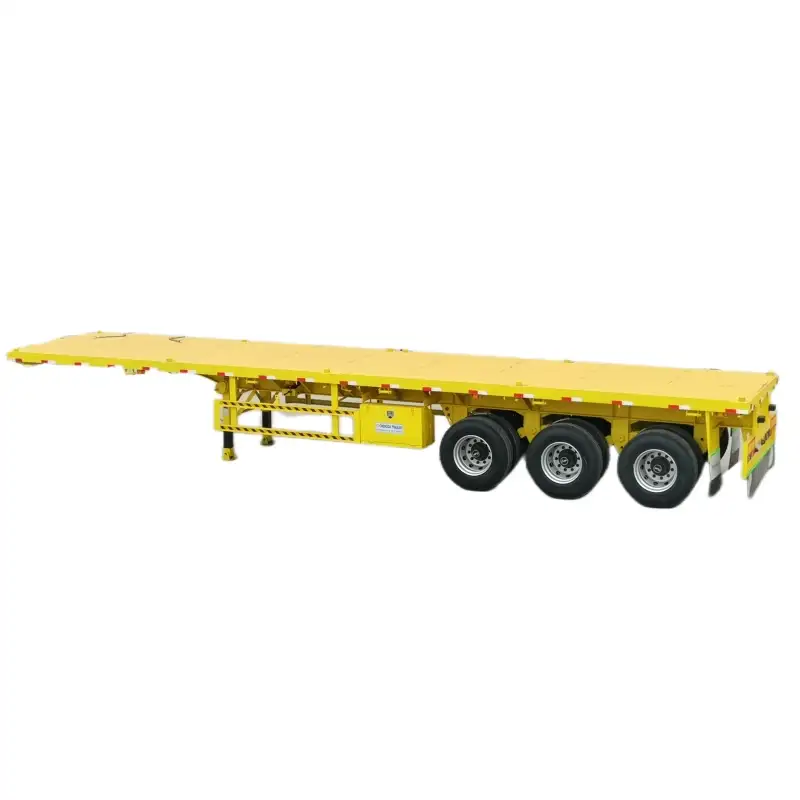
3 Axle Flatbed Semi Trailer |
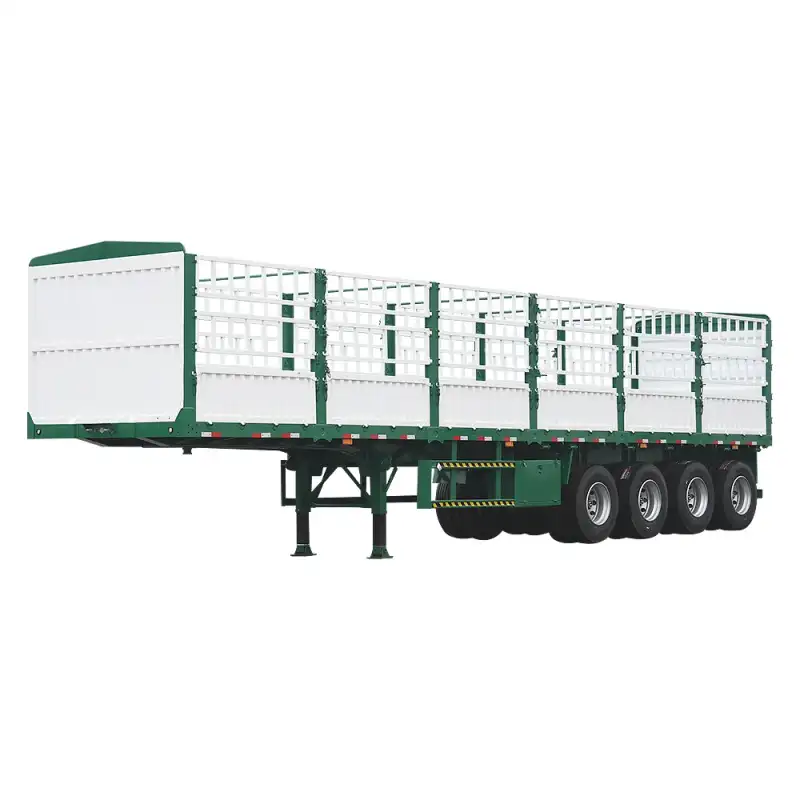
4 Axle Cargo Fence Semi Trailer |