For cross-border intermodal logistics operators across Southern Africa, East Africa, and Latin America, trailer fleet profitability depends on balancing dimensional statutory caps, unloading discharge efficiency, and tare weight economics. In long-distance freight corridors between South Africa, Zambia, and DR Congo, a Superlink flatbed trailer combination (B-train) complies with statutory 22-meter overall length restrictions and 56-ton Gross Combination Mass (GCM) caps, offering 38 to 40 tons of net payload across twin articulated decks. In infrastructure projects, choosing a V-type pneumatic dry bulk cement trailer equipped with a 12m³/min diesel-driven twin-cylinder air compressor delivers discharge speeds above 1.5 tons/min with a residual cleanout rate under 0.25%. Meanwhile, port transport operators must evaluate a lightweight 40ft container chassis vs. a multi-purpose flatbed trailer, where a 2.3-ton tare weight advantage saves over $7,200 annually in fuel and highway toll fees.
1. Superlink Flatbed Trailer Dimensions & SADC Payload Regulations
A Superlink (also known as an Interlink or B-train) consists of two interconnected semi-trailers: a lead trailer featuring an elevated rear fifth-wheel coupling directly linked to a trailing secondary trailer. This setup dominates Southern African Development Community (SADC) logistics corridors:
| Statutory & Dimensional Parameter | Chengda Superlink Flatbed Specification | SADC Highway Regulatory Limits |
|---|---|---|
| Overall Combination Length | 21,500 mm (coupled to 6x4 tractor) | Max. 22,000 mm (Statutory legal envelope) |
| Front Lead Trailer Length | 7,500 mm (Carries 1 x 20ft container or breakbulk) | Fitted with heavy-duty JOST 50# or 90# fifth wheel |
| Rear Trail Trailer Length | 12,500 mm (Carries 1 x 40ft or 2 x 20ft containers) | Equipped with 12 container twist locks |
| Axle Group Configuration | 2-Axle (Front) + 2-Axle or 3-Axle (Rear) FUWA 13T | Axle mass load: max. 9,000 kg per axle line |
| Maximum Gross Combination Mass (GCM) | 56,000 kg (Full highway rating) | Capped at 56,000 kg on South Africa, Zambia, Zimbabwe routes |
| Net Freight Payload | 38,500 kg – 40,000 kg | 30% more cargo volume than a single 40ft flatbed |
A key engineering advantage of the Superlink is articulated maneuvering. Unlike a full trailer with a loose drawbar dolly that is nearly impossible to reverse, the B-train configuration behaves predictably in reverse, allowing drivers to dock precisely into tight warehouse bays in Durban, Lusaka, or Lubumbashi.
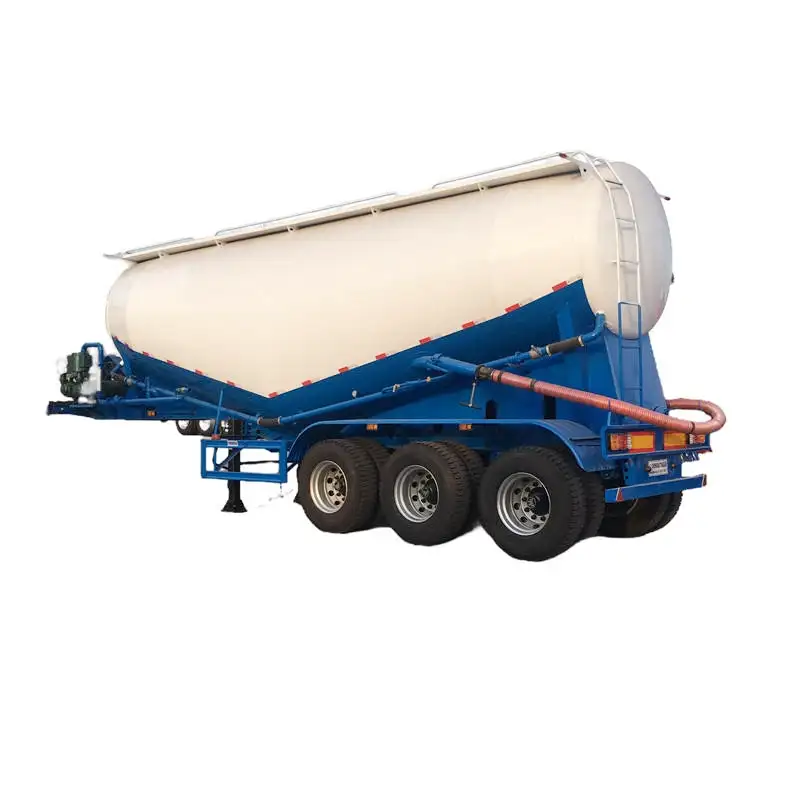
2. V-Type Pneumatic Dry Bulk Cement Trailer Air Compressor Specifications
Pneumatic dry bulk cement trailers (bulkers) rely on fluidized aeration beds to discharge powdery materials (ordinary Portland cement, fly ash, lime powder) into vertical batching plant silos. Choosing the correct onboard diesel engine and air compressor governs discharge speed and material cleanout:
| Compressor & Tank Spec | 10m³/min Twin-Cylinder System | 12m³/min High-Performance System (Recommended) |
|---|---|---|
| Compressor Model & Type | Bohai / Wuzhou 10.0m³ Twin-Cylinder Piston | Bohai 12.0m³ Heavy-Duty Water-Cooled / Air-Cooled |
| Auxiliary Diesel Engine | Huafeng / Yuchai 4100 (44 kW / 60 HP) | Weichai 4102 / Tianhe 4105 (48 kW / 65 HP) |
| Operating Discharge Pressure | 0.20 MPa (2.0 Bar) | 0.20 MPa – 0.22 MPa (Safety pop-off valve at 0.25 MPa) |
| Vertical Pumping Height | Up to 18 meters into batch silos | Up to 25 meters into tall concrete plant silos |
| Horizontal Blowing Distance | Up to 25 meters pipe run | Up to 35 meters with booster line injection |
| Discharge Velocity | 1.2 Tons / minute | 1.5 – 1.8 Tons / minute (Unloads 45T in ~28 mins) |
| Residual Material Ratio | < 0.40% (approx. 150 kg cement trapped) | < 0.25% (via 14-degree steeper fluidizing canvas bed) |
3. 40ft Container Chassis vs. Flatbed Trailer: Fleet Operating Cost Analysis
When shuttling marine shipping containers between ports (such as Dar es Salaam, Mombasa, Lagos Apapa, or Valparaiso) and inland container depots (ICDs), selecting between a skeleton container chassis trailer and a general flatbed semi-trailer determines lifecycle margins:
| Cost Factor / Operational Metric | 40ft Skeletal Container Chassis | 40ft Multi-Purpose Flatbed Trailer |
|---|---|---|
| Chassis Tare Weight (Dry) | 5,200 kg – 5,600 kg (No steel deck plating) | 7,500 kg – 8,100 kg (With 3mm chequered plate floor) |
| Empty Return Fuel Burn | 25.5 L / 100 km (Low aerodynamic drag skeleton) | 29.2 L / 100 km (Solid floor causes drag turbulence) |
| Annual Fuel Savings (100,000 km) | Saves $4,400 / year (at $1.20/L diesel) | Baseline operating consumption |
| Tire Wear & Suspension Stress | Lower empty rolling resistance; 20% longer tire life | Carrying 2.3 extra deadweight tons on empty returns |
| Cargo Versatility | Restricted strictly to ISO containers (1x40ft or 2x20ft) | High: handles bagged cement, steel coils, lumber, and boxes |
| Procurement Capital Cost | approx. $11,500 – $13,800 (FOB China) | approx. $13,500 – $16,500 (FOB China) |
Frequently Asked Questions (FAQ)
Q: What causes dry bulk cement tankers to discharge slowly or choke during silo loading?
A: Slow discharge is primarily caused by compressed air moisture saturating the fluidization canvas bed, causing cement caking. Chengda equips bulkers with dual oil-water moisture separators and a secondary air blow-by booster line that injects high-velocity air directly into the discharge elbow, clearing line plugs instantly.
Q: Can a Superlink flatbed trailer be split to operate as independent trailers?
A: Yes. Both trailers feature independent landing legs, air brake reservoirs, and ABS control circuits. The lead trailer can uncouple and deliver its 20ft container while another tractor hooks directly to the trail trailer, doubling fleet dispatch flexibility.
Recommended Intermodal & Bulk Semi-Trailers
|
3 Axle 40m³ Bulk Cement Bulker |
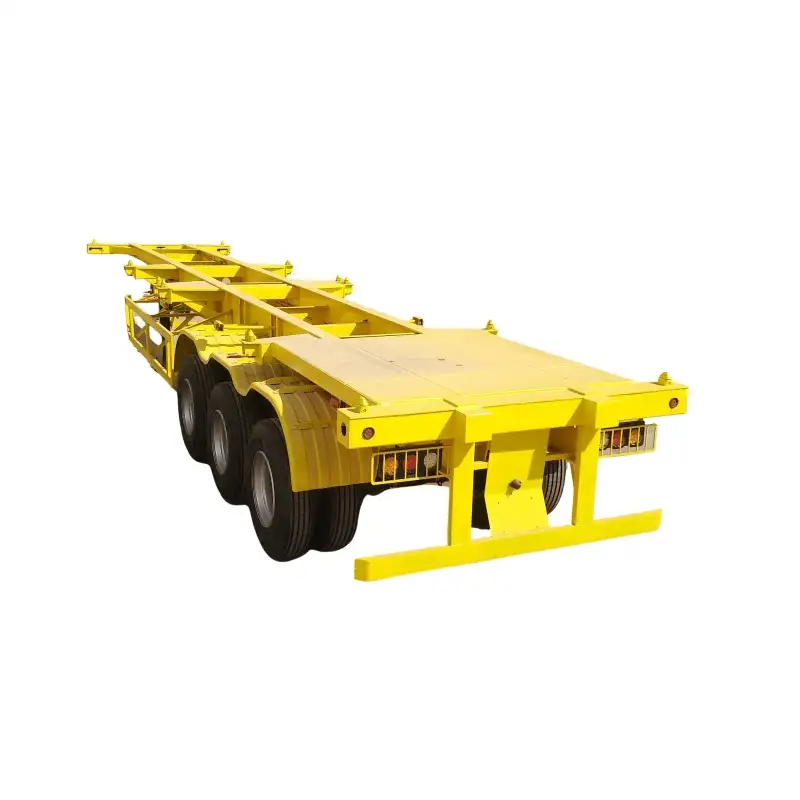
3 Axle 40ft Skeletal Container Chassis |
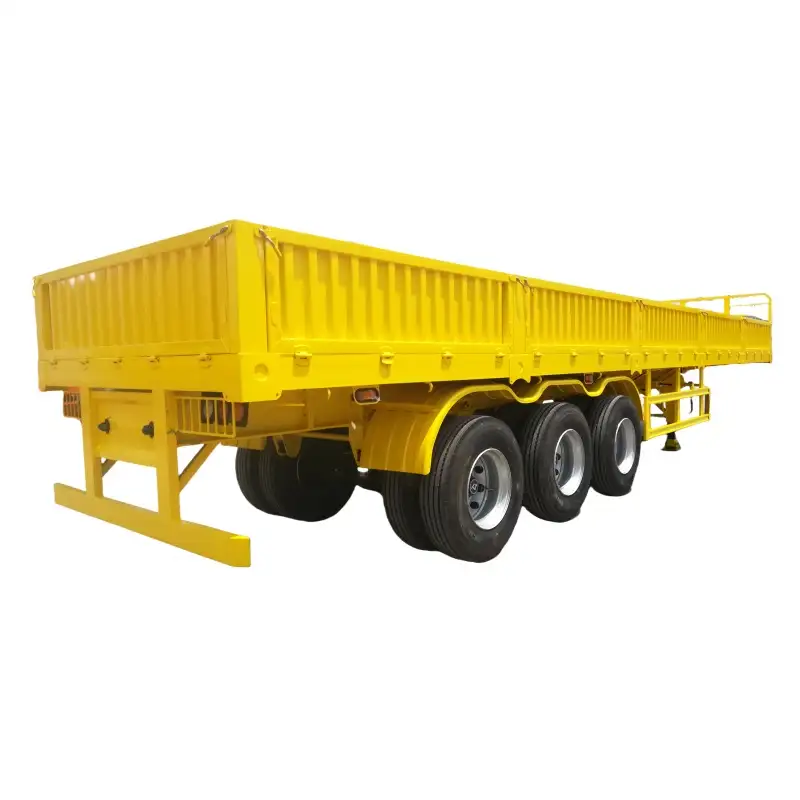
3 Axle 40ft Flatbed Cargo Semi-Trailer |
Contact Chengda Engineers for Superlink Configurations & Bulker Factory Pricing