Navigating highway regulations, bridge clearance envelopes, and warehouse dock specifications requires a precise understanding of standard semi-truck trailer dimensions and legal height clearances. Across global road freight corridors, standard semi-trailers operate under strict external height limits—typically 13 feet 6 inches (4.11 m) in North America and 4.0 meters (13.12 ft) across Europe, Africa, and Latin America—with standard lengths spanning from 20ft (6.0m) port drayage chassis up to 53ft (16.2m) dry vans and flatbed trailers carrying legal payloads up to 45 to 65 metric tons.

1. Master Dimension Matrix: Standard Semi-Trailer Categories
Below are the authoritative exterior and interior dimensions across the five most prevalent commercial semi-trailer silhouettes operating worldwide:
| Trailer Silhouette | External Length | External Width | Overall Height from Ground | Internal Height / Depth | Standard Deck Height |
|---|---|---|---|---|---|
| 53-Foot Dry Van Box | 53 ft (16,150 mm) | 102 in (2,590 mm) | 13 ft 6 in (4,115 mm) | 110 in (2,794 mm) | 48 in (1,220 mm) |
| 40-Foot Flatbed Platform | 40 ft (12,500 mm) | 98.4 in (2,500 mm) | 59 in (1,500 mm, unloaded) | Open Deck (Zero roof) | 59 in (1,500 mm) |
| Drop-Deck Step-Deck Trailer | 48 ft (14,630 mm) | 102 in (2,590 mm) | Upper: 59 in / Lower: 39 in | Open Deck | Lower Deck: 39 in (1,000 mm) |
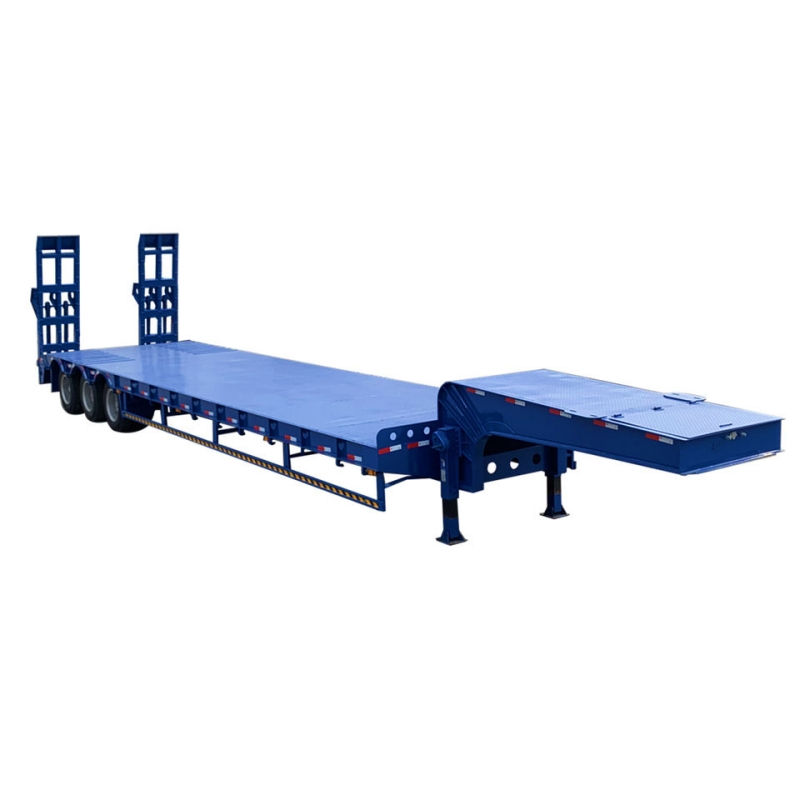
| Heavy Duty Lowboy / Lowbed | 42 ft (13,000 mm) | 118 in (3,000 mm with outriggers) | 33 in (850 mm - 950 mm) | Open Deck | Low Deck: 33 in (850 mm) |
| 45,000L Fuel Tanker Trailer | 38 ft (11,500 mm) | 98.4 in (2,500 mm) | 144 in (3,650 mm to handrail) | 5 Compartments | Low Center of Gravity |
2. Height Clearance Regulations & Bridge Strike Prevention
Understanding maximum vehicle height limits is the single most critical factor in route planning to avoid bridge collisions and overhead wire strikes:
- North American Federal Bridge Formula (13'6" / 4.11 m): Interstate highways mandate a maximum vehicle height of 13 feet 6 inches (4.11 m) without oversized permits, while certain western states allow up to 14 feet 0 inches (4.27 m). Minimum interstate overpass bridge clearance is set at 16 feet 0 inches (4.88 m) in rural areas.
- European & African Standards (4.00 m / 13.12 ft): The European Union (Directive 96/53/EC), the Southern African Development Community (SADC), and the Central African CEMAC code enforce an absolute legal maximum height of 4.00 meters for articulated vehicle combinations.
- The 53-Foot Trailer Interior Height Advantage: A standard 53ft dry van features an interior floor-to-ceiling clearance of **110 inches (2.79 m)** with an internal width of 99 inches (2.51 m) and an interior volume of approximately 3,850 cubic feet (109 m³), permitting double-stacking of standard 48×40 inch pallets.
3. Legal Axle Weight Limits & Bridge Formula Calculations
Complying with dimensional limits is only half the battle; fleets must distribute cargo to satisfy legal axle load limitations at highway weigh stations:
| Axle Group Configuration | North American Limit (DOT) | European Union Limit (EU) | African Corridor Limit (SADC/CEMAC) |
|---|---|---|---|
| Steer Axle (Single Front) | 12,000 lbs (5,443 kg) | 10,000 kg (10.0 Tons) | 8,000 kg (8.0 Tons) |
| Drive Tandem (Dual Drive Axles) | 34,000 lbs (15,422 kg) | 19,000 kg (19.0 Tons) | 18,000 kg (18.0 Tons) |
| Trailer Tandem / Tri-Axle Group | Tandem: 34,000 lbs (15,422 kg) | Tri-Axle: 24,000 kg (24.0 Tons) | Tri-Axle: 24,000 kg (24.0 Tons) |
| Gross Combination Vehicle Weight | 80,000 lbs (36,287 kg) | 40,000 kg - 44,000 kg (ISO Container) | 48,000 kg - 56,000 kg (6/7 Axles) |
4. Lowbed & Step-Deck Solutions for Oversized Cargo
When cargo height exceeds 2.5 meters (8.2 ft), loading it onto a standard 1.5-meter flatbed pushes the total vehicle height above 4.0 meters, risking severe bridge collisions:
- Step-Deck Platform (1.0m Deck Height): Lowers the main cargo deck by 500 mm compared to standard flatbeds, allowing cargo up to 3.0 meters (9.8 ft) tall to travel legally under standard 4.0m overpasses without costly escort vehicles or route detour permits.
- Lowboy / Lowbed (0.85m Deck Height): Designed specifically for construction machinery (excavators, drill rigs). The deck height of 850 mm provides a 3.15-meter vertical payload window beneath legal clearance ceilings.
- Fifth Wheel Height Matching: Matching tractor fifth-wheel heights (1,150 mm to 1,350 mm) to trailer kingpin plates is essential. A mismatched high tractor raises the trailer nose, causing the front roof corner to strike toll booth overhead gantries.
Frequently Asked Questions (FAQ)
Q: What is the maximum legal height for a semi-truck in Europe and Africa?
A: The legal maximum height is strictly 4.00 meters (13 feet 1.5 inches). Any load exceeding 4.00 meters requires an exceptional transport permit (abnormal load permit), designated police or escort vehicles, and certified route surveys to verify bridge clearances.
Q: How wide is a standard commercial semi-trailer?
A: Standard international semi-trailers have an exterior width of 2,500 mm (2.50 meters / 8.2 feet) for general freight. In North America, the standard width is 102 inches (2.59 meters). Refrigerated reefers often measure 2,600 mm externally to accommodate thick insulating side wall panels while maintaining standard pallet loading widths.
Q: What is the internal volume of a standard 40ft container versus a 53ft trailer?
A: A standard 40ft High Cube ISO shipping container provides approximately 2,694 cubic feet (76.2 m³) of volume. A 53-foot dry van trailer provides approximately 3,850 cubic feet (109 m³) of internal volume, delivering roughly 43% more cubic freight capacity per trip.
Recommended Equipment Compliant with Legal Height Limits
|
3 Axle Flatbed Semi Trailer |
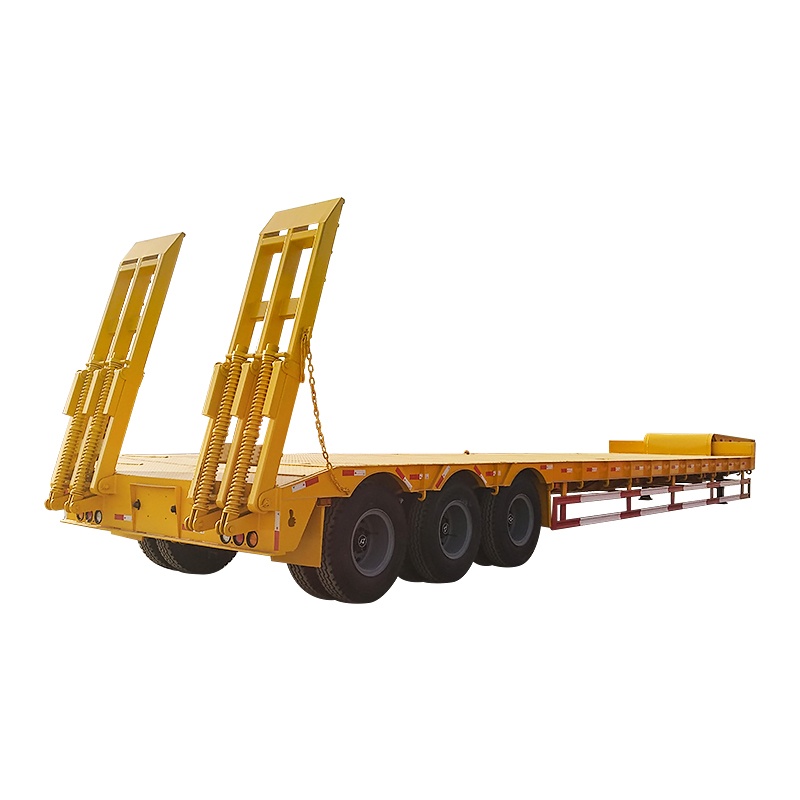
3 Axle Lowbed Semi Trailer |
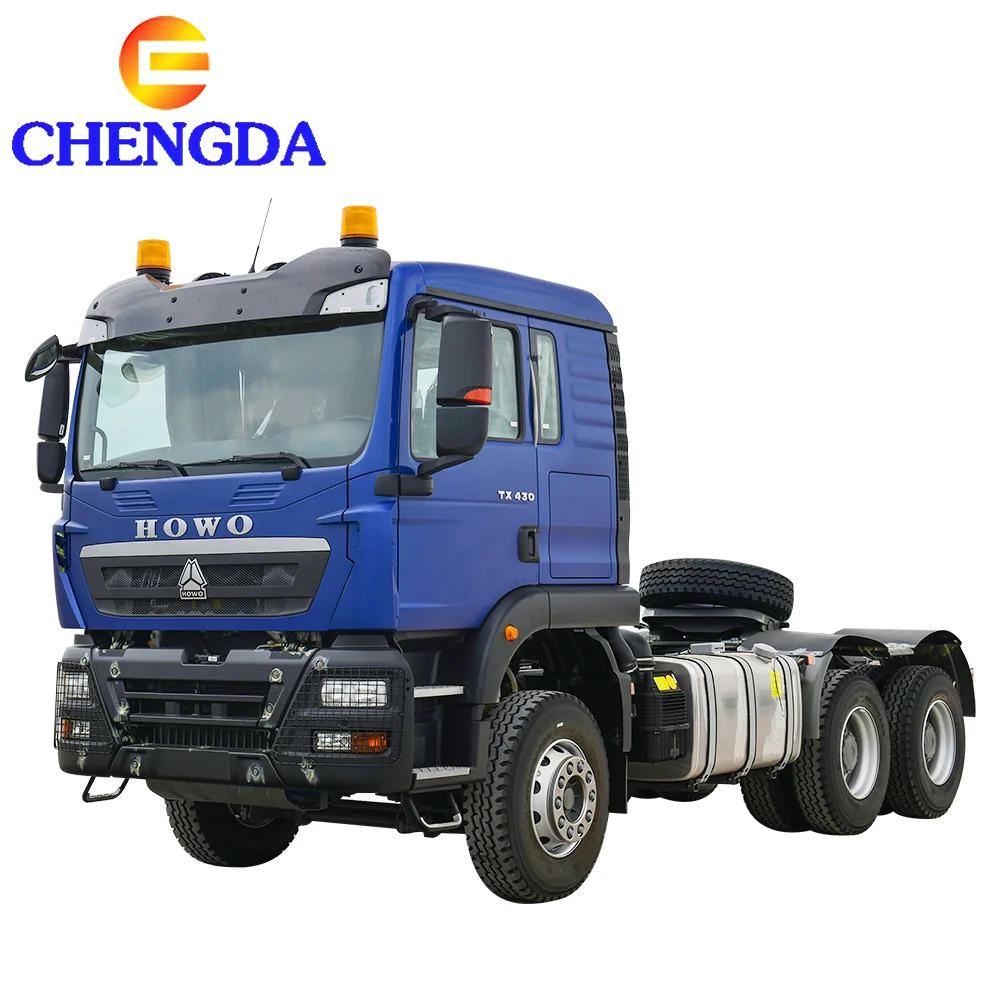
Howo TX 430hp 6x4 Tractor Truck |