In commercial petroleum distribution—hauling gasoline, diesel, and aviation kerosene (Jet A-1)—selecting the proper fuel tanker trailer compartment configuration and shell metallurgy (Aluminum Alloy vs Carbon Steel) directly dictates payload profitability, explosion safety, and fleet operating longevity. Across African, Latin American, and Middle Eastern distribution corridors, modern 40,000L to 45,000L multi-compartment fuel tankers equipped with European ADR-compliant bottom loading valves, vapor recovery manifolds, and pneumatic emergency bottom shut-off systems maximize legal payload while mitigating hazardous liquid surge.
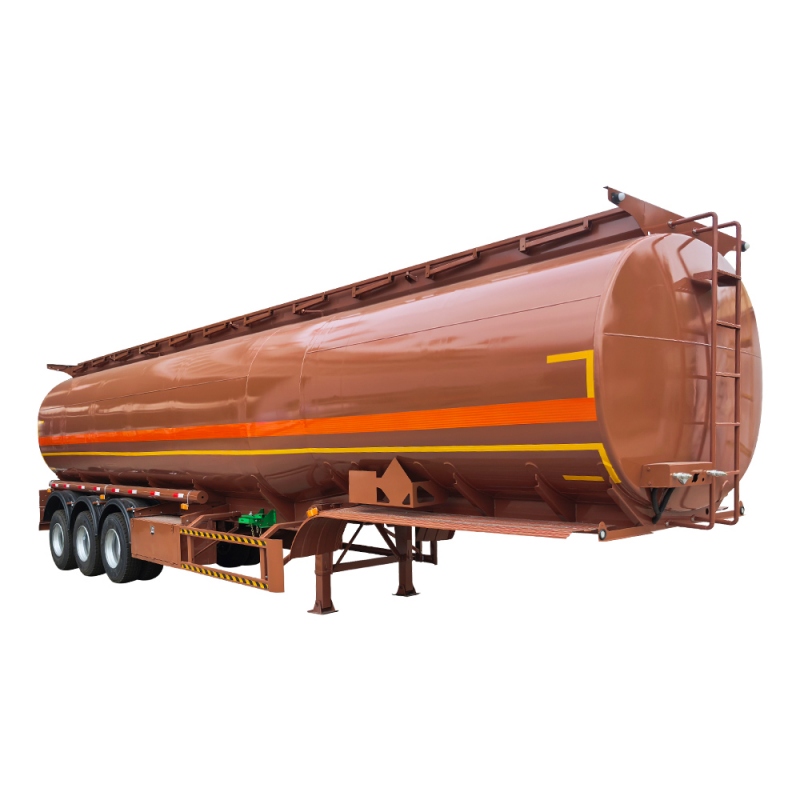
1. Metallurgy Breakdown: Aluminum Alloy (5182) vs Carbon Steel (Q235B)
The choice of tank shell material represents a direct financial tradeoff between initial capital acquisition expenditure and daily operational payload yield:
| Engineering Property | Aluminum Alloy 5182-H111 Tanker | High-Strength Carbon Steel (Q235B) | Operational Return on Investment |
|---|---|---|---|
| Empty Tare Weight (45,000L) | 5,200 kg - 5,800 kg (Ultra-Light) | 8,800 kg - 9,600 kg (Standard Heavy) | Aluminum carries 3,500 kg to 4,000 kg more fuel per trip legally |
| Shell Wall Thickness | 6.0 mm body / 7.0 mm dished heads | 5.0 mm body / 6.0 mm dished heads | Thicker aluminum plate absorbs kinetic impact without cracking |
| Corrosion Resistance & Fuel Purity | 100% Rust-Proof; zero contamination | Requires internal anti-corrosion coating | Aluminum is mandatory for high-purity Jet A-1 aviation kerosene |
| Initial Acquisition CapEx | $28,000 - $36,000 | $16,000 - $22,000 | Carbon steel offers low entry cost for budget-conscious fleets |
| Residual Scrap Value After 15 Years | High (Recovers 70% of raw aluminum price) | Low scrap value | Aluminum retains significant asset resale value at retirement |
2. Compartment Architecture & Surge Baffle Engineering
Dividing a 45,000-liter shell into 4 to 6 independent sealed compartments serves two indispensable functions: multi-product distribution and dynamic liquid slosh mitigation:
- Multi-Grade Fuel Transport: A standard 45,000L tanker configured with 5 compartments (e.g., 10kL + 8kL + 10kL + 8kL + 9kL) allows a single trailer to deliver regular gasoline, premium gasoline, and low-sulfur diesel to retail filling stations in a single logistical run without cross-contamination.
- Surge Baffle Waves Protection (Dished Anti-Wave Plates): Inside each compartment, dished corrugated baffles featuring calibrated fluid circulation holes dampen forward longitudinal slosh during emergency braking. Baffles absorb 75% of hydraulic wave kinetic energy, keeping the tractor-trailer stable on mountain downgrades.
- Low Center of Gravity Cross-Section: Chengda tankers employ an elliptical or super-elliptical (square-circle) cross-sectional profile, placing the liquid mass 200 mm lower than cylindrical tankers, significantly increasing critical rollover speed thresholds.
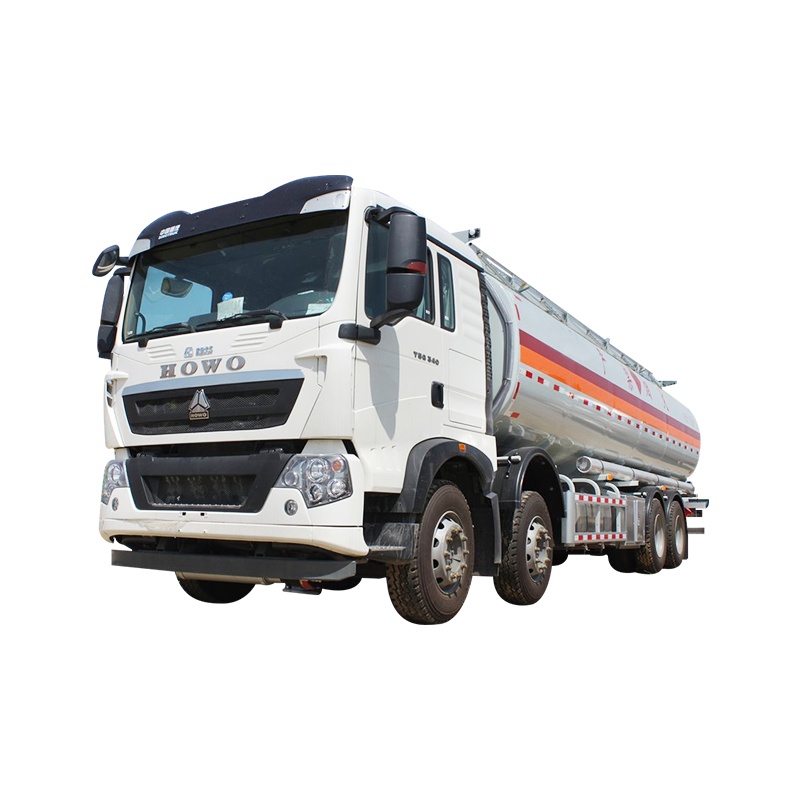
3. European ADR Bottom Loading & Safety Systems
Legacy top-loading tankers require operators to climb onto the slippery top walkway with open hatch covers—creating severe vapor explosion risks and toxic inhalation. Modern international standards mandate sealed bottom loading:
| ADR Safety Subsystem | Component Specification | Safety / Environmental Protection Function |
|---|---|---|
| Emergency Bottom Shut-Off Valve | Pneumatically controlled aluminum 4-inch foot valves with shear groove | If external discharge pipe is sheared off during a collision, the internal valve remains sealed inside the shell, preventing fuel spills |
| Vapor Recovery System | Top pneumatic vapor vent valves connected to ground-level return pipe | Collects VOC gasoline vapors displaced during bottom loading, routing vapors back to terminal storage with zero atmospheric emissions |
| Optic Overfill Prevention Sensor | 5-wire optic liquid level probes installed in each compartment dome | Sends instant digital shut-off signal to terminal loading rack pumps if liquid level rises to 98% capacity, preventing catastrophic tank overflows |
| Static Grounding Reel & Interlock | Heavy copper grounding cable with explosion-proof terminal clamp | Dissipates dangerous electrostatic charges generated by fuel turbulence; interlock prevents loading until ground continuity is confirmed |
Frequently Asked Questions (FAQ)
Q: How many kilometers does an aluminum fuel tanker need to run to repay its price premium?
A: An aluminum tanker carries approximately 4,000 liters (3,400 kg) more fuel per delivery trip under legal weight limits. Operating 8,000 km per month on long-distance commercial freight routes, the extra revenue generated by additional fuel delivered typically pays off the $12,000 to $15,000 aluminum price premium in **under 8 to 11 months**.
Q: Can a carbon steel tanker transport crude oil or palm oil?
A: Yes. Carbon steel tankers are ideal for heavy crude oil, furnace oil, asphalt, and raw palm oil. For viscous crude or vegetable oils, Chengda installs optional internal steam heating coils or diesel-fired thermal oil burner tubes to liquefy the cargo prior to pumping.
Q: What is the testing pressure for a certified petroleum fuel semi-trailer?
A: While atmospheric fuel tankers operate under atmospheric pressure (0 bar) during highway transit, every Chengda compartment undergoes hydraulic pressure testing at **0.035 MPa (5 psi)** and pneumatic leakage testing for 30 minutes, certified with official radiographic X-ray weld seam inspection reports.
Recommended Fuel Tanker Equipment
|
3 Axle Oil Tank Trailer |
2 Axle Fuel Tanker Trailer |
Howo TX 430hp 6x4 Tractor Truck |