In commercial petroleum semi-trailers hauling gasoline, diesel, and jet fuel across international logistics routes, the pneumatic bottom emergency foot valve (also known as the internal shutoff valve, belly valve, or emergency bottom valve) is the primary barrier preventing hazardous cargo spills during highway rollover accidents. Engineered to meet international ADR, EN 13083, and API standards, this bottom-mounted aluminum valve utilizes an internal spring-closed poppet and sacrificial external shear groove to seal thousands of liters of flammable fuel inside the tank even if the bottom piping is completely sheared away in an accident.

1. Technical Specification Comparison: Pneumatic Foot Valve vs. Manual Mechanical Valve
Emergency response times, closing forces, and safety automation across tank bottom valve types:
| Engineering Parameter | Pneumatic Emergency Bottom Foot Valve (ADR Standard) | Manual Mechanical Screw Foot Valve |
|---|---|---|
| Actuation Method | Pneumatic piston cylinder powered by truck compressed air line | Manual hand-wheel screw mechanism mounted on tank top or bottom |
| Emergency Automatic Shutoff Speed | Instantaneous closure (< 0.5 seconds upon air pressure release) | Manual closure only (Takes 1 to 2 minutes of hand-cranking) |
| Impact Shear Groove Protection | Integrated sacrificial shear groove machined outside the tank shell | No shear groove; impact tears directly into the tank bottom plate |
| Valve Body Metallurgy | Low-density aluminum alloy (AL356 / 5083 forged body, stainless trim) | Cast iron or standard aluminum casting |
| Internal Seal Compound | Viton (FKM) or Fluorosilicone (100% aromatic hydrocarbon immune) | Standard Nitrile (NBR) rubber (Degrades with high-octane petrol) |
| Emergency Cut-Off Controls | Multi-point emergency air vents (Cab switch + bumper fire fusible links) | Single manual hand-wheel only |
| Flow Rate & Pressure Drop | High flow: Up to 2,500 Liters / minute @ 0.015 MPa pressure drop | Moderate flow: approx. 1,600 – 1,800 Liters / minute |
| ADR Regulatory Compliance | Mandatory for international petroleum transit (Class 3 liquids) | Banned in cross-border petroleum transport; domestic only |
2. Sacrificial Shear Groove Physics: Preventing Catastrophic Spills
During severe highway rollover crashes, bottom discharge piping strikes the ground with extreme force:
- The Sacrificial Shear Plane: Chengda pneumatic foot valves feature an engineered V-notch shear groove machined around the outer circumference of the valve body just outside the tank mounting flange.
- Clean Mechanical Separation: When an impact force exceeds 2,500 Nm, the external pipe elbow shears cleanly off at the groove. The valve seat and spring-loaded closing poppet remain securely locked inside the tank shell, preventing a single drop of fuel from leaking onto the road.
3. Diagnosing Valve Weeping & Slow Pressure Leaks
Petroleum dripping from bottom outlet pipes when the foot valve is closed indicates specific seal failures:
| Observed Leak Symptom | Most Probable Root Cause | Immediate Corrective Action |
|---|---|---|
| Fuel dripping from discharge pipe with valve closed | Foreign debris (rust scale, gravel) trapped between Viton seal and valve seat; degraded swollen O-ring | Flush tank compartment; inspect sealing face; replace Viton main seal disc |
| Valve refuses to open when pneumatic switch is pulled | Low control air pressure (< 0.45 MPa); seized pneumatic cylinder piston; ruptured nylon air line | Check trailer air reservoir pressure; verify 0.6 MPa pilot pressure; replace pneumatic cylinder seals |
| Air hisses continuously from valve vent port | Blown internal cylinder piston O-rings allowing compressed air to bleed across the chamber | Replace pneumatic actuator piston seals and dynamic rod wiper rings |
| Valve closes sluggishly or sticks open halfway | Bent internal stainless steel valve stem caused by hydraulic hammer shock during rapid valve closure | Replace valve stem spindle assembly; check internal heavy return spring tension |
4. Emergency Air Cut-Off & Thermal Fusible Links
Modern ADR safety systems integrate automated thermal emergency cut-offs:
- Fusible Alloy Plugs (75°C Melt Point): In the event of a fire near the bottom loading manifold, low-melting-point eutectic alloy plugs in the pneumatic lines melt within seconds. Depressurizing the air line triggers internal springs that slam all compartment foot valves shut instantly, starving the fire of fuel.
- Rear Bumper Emergency Push Buttons: Red pneumatic emergency push-buttons mounted on the rear bumper and front bulkhead allow the driver or terminal operator to close all valves from a safe distance with a single strike.
Frequently Asked Questions
Q: Can the pneumatic foot valve be opened manually if trailer air pressure is completely empty?
A: Yes. All Chengda emergency foot valves incorporate a manual emergency jacking screw or mechanical lever on the side, allowing field operators to crank the poppet open during depot maintenance without air pressure.
Q: What size foot valve is required for a 45,000L petroleum tanker?
A: A 4-inch (DN100) foot valve is standard across commercial fuel tankers, matching standard 4-inch bottom API dry-break loading adaptors to achieve rapid 2,000 L/min loading rates.
Q: Where can fleet operators source replacement pneumatic foot valves and Viton seal kits?
A: Browse our complete liquid hardware inventory in the Heavy-Duty Spare Parts Category, inspect original Fuel Tanker Semi-Trailers, or consult our International FAQ Center.
Request Fuel Tanker Valves & Spare Parts Catalog
Recommended Semi-Trailers
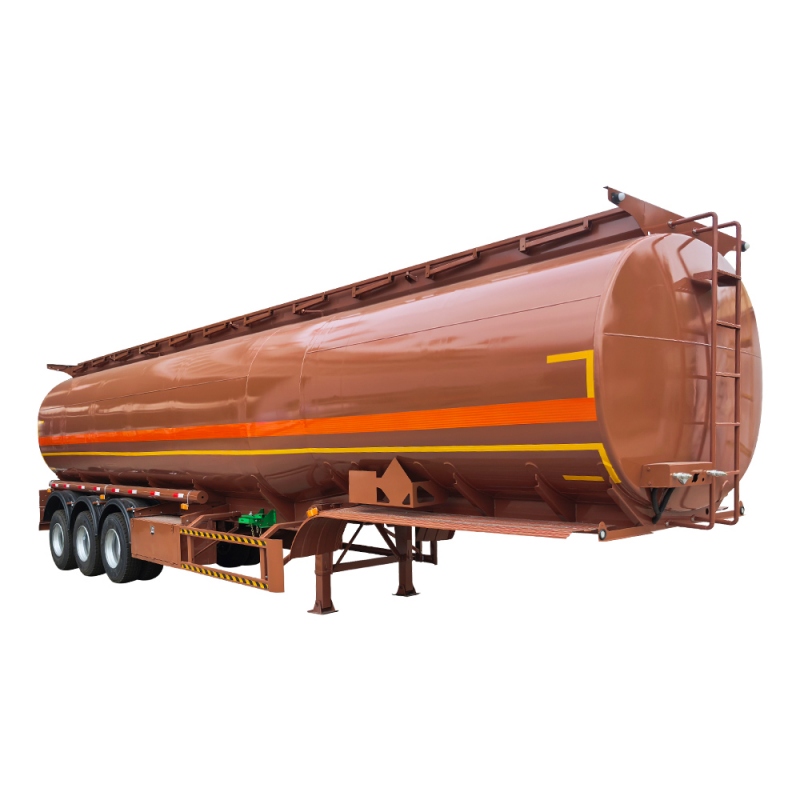 3 Axle Oil Tank Trailer |  2 Axle Fuel Tanker Trailer |  3 Axle Flatbed Trailer |