In heavy commercial common-rail diesel engines (Sinotruk Howo D12, Weichai WP10/WP12, Shacman F3000/X3000), the mechanical common rail pressure relief valve (PRV / safety limiter valve) threads into the end of the forged steel common rail pipe. Serving as the primary mechanical hydraulic fuse, this two-stage spring-loaded plunger pops open when rail pressure spikes beyond 1,800 to 2,000 bar (180 to 200 MPa), dumping excess fuel to the return line to prevent fuel rail bursting or high-pressure steel injector pipe rupture.
1. Technical Specification Comparison: Standard Single-Stage vs. Two-Stage Mechanical Relief Valves
Opening pressure thresholds, holding pressures, and operational dynamics across common rail safety valves:
| Engineering Parameter | Standard Single-Stage Spring Poppet Relief Valve | Bosch Two-Stage Holding Pressure Relief Valve (PRV Spec) |
|---|---|---|
| Initial Opening Pressure (Pop-Off) | approx. 1,750 – 1,850 bar (Spikes dump immediately) | Strictly 1,850 – 2,000 bar (185 to 200 MPa maximum safety limit) |
| Post-Trip Holding Rail Pressure | Dumps rail pressure to near zero (Engine dies instantly) | Maintains approx. 600 – 800 bar holding pressure (Enables limp-home mode) |
| Plunger Valve Architecture | Single conical needle seating directly on orifice seat | Tandem stepped plunger with dual differential springs and pilot orifices |
| Thread Mounting Interface | M16 x 1.5 or M18 x 1.5 high-pressure thread | M18 x 1.5 or M20 x 1.5 precision thread with metal-to-metal seal face |
| Tightening Torque Specification | 85 – 100 N·m (With copper washer) | Strictly 100 – 110 N·m (Direct tapered metal cone sealing) |
| Allowable Static Return Leakage | Zero drops at idle (0 ml / minute under 400 bar rail pressure) | Zero drops at idle; maximum 1 to 2 drops under 1,600 bar load |
| ECU Fault Code Generation | Generic low rail pressure codes | Specific DTC: P0088 (Rail Pressure Too High) / P1088 (PRV Open State) |
| Reusability After Emergency Pop | Replace immediately (Spring weakens and loses calibration) | Inspect return flow; replace if continuous fuel leakage exceeds 5 ml/min |
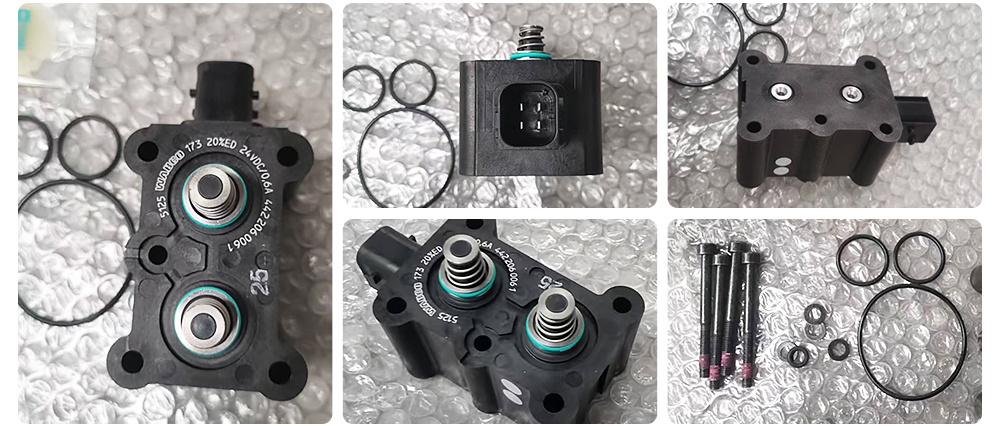
2. Kinematics of the Two-Stage PRV: The "Limp-Home" Holding Pressure
Older single-stage relief valves caused catastrophic engine shutdowns in highway traffic when tripped:
- The Overpressure Event: If the high-pressure pump metering unit (MeUN) sticks wide open during sudden deceleration, rail pressure spikes toward 2,000 bar. The initial high-pressure plunger in the PRV cracks open against a heavy Belleville spring stack.
- The Stepped Holding Stage: Instead of dumping all fuel pressure, fuel flows into an intermediate internal chamber behind a secondary plunger. This shifts the internal balance area, keeping the valve open while maintaining an engineered 700 to 800 bar holding pressure.
- The Limp-Home Highway Exit: This controlled holding pressure allows the engine ECU to maintain rough combustion at reduced power (limp mode), enabling the driver to maneuver the 50-ton truck safely off the highway shoulder rather than losing power steering and air brakes in live traffic.
3. Troubleshooting Valve Seat Erosion & Engine Power Loss
A leaking or washed-out PRV causes chronic hard starting and unexpected engine stall-outs:
| Observed Engine Symptom | Most Probable Root Cause | Immediate Corrective Action |
|---|---|---|
| Engine cuts out into Limp Mode climbing hills; fault code P1088 active | PRV valve seat eroded by abrasive fuel silt; valve pops open prematurely under normal 1,500 bar load | Perform PRV return flow test; replace worn PRV valve; replace contaminated primary fuel filter |
| Engine takes 8 to 12 seconds of cranking to start, but runs once fired | PRV leaking fuel constantly back to tank at low cranking speeds, preventing rail from hitting 250 bar start threshold | Disconnect PRV return rubber line; crank engine: if fuel trickles out during cranking, PRV is defective |
| Engine dies instantly when accelerating hard from low RPM | PRV spring fatigued from repeated pressure spikes; seal face galled and refusing to close tightly | Replace PRV valve assembly; calibrate high-pressure pump metering unit (MeUN / IMV valve) |
| Diesel fuel weeping from common rail end thread | PRV undertorqued or metal-to-metal sealing cone scored from dirt trapped during installation | Remove valve; clean cone seat with lint-free cloth; torque with calibrated wrench to exact 105 N·m |
4. The Standard Field "Plastic Bottle" PRV Return Leak-Off Test
Confirming PRV failure without expensive electronic test benches:
- Locate the Rail Return Line: Identify the common rail pipe. At the front or rear end sits the hex-headed PRV with a rubber or flexible nylon return fuel line leading back to the tank manifold.
- Disconnect and Plug the Return Hose: Disconnect the rubber return line from the PRV nipple. Plug the open hose to prevent fuel system air ingestion.
- Attach a Clear Measuring Hose: Slide a transparent vinyl hose over the PRV metal drain nipple and direct the other end into a clean plastic bottle.
- Run the Engine at 1,500 RPM: Start the engine and rev to 1,500 rpm. A healthy PRV must show absolutely zero fuel flow—not a single drop! If fuel sprays or steadily trickles into the bottle (more than 5 ml in 30 seconds), the valve seat is washed out and the PRV must be replaced immediately.
Frequently Asked Questions
Q: Can a blown PRV valve be ground or lapped back to life with grinding paste?
A: Absolutely not! Lapping the valve seat with abrasive paste destroys the micro-finished tungsten-carbide sealing contour. Operating under 1,800 bar, lapped valves will wash out within 50 km, causing sudden highway stalls.
Q: Can the PRV valve be welded shut or replaced with a solid steel blanking plug?
A: This is an extremely dangerous and illegal shortcut! Blanking off the rail safety valve removes the hydraulic fuse. The next electrical or pump overpressure spike will rupture the forged steel common rail pipe or blow fuel lines apart at 2,000 bar, causing catastrophic pressurized fuel spray fires.
Q: Where can fleet operators source genuine Bosch and Weichai common rail pressure relief valves?
A: Browse our complete precision fuel injection inventory in the Heavy-Duty Spare Parts Category, inspect original Diesel Engine Assemblies, or consult our International FAQ Center.
Request Common Rail Relief Valves & Injection Parts Catalog
Recommended Semi-Trailers
 Howo 8x4 Dump Truck |  3 Axle Lowbed Semi Trailer |  3 Axle Lowboy Trailer |