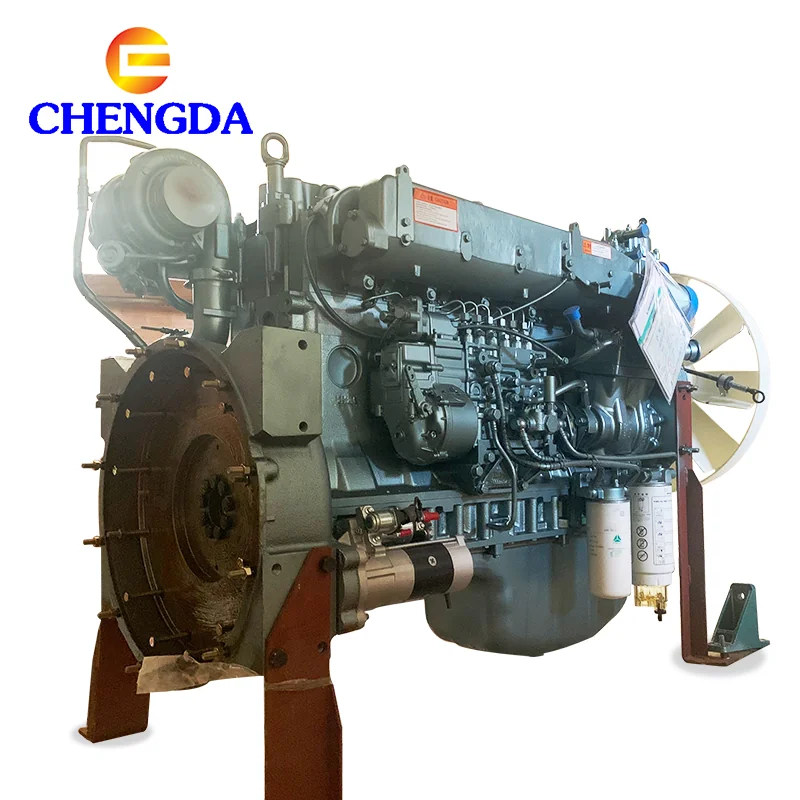
In heavy commercial common-rail diesel engines (Sinotruk D12, Weichai WP10/WP12, Shacman X3000), the injector fuel return line backpressure valve (calibrated overflow check valve, maintaining 0.8 to 1.5 bar / 0.08 to 0.15 MPa backpressure) installed in the injector return manifold is essential for stabilizing injector hydraulic balance. When this small spring-loaded check valve sticks open, collapses, or is inadvertently deleted by field mechanics, loss of backpressure causes erratic nozzle needle bounce, cylinder misfires, sluggish hill-climbing acceleration, and excessive injector internal leak-off.
1. Technical Specification Comparison: Calibrated Backpressure vs. Unrestricted Return Systems
Hydraulic backpressure limits, injector control chamber dampening, and engine operating parameters:
| Operational Parameter | Factory-Calibrated Injector Backpressure Valve System | Defective / Missing Backpressure Valve (Zero Backpressure) |
|---|---|---|
| Injector Return Rail Gauge Pressure | Strictly regulated between 0.8 bar and 1.5 bar (approx. 12 – 22 psi) | Drops to 0.0 bar (Atmospheric return straight into fuel tank) |
| Internal Spring Cracking Pressure | Factory spring-loaded poppet cracks open at 0.8 – 1.0 bar | Stuck open; zero restriction to returning diesel fuel flow |
| Hydraulic Shock Wave Dampening | Dampens violent 1,800-bar fuel pulses returning from injectors | Hydraulic shock waves resonate back into adjacent injector bodies |
| Nozzle Needle Closing Dynamics | Fast, crisp needle seating; clean termination of injection | Sluggish needle closing; nozzle dribble causes soot accumulation |
| Low-Load Pilot Injection Accuracy | Precision micro-metering (±0.2 mm³ per stroke pilot delivery) | Pilot injection collapses randomly; causes harsh combustion clatter |
| Engine Throttle Response | Crisp, instant power delivery under heavy accelerator tipping | Sluggish acceleration; engine feels "choked" and hesitant under load |
| Cylinder Contribution Balance Test | All 6 cylinders balanced within ±1.5 mg/stroke fuel trim | Erratic balance deviations; ECU throws false injector fault codes |
| Compatible Common Rail Systems | Bosch CRIN2 / CRIN3, Weichai WISE15, Sinotruk Common Rail | N/A (Operating without backpressure damages injector control valves) |
2. The Hydraulics of Injector Control: Why Injectors Require Return Backpressure
Modern common rail injectors rely on a precise hydraulic equilibrium between two chambers:
- The Dual-Chamber Pressure Balance: Inside the injector body, 1,800-bar common rail fuel fills both the bottom nozzle needle chamber and the upper control valve chamber. The control valve chamber has a larger surface area, holding the needle valve closed against its seat.
- The Solenoid Trigger & Return Surge: When the ECU energizes the solenoid, the control valve opens, dumping a tiny droplet of fuel into the low-pressure return line. The pressure drop in the upper chamber allows the bottom high pressure to pop the needle open for fuel injection.
- The Role of the 1.0-Bar Hydraulic Cushion: When the solenoid closes, a column of fuel under 1.0 bar backpressure provides an essential hydraulic cushioning buffer. If the return line has zero backpressure (atmospheric free-fall), fuel flashes into microscopic cavitation bubbles. The lack of liquid density delays pressure rebuilding in the control chamber, causing the needle to float and dribble extra un-atomized fuel into the cylinder.
3. Troubleshooting Backpressure Valve Failures in Field Operations
A failed return backpressure check valve produces symptoms that mimic failing high-pressure pumps:
| Observed Engine Symptom | Most Probable Root Cause | Immediate Corrective Action |
|---|---|---|
| Engine lacks pulling power climbing grades; scanner shows erratic rail pressure | Backpressure valve stuck open or spring fatigued; return pressure reads 0 bar | Connect 2.5 bar pressure gauge to return rail; replace backpressure check valve |
| Hard starting hot; engine cranks 8 to 10 seconds before firing | Backpressure valve check ball eroded by contaminated fuel, allowing air to drain into return rail | Inspect valve internal ball and seat; clean brass banjo fitting; replace return valve assembly |
| Harsh metallic combustion knock at idle, disappears above 1,200 rpm | Lack of return line backpressure destabilizes delicate pilot pre-injection timing on Cylinder 1-6 | Verify 1.0 bar backpressure at idle; check for pinched or bypassed fuel return hoses |
| Excessive fuel return volume; fuel tank runs blisteringly hot (>60°C) | Injectors blowing excessive bypass fuel due to erratic control valve seating dynamics | Replace fuel return backpressure valve; verify clean fuel delivery to primary common rail |
4. Step-by-Step Field Pressure Testing & Valve Replacement Protocol
Testing the injector fuel return backpressure in under 15 minutes:
- Locate the Backpressure Banjo Valve: The valve is typically integrated into the hollow banjo bolt connecting the common rail injector return manifold pipe to the main return hose leading to the tank, or mounted on the fuel filter head.
- Tee-In a Low-Pressure Test Gauge: Install a specialized 0 to 2.5 bar (0 to 35 psi) precision test gauge inline between the injector return manifold and the backpressure check valve using flexible transparent fuel line.
- Start Engine and Check Idle Pressure: Start the engine and let it idle at 650 rpm. The test gauge must read steadily between 0.8 bar and 1.2 bar (12 to 17 psi).
- If Pressure Reads 0.0 bar: The internal spring is broken or missing; the valve is permanently stuck open. Replace the valve assembly.
- If Pressure Exceeds 2.5 bar: The valve is plugged with carbon debris or the main tank return line is pinched, causing excessive backpressure that prevents injectors from opening cleanly.
- Torque the Replacement Banjo Bolt: When installing a new backpressure valve bolt, always install fresh annealed copper sealing crush washers, torquing the M12 or M14 hollow bolt to 25 – 30 N·m.
Frequently Asked Questions
Q: What happens if a mechanic replaces the calibrated backpressure banjo bolt with a standard hollow bolt?
A: This is a common and catastrophic roadside blunder! A standard hollow bolt has no internal spring check valve, dropping return pressure to zero. The truck will immediately experience loss of 40 to 60 horsepower, rough idle shuddering, and loud diesel knock.
Q: Does a Weichai mechanical Euro II engine have an injector return backpressure valve?
A: No. Older mechanical Euro II engines (WD615 with mechanical inline injection pumps) operate on direct spring-loaded nozzles that do not require return line backpressure. Backpressure valves are required exclusively on electronic common rail systems.
Q: Where can fleet operators source genuine Bosch and Weichai common rail return valves?
A: Browse our complete precision fuel injection inventory in the Heavy-Duty Spare Parts Category, inspect original Diesel Engine Assemblies, or consult our International FAQ Center.
Request Common Rail Fuel System Valves & Parts Catalog
Recommended Semi-Trailers
 Howo 8x4 Dump Truck |  3 Axle Oil Tank Trailer |  2 Axle Fuel Tanker Trailer |