When transporting 30-ton to 80-ton crawler excavators, drilling rigs, and industrial machinery, choosing between a detachable gooseneck (RGN) lowboy and a fixed gooseneck lowbed semi-trailer dictates loading safety. RGN trailers allow equipment to drive directly onto a 500-650mm ultra-low deck from the front at gentle 6-8 degree approach angles, while fixed goosenecks require climbing steep rear spring ramps onto higher 850-1,150mm decks.
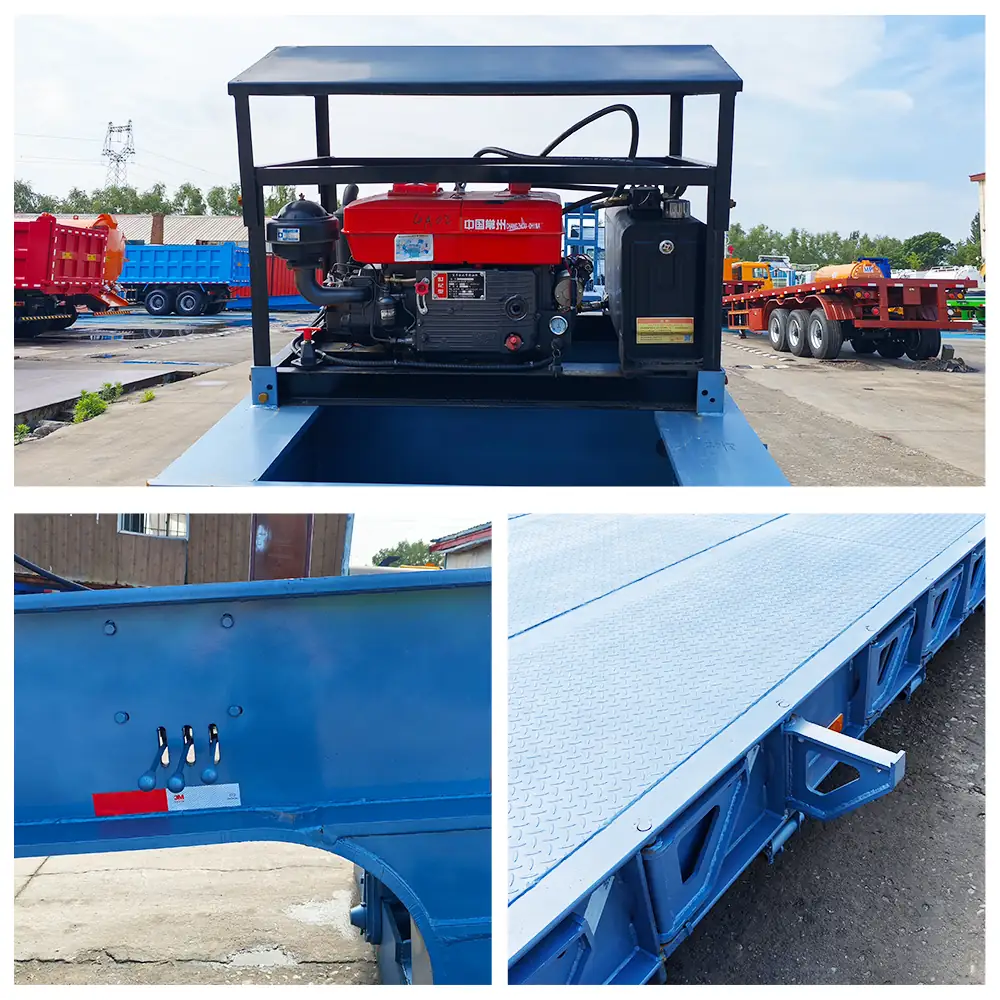
1. Technical Comparison: RGN Lowboy vs. Fixed Gooseneck Lowbed
Structural layout, ground clearance, and machinery loading mechanisms differ significantly between the two heavy-haul platforms:
| Engineering Metric | Detachable Gooseneck (RGN Lowboy) | Fixed Gooseneck Lowbed Trailer |
|---|---|---|
| Loading Method | Front drive-on (Hydraulic neck detaches completely) | Rear climb-on (Heavy mechanical spring or hydraulic ramps) |
| Working Deck Height | 500 mm – 650 mm (Ultra-low ground profile) | 850 mm – 1,150 mm (Drop-deck above rear bogie) |
| Drive-On Ramp Angle | Gentle 6° – 8° slope directly onto ground | Steep 15° – 20° rear incline onto rear wheels |
| Tare Weight | approx. 11.5 – 14.5 Tons (Hydraulic neck & cylinders) | approx. 8.5 – 10.5 Tons (Simpler structural frame) |
| Equipment Suitability | Low ground-clearance pavers, massive excavators, crushers | Wheel loaders, bulldozers, standard heavy machinery |
| Axle Configurations | 3 Axles to 4 Axles (+ optional flip axle / dolly) | 3 Axles to 4 Axles heavy mechanical suspension |
| Maintenance Demands | Higher (hydraulic lines, neck locking pins, diesel pony engine) | Minimal (solid mechanical frame, no hydraulic disconnects) |

Engineering Selection Matrix: Fixed Gooseneck vs Detachable RGN
Quick reference for fleet engineers choosing between a fixed gooseneck lowbed and a hydraulic detachable gooseneck (RGN) lowboy:
| Engineering Metric | Fixed Gooseneck Lowbed | Detachable Gooseneck (RGN) |
|---|---|---|
| Loading Method | Rear climb via heavy-duty spring ramps | Front drive-on directly at ground level |
| Tare Weight & Cost | Lower tare weight (approx. 8.5 T), lower FOB cost | Heavier hydraulic frame, higher capital cost |
| Ideal Cargo | Tracked excavators (e.g. Cat 330C), dozers, rollers | Low-clearance pavers, cranes, drilling rigs |
| Recommended Product | 3 Axle 60-Ton Fixed Lowbed » | 3 Axle 60-70 Ton RGN Lowboy » |
2. Front Loading vs. Rear Climbing: Eliminating Tipping Hazards
Loading heavy machinery onto trailers causes over 60% of transport-related accidents on remote job sites:
- The RGN Advantage (Zero Fall Risk): The tractor uncouples, the hydraulic neck drops the trailer front flat against the graded ground, and the neck drives away. Tracked excavators drive straight forward onto the deck without climbing over high rear wheels or slippery metal ramps.
- Fixed Lowbed Considerations: Climbing rear spring ramps requires experienced operators. If rain, mud, or hydraulic fluid coats the steel ramps, tracked equipment risks slipping off sideways during the ascent over rear axle humps.

3. Overhead Bridge Clearance & Center of Gravity
Height restrictions are critical when hauling tall industrial boilers, mining screens, and high-cab excavators:
- Lowering Total Traveling Height: An RGN working platform rides just 550mm off the pavement, saving 300mm to 500mm of vertical height compared to a fixed lowbed. This margin allows tall loads to clear 4.2-meter highway overpasses and overhead electrical cables without circuitous detours.
- Rollover Resistance: Lowering vehicle center of gravity by 400mm reduces centrifugal roll torque by over 35% on banked highway interchanges and rough mining haul roads.
4. Swing-Out Outriggers for Extra-Wide Mining Machinery
Modern earthmoving machinery often exceeds standard 2.5-meter highway widths:
- Chengda equips both RGN and fixed lowbeds with heavy-duty forged swing-out brackets (outriggers) every 500mm along both side beams.
- Deploying these brackets with hardwood timbers expands the effective deck width from 3,000 mm to 3,500 mm, securely supporting wide excavator steel tracks.
Frequently Asked Questions
Q: How is the detachable gooseneck powered during field detachment?
A: RGN trailers can be powered either via tractor PTO (power take-off) hydraulics or an independent small diesel pony engine mounted inside the gooseneck frame.
Q: When is a fixed gooseneck lowbed preferable to an RGN?
A: For operators working in remote African or Latin American regions where hydraulic servicing is limited, fixed goosenecks provide maximum structural reliability with zero hydraulic downtime.
Q: Where can fleet buyers find custom 60-100 ton lowbed trailers?
A: Explore our heavy equipment range in the Semi-Trailers Category, inspect the 3-Axle Lowboy Trailer, or consult our International FAQ Center.
Request Heavy Lowboy Technical Drawings & Factory Quote
Need Custom Lowbed Blueprints & Factory Pricing?Chengda manufactures 50 T to 120 T fixed gooseneck and hydraulic detachable lowbed trailers, configured for African and Middle Eastern mining corridors — reinforced decks, swing-out outriggers and heavy-duty ramp packages. |
Recommended Semi-Trailers
 3 Axle Lowbed Semi Trailer |  3 Axle Lowboy Trailer |  Caterpillar 330C Excavator |