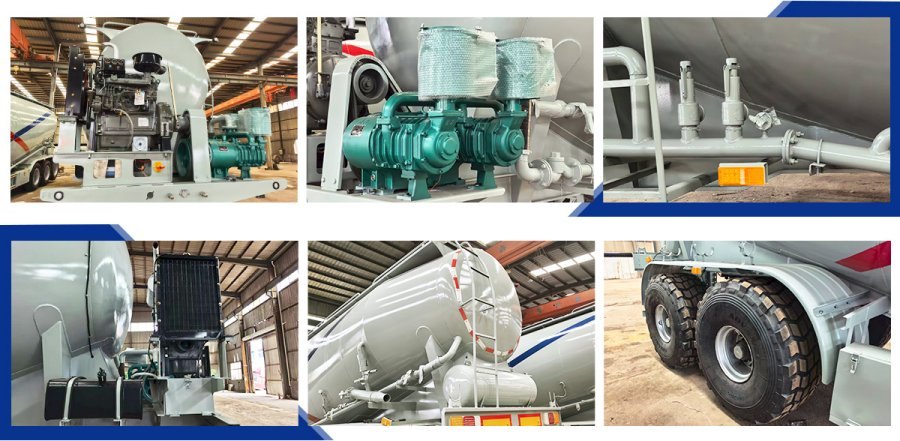
In pneumatic dry bulk logistics, the onboard air compressor (10m³/min to 12m³/min capacity) is the mechanical heartbeat of a cement bulker semi-trailer. Powered by an auxiliary 4-cylinder diesel engine (Weichai / Huafeng 4102) or a truck transmission PTO shaft, proper pneumatic pressure regulation (0.2 MPa operating pressure) directly dictates vertical discharge speeds (1.2 to 1.5 tons/min into 25-meter silos) while preventing catastrophic cement pipeline clogging and fluidized canvas tearing.
1. Technical Comparison: 10 m³/min vs. 12 m³/min Cement Air Compressors
Displacement volumes, diesel power ratings, and discharge speed metrics across standard compressor units:
| Engineering Parameter | 10 m³/min Twin-Cylinder Air Compressor | 12 m³/min Heavy-Duty Air Compressor (Bohai / Wuhu) |
|---|---|---|
| Air Displacement Volume | 10.0 m³ / minute (approx. 350 CFM) | 12.0 m³ / minute (approx. 425 CFM) |
| Rated Operating Pressure | 0.20 MPa (Working limit: 0.25 MPa) | 0.20 MPa (Safety valve blow-off: 0.22 MPa) |
| Compressor Cylinder Architecture | V-type twin cylinder single-stage piston design | Heavy-duty twin-cylinder or 3-cylinder water/air-cooled |
| Auxiliary Diesel Engine Match | 4-Cylinder 4100 / 4102 Diesel (approx. 40 – 48 HP) | 4-Cylinder 4102 Turbocharged Diesel (approx. 55 – 65 HP) |
| Vertical Silo Elevation Reach | Up to 18 – 20 Meters vertical height | Up to 25 – 30 Meters vertical height |
| Average Unloading Speed | 1.0 – 1.2 Tons / minute (approx. 35 mins for 35T) | 1.3 – 1.6 Tons / minute (approx. 25 mins for 35T) |
| Compressor Weight (Bare Pump) | approx. 220 kg | approx. 270 kg |
| Optimal Fleet Application | 25 – 35 CBM Dry Bulk Trailers, Fly Ash Transport | 38 – 50 CBM Heavy V-shape / W-shape Cement Tankers |
2. The Standard 4-Step Pneumatic Unloading Procedure
Deviating from correct pressure sequencing causes instant cement pipe solidification:
- Warm-Up & Tank Pressurization: Start the auxiliary diesel engine, engage the compressor clutch, and verify oil pressure. Keep all discharge valves closed. Allow compressed air to inflate the fluidized canvas beds until tank internal pressure gauges read between 0.18 MPa and 0.20 MPa.
- Cracking the Secondary Booster (Blow-Assist) Line: Before opening the main discharge butterfly valve, open the secondary air booster ball valve located directly on the discharge pipe elbow. This creates a high-velocity air jet down the discharge hose.
- Opening the Bottom Discharge Valves: Once the booster air line is flowing freely, slowly open the primary bottom butterfly valve to 50%, then 100%. Fluidized cement enters the air stream and accelerates up the vertical silo pipe.
- Tank Purge & Clean-Down: When the tank empties, internal pressure drops rapidly to 0.05 MPa. Run the compressor for an additional 3 minutes with the booster open to scour all residual dust out of the rubber hose before stopping the engine.
3. Troubleshooting Cement Pipe Blockages (Emergency Protocol)
If tank pressure spikes to 0.22 MPa while cement stops flowing into the silo:
- Immediate Valve Shutdown: Instantly close the bottom discharge butterfly valve. Do NOT turn off the air compressor.
- Activating Full Secondary Booster Pressure: With the discharge valve closed, all compressed air routes through the secondary booster line, directing 0.2 MPa full airflow down the hose to blast the compacted cement plug out into the silo.
- The "Air-Hammer" Pulsing Technique: If the blockage persists, rapidly open and close the secondary ball valve to create pneumatic shock waves along the rubber hose while tapping the hose elbow lightly with a rubber mallet.
- Exhaust Depressurization: Never disconnect a pressurized cement hose! If the pipe remains blocked, shut off the engine, open the manual tank top pressure relief valve, verify that pressure reads strictly zero, and then uncouple the camlock fittings.
4. Daily Compressor Maintenance Protocol for Zero Downtime
- Inspect Lubricating Oil Level Daily: Use high-grade CD or CF-4 15W-40 diesel oil in the compressor crankcase. Low oil levels cause connecting rod big-end bearing seizure within hours.
- Clean Air Intake Filter Cartridge: In dusty cement batching plants, blow out the compressor paper air intake filter daily. A dust-clogged intake reduces air output by over 30%, doubling discharge time.
- Drain Tank Air Moisture Pre-Trip: Condensed water inside air lines cakes dry cement powder against the canvas. Drain all air tank water petcocks before every loading cycle.
Frequently Asked Questions
Q: What causes cement powder to pack tightly and refuse to fluidize?
A: This occurs when loading hot cement (above 80°C) during rainy weather or when moisture contaminates the fluidized bed canvas, forming hard crusts over the aeration pores.
Q: Can the air compressor be powered directly by the truck tractor?
A: Yes. Chengda provides tractor PTO drive configurations where a cardan shaft runs from the truck transmission directly to the compressor, eliminating the weight and maintenance of an auxiliary diesel engine.
Q: Where can fleet operators source replacement cement air compressors and parts?
A: Explore our full inventory in the Heavy-Duty Spare Parts Category, inspect original Bulk Cement Semi-Trailers, or consult our International FAQ Center.
Inquire for Cement Bulker Air Compressors & Spare Parts
Recommended Semi-Trailers
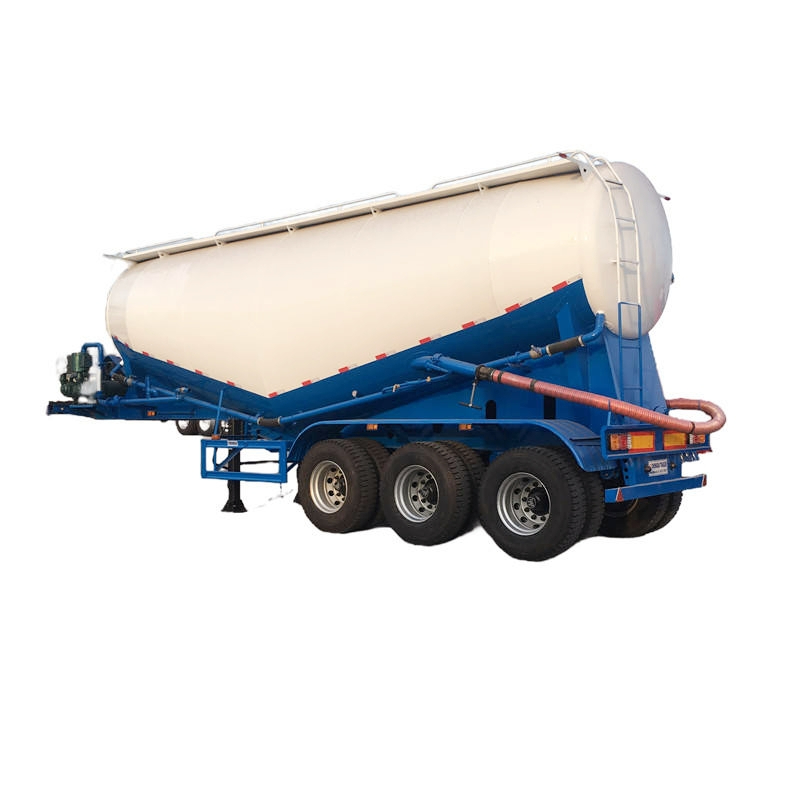 3 Axle Bulk Cement Trailer | 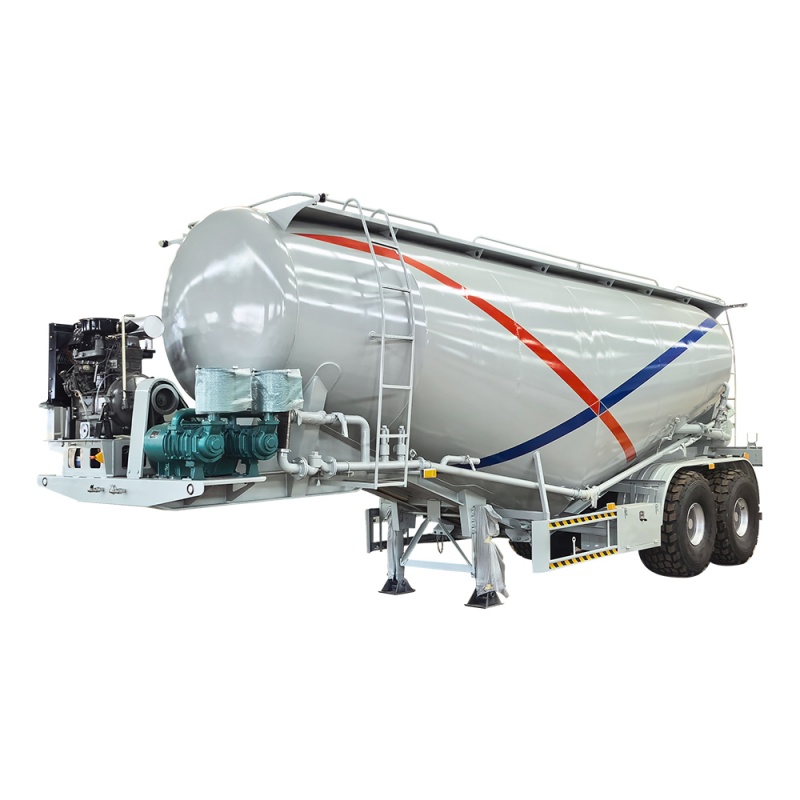 2 Axle Cement Trailer |  Howo 8x4 Dump Truck |