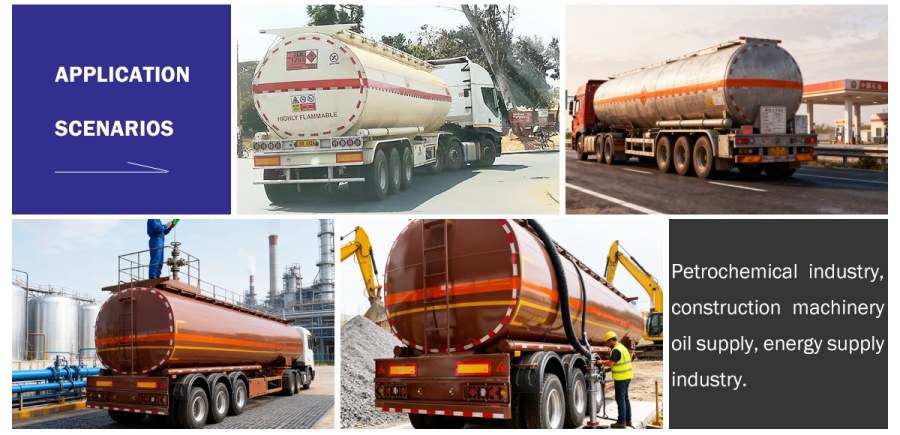
When purchasing liquid petroleum transport equipment, selecting between a carbon steel (Q235B) fuel tanker trailer and an aluminum alloy (5083) tanker trailer directly dictates payload profitability under strict highway axle weight limits. An aluminum tanker weighs 2.5 to 3.5 tons less than an equivalent carbon steel unit, allowing operators to haul 3,000 to 4,000 additional liters of fuel per trip within legal gross weight limits, recovering the initial purchase price premium within 18 to 24 months.
1. Technical Comparison: Carbon Steel vs. Aluminum Alloy Tanker
Operational economics, material toughness, and transport longevity differ significantly across the two alloy platforms:
| Performance Metric | Carbon Steel Tanker (Q235B) | Aluminum Alloy Tanker (5083-H111) |
|---|---|---|
| Tare Weight (45,000L 3-Axle) | approx. 9.8 – 11.2 Tons | approx. 6.8 – 7.5 Tons (30% to 35% lighter) |
| Legal Payload Capacity | Standard liquid volume capped by axle weighbridges | +3,000 to +4,000 Liters extra fuel payload per trip |
| Corrosion Resistance | Requires internal anti-corrosion coating; prone to rust from water in diesel | Naturally corrosion-resistant; zero rust formation, maintains high fuel purity |
| Impact Toughness on Rough Roads | Superior structural flexibility; easily repaired by local welders on unpaved roads | High rigidity; requires specialized TIG/MIG argon pulse welding equipment |
| Explosion & Fire Safety | Conducts static charges effectively with standard bonding reels | Non-sparking alloy; lower risk of frictional ignition during road accidents |
| Initial Purchase Cost | Lower initial investment (approx. 35-45% cheaper than aluminum) | Higher initial investment |
| Residual / Scrap Value | Low scrap steel value (approx. 10% of purchase price) | High residual scrap value (retains 40-50% of raw material value) |

2. Payload Economics: Calculating the Fleet ROI on Aluminum
On regulated regional transport corridors enforcing strict weighbridge penalties:
- Extra Fuel Volume per Run: Under a 48-ton gross vehicle combination limit, saving 3,000 kg of empty trailer tare weight translates directly into carrying approximately 3,600 liters of extra diesel (specific gravity ~0.84) on every loaded trip.
- Annual Revenue Differential: A commercial petroleum tanker running 120,000 kilometers annually completes approximately 150 delivery cycles. Hauling 3,600 extra liters per run generates an additional 540,000 liters of transported fuel volume per year without burning additional engine fuel.
- Empty Return Fuel Savings: Returning empty with a lighter aluminum chassis reduces prime mover diesel burn by 2.0 to 3.5 liters per 100 km, saving thousands of dollars in annual fleet running costs.
3. Where Carbon Steel Remains the Smarter Choice
Despite aluminum's weight efficiency, carbon steel tankers remain the preferred choice for specific operating environments:
- Severe Off-Road Mining Concessions: On unimproved rock-strewn quarry roads, extreme twisting and dynamic torsional shock can cause fatigue micro-cracks along aluminum weld seams. Carbon steel possesses superior yield ductility to absorb severe road impacts.
- Remote Field Repairability: If a carbon steel tank develops a crack in remote bush regions of the DRC, Zambia, or Angola, standard stick electrode welders can effect permanent field repairs immediately. Aluminum tanks require specialized argon shielding gas and AC TIG welding gear rarely found outside capital cities.
4. ADR Safety Standards & Compartment Engineering
Chengda engineers both steel and aluminum tankers in strict compliance with international ADR liquid transport standards:
- Pneumatic Emergency Foot Valves: Each bottom discharge outlet is secured by a fail-safe pneumatic foot valve that automatically shuts off in under 0.5 seconds if an impact or air pressure failure occurs.
- Internal Surge Baffles: Dished anti-wave baffles spaced every 1.5 to 1.8 meters restrict dynamic surge waves, preventing vehicle roll instability during emergency braking.
- Overfill Prevention Sensors: Optic socket sensors automatically signal gantry loading racks to halt pumping when fluid levels reach 98% capacity.
Frequently Asked Questions
Q: What is the most popular tanker volume for cross-border African transport?
A: 40,000 Liters to 45,000 Liters across a 3-axle configuration is the regional standard, maximizing transport revenue while complying with regional axle limits.
Q: Can an aluminum tanker carry jet fuel (Aviation Kerosene)?
A: Yes. Aluminum alloy 5083 does not react with aviation fuel or form rust scale, making it the globally mandated standard for airport aviation fuel delivery.
Q: Where can fleet buyers find certified petroleum tanker trailers?
A: Explore our full inventory in the Semi-Trailers Category, inspect the 3-Axle Fuel Tanker Trailer, or consult our International FAQ Center.
Request Fuel Tanker Specifications & Comparative Pricing
Recommended Semi-Trailers
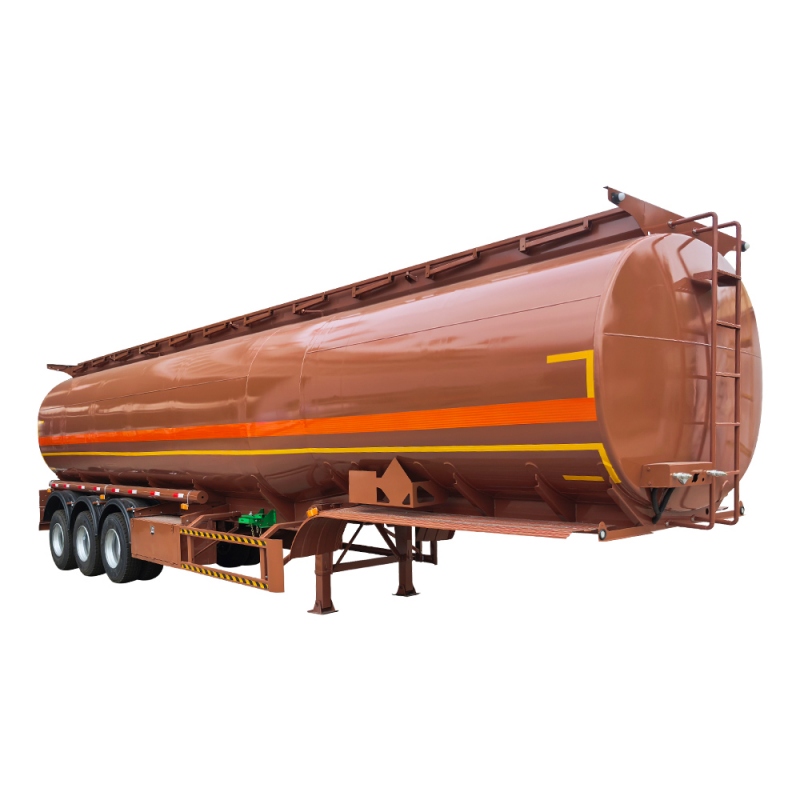 3 Axle Oil Tank Trailer |  2 Axle Fuel Tanker Trailer |  3 Axle Flatbed Trailer |