In dry bulk powder logistics—transporting Portland cement, fly ash, lime powder, and mineral dust—the specialized curved Banana Tanker Trailer (W-shape or curved belly bulker) has rapidly emerged as the preferred alternative to traditional straight-line V-shape pneumatic tankers across African and Latin American road networks. Designed with a curved lower belly profile and dual-cone fluidization chambers, banana tankers achieve a lower center of gravity (reduced by 180 mm), exceptionally low discharge residue rates (<0.2%), and discharge speeds exceeding 1.5 metric tons per minute under a working pressure of 0.2 MPa.
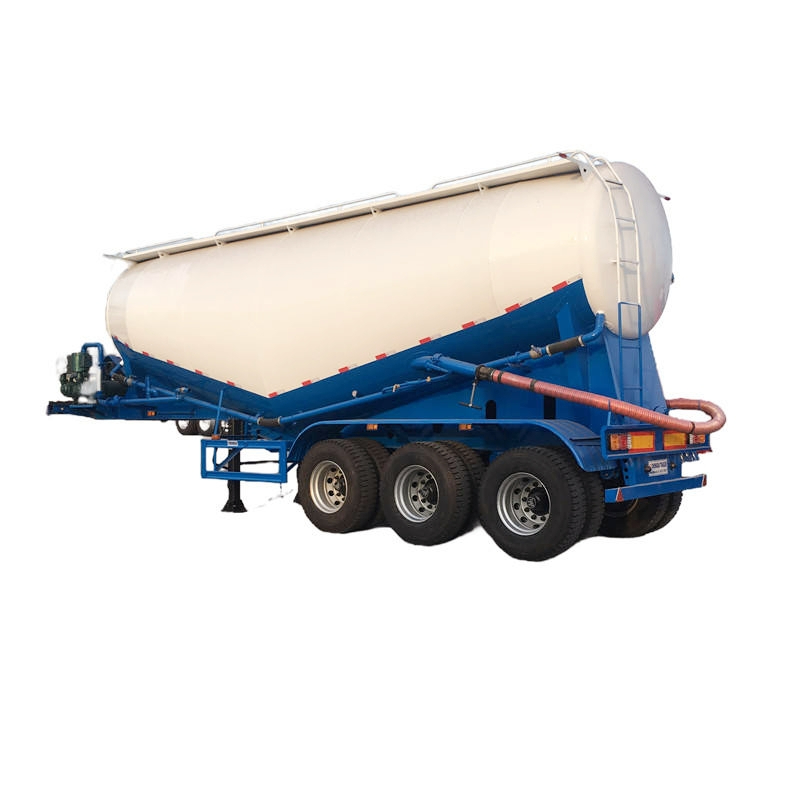
1. Design Architecture: Banana Tanker vs V-Shape Tanker
The geometry of the pressure vessel dictates how compressed air fluidizes powder particles and how effectively gravity feeds material to the discharge manifold:
| Engineering Characteristic | Banana Tanker Trailer (Curved Belly) | Traditional V-Shape Cement Bulker | Operational Advantage |
|---|---|---|---|
| Vessel Center of Gravity | 180 mm to 220 mm lower than V-shape | Standard high center of gravity | Drastically cuts rollover risk on curved developing highways |
| Fluidization Slope Angle | Steep slide angle (55° to 60°) | Moderate slide angle (45° to 50°) | Rapid powder flow into fluidized bed canvas; zero dead pockets |
| Discharge Residue Rate | Under 0.2% (<80 kg in 40T load) | 0.4% - 0.8% (160 kg - 320 kg) | Saves tons of trapped cement over annual fleet cycles |
| Effective Tank Capacity | 35 m³, 40 m³, 45 m³, 50 m³ | 28 m³, 32 m³, 36 m³ | Higher volume-to-weight ratio for low-density powders |
| Vessel Wall Material | 4.0 mm to 5.0 mm high-strength Q345B steel | 5.0 mm standard Q235 carbon steel | Cuts empty tare weight by 800 kg to 1,200 kg |
2. Pneumatic Fluidized Bed Mechanics & Fluidization Canvas
Pneumatic bulk tankers do not dump by gravity; they operate as certified pressure vessels (testing pressure 0.3 MPa, working pressure 0.2 MPa):
- Fluidization Canvas Technology: The tank floor features a perforated steel plenum chamber covered with multi-ply synthetic polyester permeable fluidization canvas. Compressed air permeates up through the canvas pores at 0.2 MPa, suspending cement micro-particles in an air cushion so the powder behaves like a liquid.
- Venturi Discharge Manifold: As fluidized cement flows toward the bottom outlet valve, secondary aeration boost lines inject pressurized air directly into the 4-inch (100 mm) discharge pipe, creating a Venturi pressure differential that propels the cement slurry up vertical silo delivery pipes up to 25 to 30 meters height.
- Pressure Relief & Safety Check Valves: Dual automatic safety valves (calibrated to blow off at 0.22 MPa) prevent over-pressurization, while internal check valves prevent cement from backing up into the air compressor cylinders during sudden shutdowns.
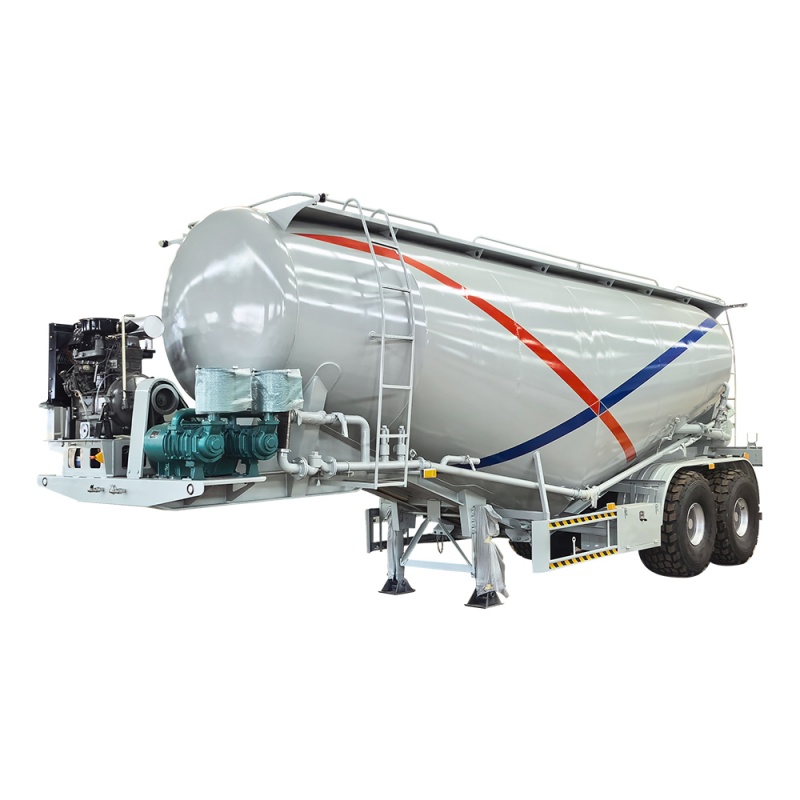
3. Air Compressor Pairing: Diesel Auxiliary Engine vs Tractor PTO
Supplying 10 to 12 cubic meters of compressed air per minute requires selecting between an independent diesel power pack or a tractor power take-off (PTO) drive shaft:
| Compressor Drive Option | Engine Model / Power | Compressor Air Output | Fleet Operation Profile |
|---|---|---|---|
| On-Board Diesel Auxiliary Engine | Weichai Huafeng 4102 (44 kW / 60 HP) | 10.0 or 12.0 m³/min (Bohai / Wuhu 2-cylinder) | Universal flexibility. Trailer unloads with any tractor brand without hydraulic PTO |
| Tractor Direct PTO Drive Shaft | Driven directly off tractor transmission PTO | 10.0 or 12.0 m³/min | Saves 850 kg of auxiliary engine tare weight; zero maintenance on second engine |
4. Daily Operating & Maintenance Protocol for Powder Fleets
Cement dust is highly abrasive. Operators must enforce strict preventive inspection routines to guarantee unhindered discharge cycles:
- Moisture Contamination Prevention: Water in compressed air causes cement to hydrate inside the tank, hardening the fluidization canvas. Drain compressor moisture traps daily before initiating pressurization.
- Canvas Permeability Inspection: If discharge time climbs from 25 minutes to over 45 minutes, the canvas pores have become clogged with hydrated cement crust. Open manhole covers, inspect canvas tension, and replace canvas strips every 18 to 24 months.
- Manhole Gasket Integrity: Check the rubber seals on the top 500 mm loading manholes before departure. Pressure leaks around manhole clamps prevent the tank from reaching its mandatory 0.2 MPa discharge threshold.
Frequently Asked Questions (FAQ)
Q: How long does it take to unload a 40-ton cement banana tanker?
A: With a standard 12 m³/min air compressor operating at 0.2 MPa, a 40-ton load of dry Portland cement discharges into a 25-meter vertical silo in approximately 25 to 30 minutes, achieving an average discharge rate of 1.3 to 1.6 tons per minute.
Q: What is the benefit of a W-shape or Banana Tanker over a V-shape tanker?
A: The banana shape curves downward in the center, allowing larger volume capacities (up to 45m³–50m³) while keeping the total height lower than a V-shape tanker. Furthermore, its steeper internal slide angles reduce powder residue inside the tank to under 0.2%, compared to 0.5%–0.8% in older V-shape models.
Q: Can a cement bulker transport flour, sugar, or food products?
A: No. Cement tankers are fabricated from carbon steel and use non-food-grade canvas. For food-grade powders (flour, starch, sugar), Chengda manufactures dedicated stainless steel (304/316) or high-grade aluminum alloy tankers with FDA-compliant sanitary fluidization pads and fluid piping.
Recommended Equipment for Dry Bulk Cement Logistics
|
3 Axle Bulk Cement Trailer |
2 Axle Cement Trailer |
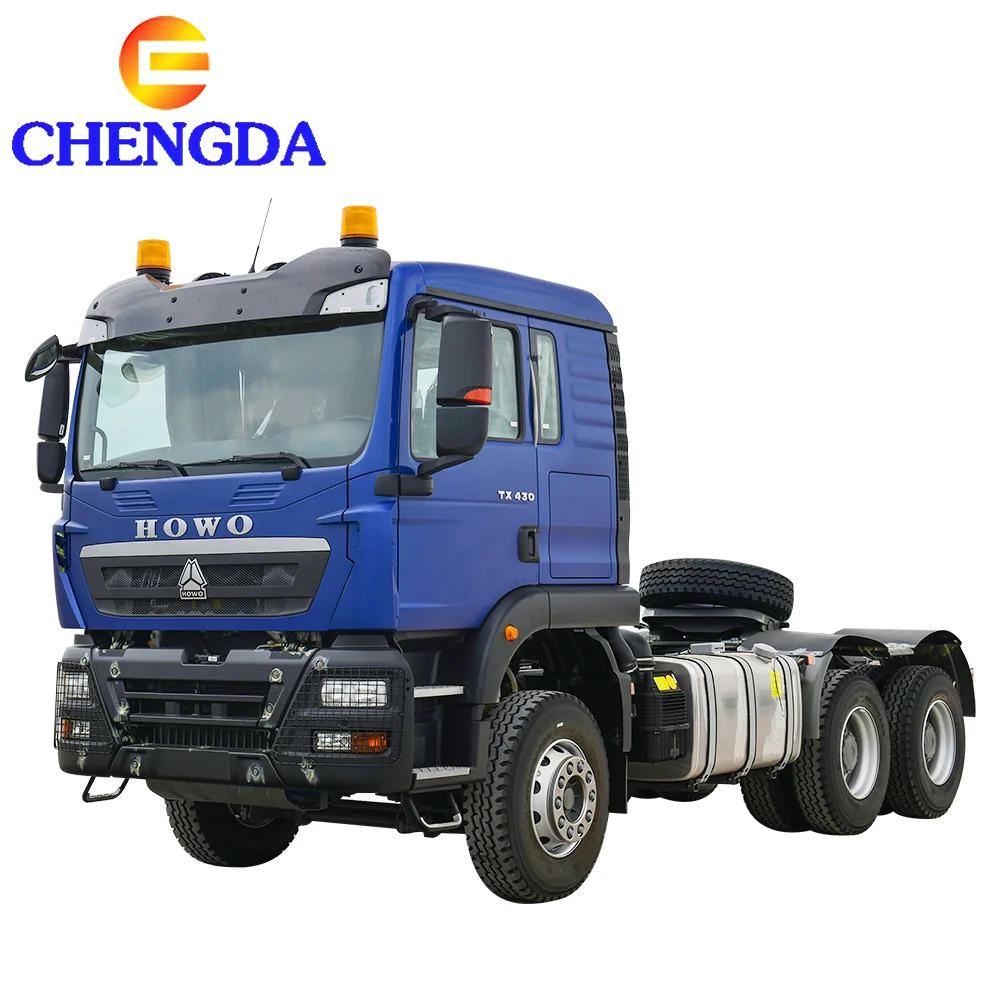
Howo TX 430hp 6x4 Tractor Truck |