In highway asphalt paving, chip sealing, and bituminous road surface dressing across Africa and Latin America (Sinotruk Howo, Shacman 8,000L to 16,000L asphalt distributors), the thermal oil indirect heating system and multi-nozzle spray bar maintain liquid asphalt (viscous penetration bitumen, SBS polymer-modified asphalt, or emulsified asphalt) at exact application temperatures between 160°C and 185°C. Operating under heavy asphalt varnishing risks, diagnosing high-temperature thermal oil circulation pump seizures, servicing automated Riello diesel burners, and clearing triple-overlap spray bar nozzles ensures precise computer-controlled application rates (0.2 to 3.0 kg/m²) without streaking.
1. Technical Specification Comparison: Direct Flue Heating vs. Thermal Oil Indirect Heating
Heating uniformities, bitumen oxidation risks, thermal efficiencies, and safety profiles across asphalt distributor trucks:
| Engineering Parameter | Conventional Direct Flue Pipe Heating (Direct Flame) | Chengda Thermal Oil Indirect Circulation Heating (OEM Spec) |
|---|---|---|
| Heating Principle & Medium | Open diesel burner firing directly into U-shaped steel fire tubes | Closed-loop thermal oil circulating at 220°C through jacketed coils |
| Bitumen Aging & Carbonization | High risk: Localized flue skin temperatures (>350°C) char asphalt | Zero coking: Gentle, uniform heating preserves chemical binder ductility |
| Thermal Oil Circulation Pump | None (Static convection only) | High-temperature magnetic or mechanical seal centrifugal pump (25 m³/h) |
| Heating Rate Efficiency | approx. 10°C to 12°C per hour | Fast heating: approx. 18°C to 22°C temperature rise per hour |
| Diesel Burner Model | Manual single-stage burner | Italian Riello dual-stage automated burner with digital thermostat |
| Spray Bar Heating Jacket | External diesel torching or simple exhaust gas ducting | Continuous thermal oil circulation jacket around entire spray bar & valves |
| Spray Nozzle Configuration | Manual lever-operated brass nozzles (Prone to streaking) | Pneumatically-actuated individual electronic nozzles (Triple-overlap) |
| Compatible Bitumen Binders | Standard penetration asphalt (60/70, 80/100) | SBS Modified Bitumen, Crumb Rubber Asphalt, Cutback & Emulsions |

2. The Jacketed Circulation Circuit: Why Spray Bars Must Preheat Before Pumping
Pumping cold, stiff bitumen through an unheated spray bar immediately freezes the system solid:
- The "Cold Iron" Solidification Disaster: Bitumen solidifies into rock-hard black glass at temperatures below 100°C. If an operator starts the asphalt pump before heating the spray bar, molten asphalt from the insulated tank hits the cold steel pipes and freezes instantly, plugging all 36 nozzles and bursting hydraulic drive lines.
- Full Thermal Oil Jacket Coverage: In Chengda's intelligent distributor trucks, 200°C thermal oil circulates continuously through external hollow jackets encasing the main asphalt gear pump, the 6-meter folding spray bar, and every individual nozzle body.
- The Automated 40-Minute Pre-Heat Protocol: Before dispatch, the Riello burner and thermal oil circulation pump run automatically until digital sensors confirm the spray bar metal temperature reaches at least 140°C, ensuring instant, clog-free liquid asphalt spraying upon arrival at the paving site.
3. Troubleshooting Thermal Oil Pump Seizures & Burner Lockouts
Burner flameouts and stalled circulation pumps trace to specific thermal degradation and electrical faults:
| Observed System Fault | Most Probable Root Cause | Immediate Corrective Action |
|---|---|---|
| Thermal oil circulation pump motor overloads; pump shaft will not spin | Cold bitumen leaked past asphalt pump gland seal into thermal oil jacket, freezing solid | Heat pump housing with external heating wand; flush thermal oil circuit; replace shaft packing |
| Riello burner locks out (Red reset light illuminates on control box) | Soot-coated optical flame photocell; clogged burner diesel nozzle; air trapped in fuel supply | Clean photocell glass with alcohol rag; replace 1.50 GPH diesel spray nozzle; bleed burner pump |
| Spray bar leaves un-sprayed white streaks on road ("Zebra striping") | Cold nozzles; individual pneumatic nozzle air cylinder jammed; misaligned nozzle fan angle | Pre-heat bar to 150°C; check pneumatic solenoid valve; align nozzle fans at exact 30° angle to bar |
| Thermal oil reservoir expansion tank smoking heavily with acrid fumes | Thermal oil degraded and cracked into volatile light ends from overheating (>250°C) | Drain entire thermal oil volume; flush coil pipes; refill with fresh synthetic ISO VG 32 heat transfer oil |
4. Step-by-Step Spray Bar Nozzle Clean-Out & Auto-Flushing Protocol
Preventing asphalt from freezing inside the spray bar at the end of the working shift:
- Engage Asphalt Pump Reverse Suction: Immediately upon completing spraying, switch the reversible asphalt gear pump into "Suck-Back" mode. High-vacuum suction draws residual molten asphalt out of the spray bar and pulls it back into the main insulated tank.
- Pneumatic High-Pressure Air Purge: Open the automated 0.8 MPa chassis air purge valve on the in-cab touchscreen console. A high-velocity blast of compressed air shoots through the entire spray bar manifold, blowing liquid droplets out of all 36 nozzle orifices into a catch tray.
- Diesel Solvent Flushing Cycle: Divert the three-way wash valve to inject 15 liters of diesel fuel solvent through the internal pump cavity and spray bar, completely dissolving sticky asphalt varnish before the metal cools.
- Calibrate Nozzle Fan Angles to 30 Degrees: Using the specialized nozzle alignment wrench, verify that every spray tip is turned to an exact 30-degree angle relative to the spray bar axis. This precise angle ensures adjacent spray fans overlap in a triple-layer curtain without colliding into each other.
Frequently Asked Questions
Q: What type of thermal oil should be used in the circulation heating system?
A: Always use specialized Synthetic Heat Transfer Fluid (Thermal Oil ISO VG 32 or VG 46) engineered for high-temperature closed-loop service with a minimum boiling point exceeding 320°C. Never use hydraulic oil or motor oil, which crack into explosive vapor gases!
Q: How does the computer maintain accurate asphalt spraying rates when truck speed varies?
A: A high-precision Doppler ground-speed radar mounted beneath the chassis measures actual truck travel speed. The digital central computer continuously modulates the proportional hydraulic motor driving the asphalt pump, adjusting flow to match vehicle speed within ±1.5% accuracy.
Q: Where can road construction contractors procure intelligent asphalt distributor trucks and parts?
A: Browse our complete road building lineup in the Construction Machinery Category, view original Commercial Specialized Trucks, or consult our International FAQ Center.
Request Asphalt Distributor Truck Quotation & Technical Specs
Recommended Semi-Trailers
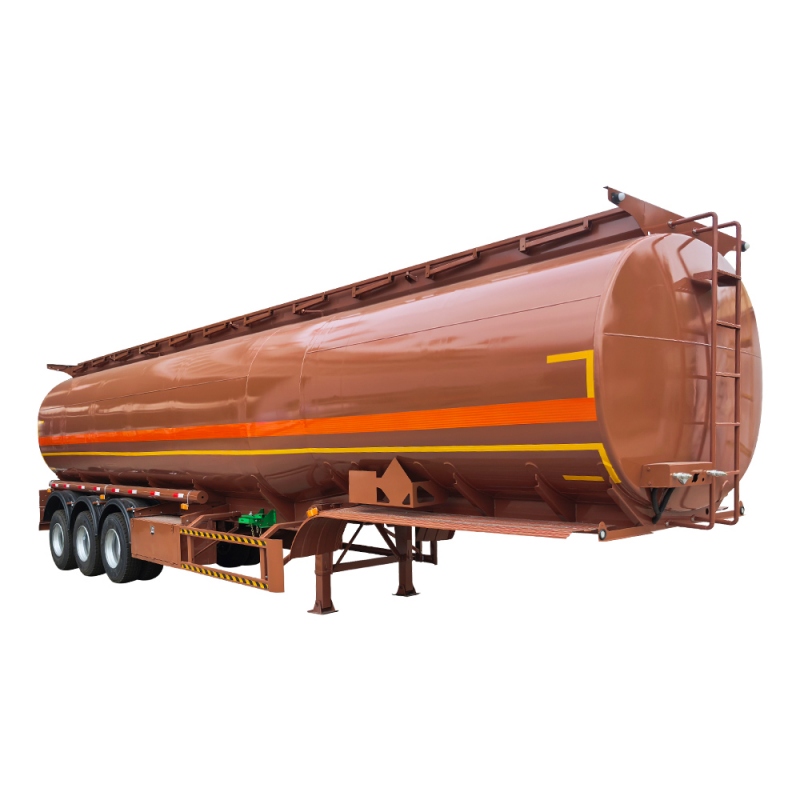 3 Axle Oil Tank Trailer |  2 Axle Fuel Tanker Trailer |  Howo 8x4 Dump Truck |