Why Transmission Selection Matters More Than You Think
The transmission sits between the engine and the drive axle, converting engine speed into usable wheel torque. A poorly matched gearbox does not just feel wrong to drive — it increases fuel consumption, accelerates clutch wear, and can shorten engine life by forcing the engine to operate outside its efficient RPM range. In a fleet context, these effects compound across every vehicle and every shift.
For light trucks operating in Africa, Latin America, and other markets where payloads are heavy, roads are unpaved, and workshop facilities are limited, the stakes are higher. A transmission that performs adequately on a smooth highway with a half-load may fail prematurely when subjected to daily maximum-weight operation on corrugated gravel. The right choice is the one that matches not just the vehicle, but the job.
Key Factors to Evaluate
1. Torque Capacity — Match the Transmission to the Engine
The most fundamental specification is torque capacity: can the transmission handle the engine's output? Every gearbox has a maximum input torque rating, measured in Newton-meters (Nm). Exceed it, and you risk gear tooth failure, bearing collapse, or input shaft breakage — all of which are expensive and avoidable.
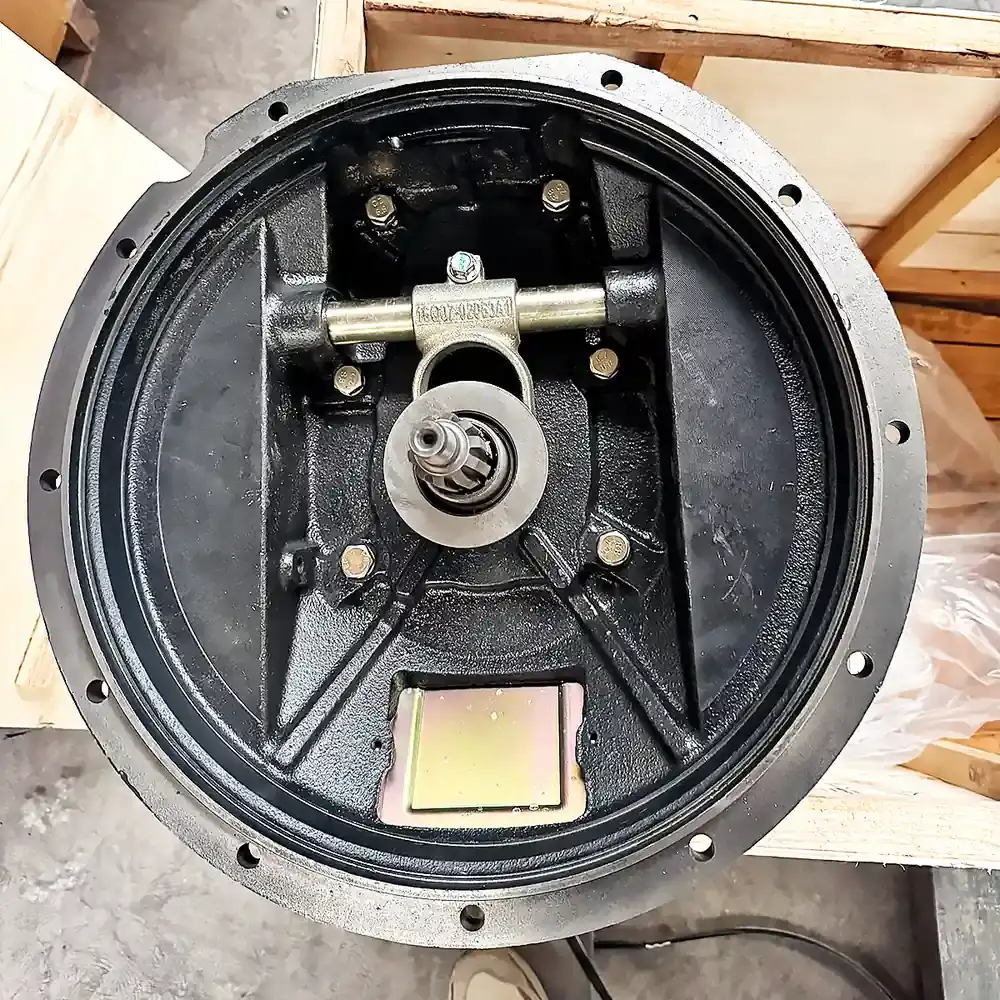
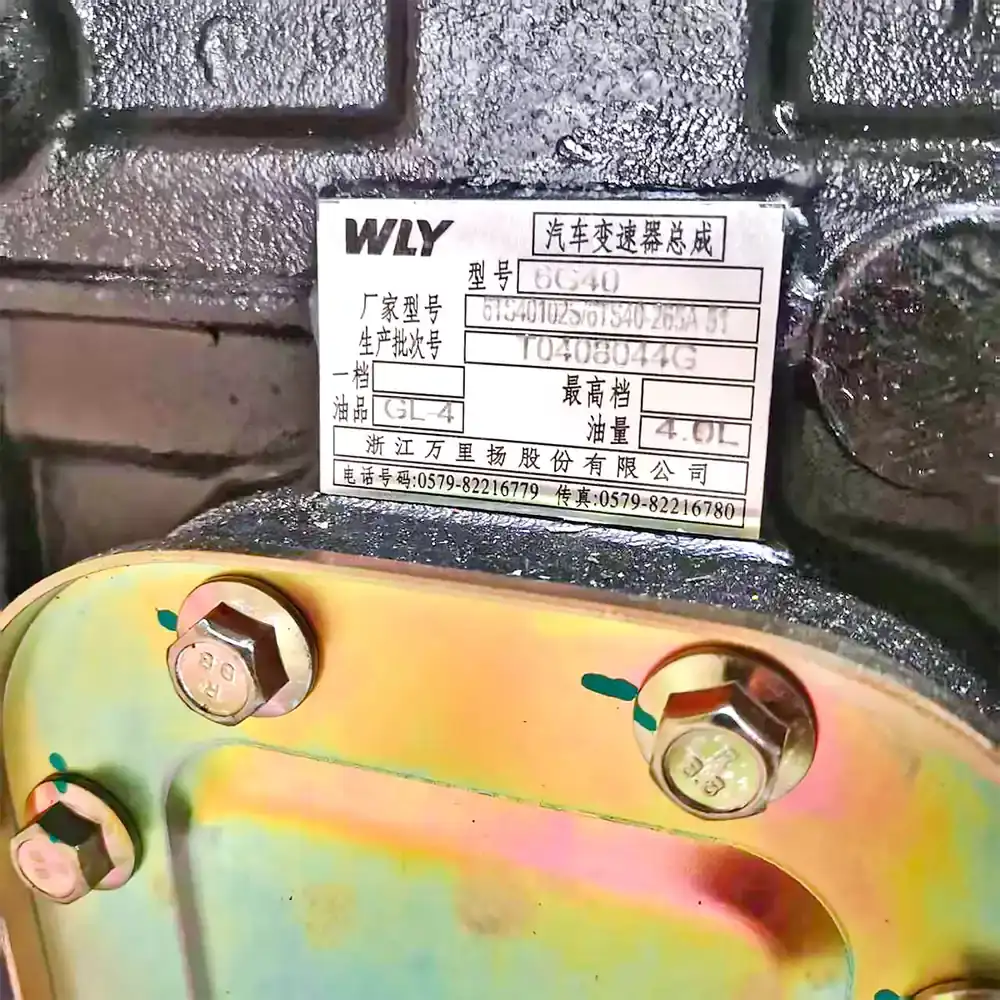
When selecting a replacement transmission, confirm that its torque rating meets or exceeds your engine's peak output. Do not rely on "it fits the same bell housing" as proof of compatibility. Two gearboxes can bolt up to the same engine but have entirely different internal specifications. The WLY 6G40, for example, is engineered for light truck applications — verify the specific torque rating with the supplier before ordering, and cross-check it against your engine's specification sheet.
2. Gear Ratios — The Right Spread for Your Routes
A 6-speed transmission like the WLY 6G40 offers an additional gear ratio compared to the 5-speed units common in older light trucks. The practical advantage is twofold:
A lower first gear provides more torque multiplication for starting on inclines or moving a fully loaded truck from a standstill on soft ground — common scenarios in construction, agricultural, and mining operations. Less clutch slipping during starts means longer clutch life.
A taller sixth gear lowers engine RPM at highway cruising speed, which reduces fuel consumption, cabin noise, and engine wear on longer hauls. For fleet operators running intercity delivery routes, the fuel savings from a proper overdrive gear can be significant over the vehicle's service life.
The key is to match the ratio spread to your driving profile. If your trucks rarely exceed 60 km/h and spend most of their time in stop-start urban delivery, the benefit of a sixth gear is marginal. If they run loaded between towns on open highways, the sixth gear pays for itself in fuel savings.
3. Brand Track Record and Parts Availability
Wanliyang is one of China's largest independent transmission manufacturers, supplying gearboxes to multiple light truck OEMs. The WLY 6G40 is a volume-production unit, which has two practical implications for fleet buyers:
First, volume production means the design has been validated across thousands of units in real-world service, reducing the risk of design-related failures that can affect low-volume or prototype gearboxes.
Second, volume production supports a broader spare parts network. Internal components — synchro rings, bearings, seals, gear sets — are more likely to be in stock at distributors because the same parts fit many vehicles. For a fleet manager planning long-term maintenance, a transmission with an established parts supply chain is worth more than a technically superior unit that requires a six-week wait for every replacement bearing.
Before committing to a transmission model, ask the supplier: what internal wear parts are stocked, what are typical lead times for major components, and which vehicle brands and models share the same gearbox so you can cross-reference parts availability in your local market.
4. New Assembly vs Remanufactured vs Used
The price difference between a factory-new WLY 6G40 assembly and a used or remanufactured unit can be considerable. Each option has its place:
New assembly: Zero-hours unit with full manufacturer warranty. Highest cost, lowest risk. Best for fleet vehicles expected to remain in service for years, or for trucks operating in remote locations where a transmission failure disrupts an entire project.
Factory-remanufactured: A used unit that has been stripped, inspected, and rebuilt with new wear components to factory specifications. Costs less than new, and if remanufactured by a reputable facility, delivers comparable reliability. Verify what was replaced — a "remanufactured" unit where only the external case was cleaned is not the same as one with new synchros and bearings throughout.
Used as-is: Lowest purchase price, highest risk. Suitable as a temporary replacement to keep a truck running while a new unit is on order, or for vehicles nearing the end of their planned service life. Always inspect — or have a mechanic inspect — before installation, and budget for the possibility that it will not last.
5. Compatibility Checks — Beyond the Part Number
Even when the transmission model is correct, compatibility extends beyond the gearbox itself. Before ordering, confirm:
Bell housing pattern: Does it match your engine block?
Input shaft dimensions: Spline count, diameter, and length must match the clutch disc.
Output shaft type: Does it match your driveshaft yoke or flange?
Shifter linkage position: Cable-operated or direct-linkage? Does the shift lever location match your cab floor?
Speedometer drive: Mechanical cable, electronic sensor, or none — does your vehicle's speedometer system match the transmission's output?
Mounting points: Are the crossmember and mount bushings compatible, or will you need adapter brackets?
A reputable supplier should be able to answer these questions with reference to your specific vehicle make, model, and year. If they cannot, find a supplier who can.
Why the WLY 6G40 Deserves a Place on Your Shortlist
The Wanliyang WLY 6G40 manual transmission assembly is designed specifically for light truck applications. While exact specifications vary by variant, the unit is generally characterized by a 6-speed layout with an overdrive top gear, a torque capacity suited to light commercial diesel engines, and compatibility with a range of Chinese-brand light trucks including Foton, JMC, and other platforms.
For fleet buyers, its key practical strengths are:
Wide OEM fitment: Used across multiple vehicle brands, which simplifies fleet standardization — one transmission model means one set of spare parts for multiple trucks.
Established aftermarket support: As a volume-production unit, internal components, gasket kits, and complete assemblies are available through Wanliyang's distributor network.
Six-speed configuration: The extra ratio compared to older 5-speed units improves both low-speed startability and highway fuel efficiency, making it a sensible upgrade when replacing a worn 5-speed gearbox — provided the engine and driveline are compatible.
Questions to Ask Your Supplier Before Ordering
Before placing an order for a WLY 6G40 or any transmission assembly, get clear answers to these questions:
What is the exact torque rating, and does it match my engine?
Can you provide the full gear ratio table (1st through 6th, plus reverse)?
Which vehicle makes, models, and engine variants is this unit compatible with?
Is this a complete assembly including bell housing, or a bare gearbox?
What is the warranty period and what does it cover?
Are internal spare parts — synchro rings, bearings, seals, gaskets — available for separate purchase?
What are the shipping weight, dimensions, and recommended freight method?
Conclusion
Choosing the right transmission assembly for a light truck fleet is not about finding the cheapest gearbox that bolts up. It is about matching torque capacity, gear ratios, parts availability, and total cost of ownership to the specific demands of your operation. A well-chosen transmission reduces downtime, cuts fuel bills, and simplifies fleet maintenance by standardizing components across vehicles. A poorly chosen one does the opposite.
The WLY 6G40 represents a practical option in the light truck segment — a 6-speed unit with broad OEM compatibility and established after-sales support. Whether it is the right choice for your fleet depends on the factors outlined above: your engine specifications, your driving routes, your maintenance capabilities, and your budget for new versus remanufactured components. Apply the framework, ask the right questions, and make the decision based on data, not guesswork.
For pricing, compatibility verification, and shipping options on the Wanliyang WLY 6G40 manual transmission assembly, contact our team.