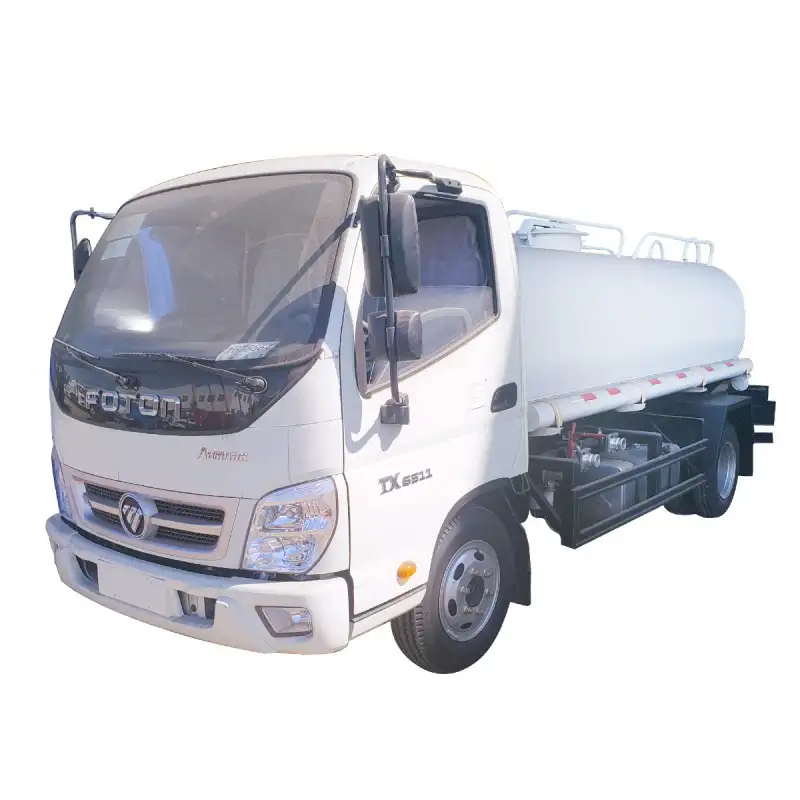
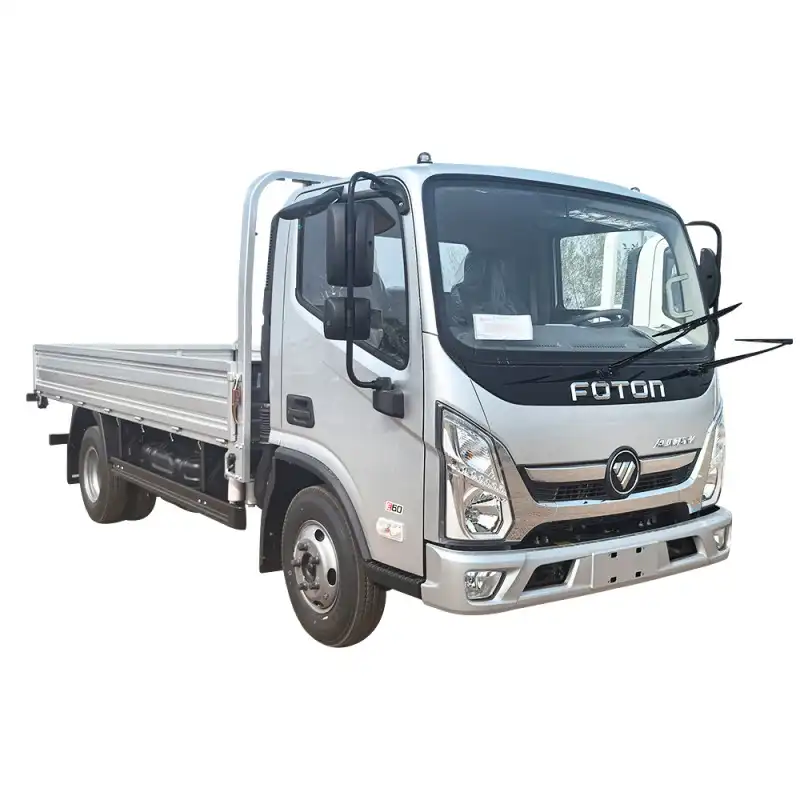
Foton Auman and Forland models cover the middle of the market: lighter tare weight, lower fuel burn and a Cummins ISG powertrain that is well understood by regional mechanics. Fleets use Foton where payload per litre matters more than absolute structural mass.
1. Application & Duty Matching
This range is normally deployed in the following duty cycles. Matching the body, cooling package and axle ratio to the actual cycle is what determines service life in African conditions:
- Regional distribution and highway trunking
- Municipal water sprinkling and street cleaning
- Ready-mix concrete delivery in urban areas
- Light construction material haulage
2. Powertrain & Configuration
Core driveline: Cummins ISG / ISF engines with Fast or ZF-derived gearboxes and lighter-weight drive axles.
Body and equipment options: Auman EST and GTL cab families, plus purpose-built mixer drums, water tanks and dropside cargo bodies.
3. Regional Axle-Load & Compliance
Every export configuration is matched to the destination market's legal limits before the chassis is built. SADC corridors operate at 56 t gross combination mass, CEMAC at 50 t, ECOWAS at 51 t, and the East African Community at 56 t — but each agreement caps individual axle loads differently. We provide the axle-rating calculation with the quotation so the combination stays legal at every weighbridge on the route, not just at the port of entry.
4. Shipping & Port Delivery
Standard export method: 40HQ container for lighter units, Ro-Ro for complete tractors, and Flat Rack for wide-bodied mixers. We supply the loading plan, lashing points and drain/isolation checklist with every shipment so terminal inspection passes without delay.
5. Ordering & Commissioning
Orders move through four stages: specification sign-off, chassis build, body fabrication and pre-shipment inspection. Each unit ships with a pre-delivery inspection report, a first-year spare parts kit and an operator handbook in English or French. On arrival our engineering team supports commissioning by video call while your mechanic performs the first service, which keeps the warranty valid without waiting for a factory technician to travel.
6. Sourcing FAQ
Q1: Which configuration suits our road and load conditions?
A: The right specification depends on your legal gross combination weight, typical gradient and road surface. Send us your route profile and payload target and our engineering team will return a configuration sheet with axle ratings, tyre size and body thickness matched to those conditions.
Q2: How long is production and shipping to an African port?
A: Standard units are built in 25 to 35 working days depending on body type and options. Ocean transit to Lagos, Mombasa, Dar es Salaam, Douala or Abidjan typically adds 25 to 40 days, plus 5 to 10 working days for customs clearance at destination.
Q3: What spare parts support is available after delivery?
A: We supply a recommended first-year spare parts kit with every unit and can ship consumables by air within 7 days. Common wear items for this range are held in regional stock so fleets are not idled waiting on imports.